
A garage door typically comes off track due to worn rollers, bent tracks, broken cables, or physical impact. These issues can create serious safety hazards and leave your home vulnerable, making quick identification and repair essential for every homeowner.
When your garage door derails, it's more than just an inconvenience. You're dealing with a heavy piece of equipment that could fall unexpectedly, potentially causing injury or property damage. Understanding what causes these problems helps you spot warning signs early and take action before a minor issue becomes a major safety concern.
Safety Alert: Never attempt to operate a garage door that has come off its tracks. The door could fall without warning, causing serious injury or damage.
Most garage door systems rely on a precise balance of components working together. Rollers guide the door along metal tracks while cables, springs, and hinges provide controlled movement. When even one part fails, it can throw the entire system out of alignment and cause the door to derail.
Your garage door moves smoothly because of a carefully designed tracking system. Metal tracks mounted on either side of your garage opening guide a series of rollers attached to the door panels. These rollers must stay properly seated in the tracks for safe operation.
The system depends on precise alignment. If tracks become bent or rollers wear out, the door can't follow its intended path. Cables work alongside springs to lift and lower the door in a controlled manner, while hinges allow the door sections to bend as they transition from vertical to horizontal movement.
Think of it like a train on railroad tracks. Just as a train needs straight, properly aligned rails to stay on course, your garage door needs straight tracks and functioning rollers to operate safely. When the "rails" bend or the "wheels" break, derailment becomes inevitable.

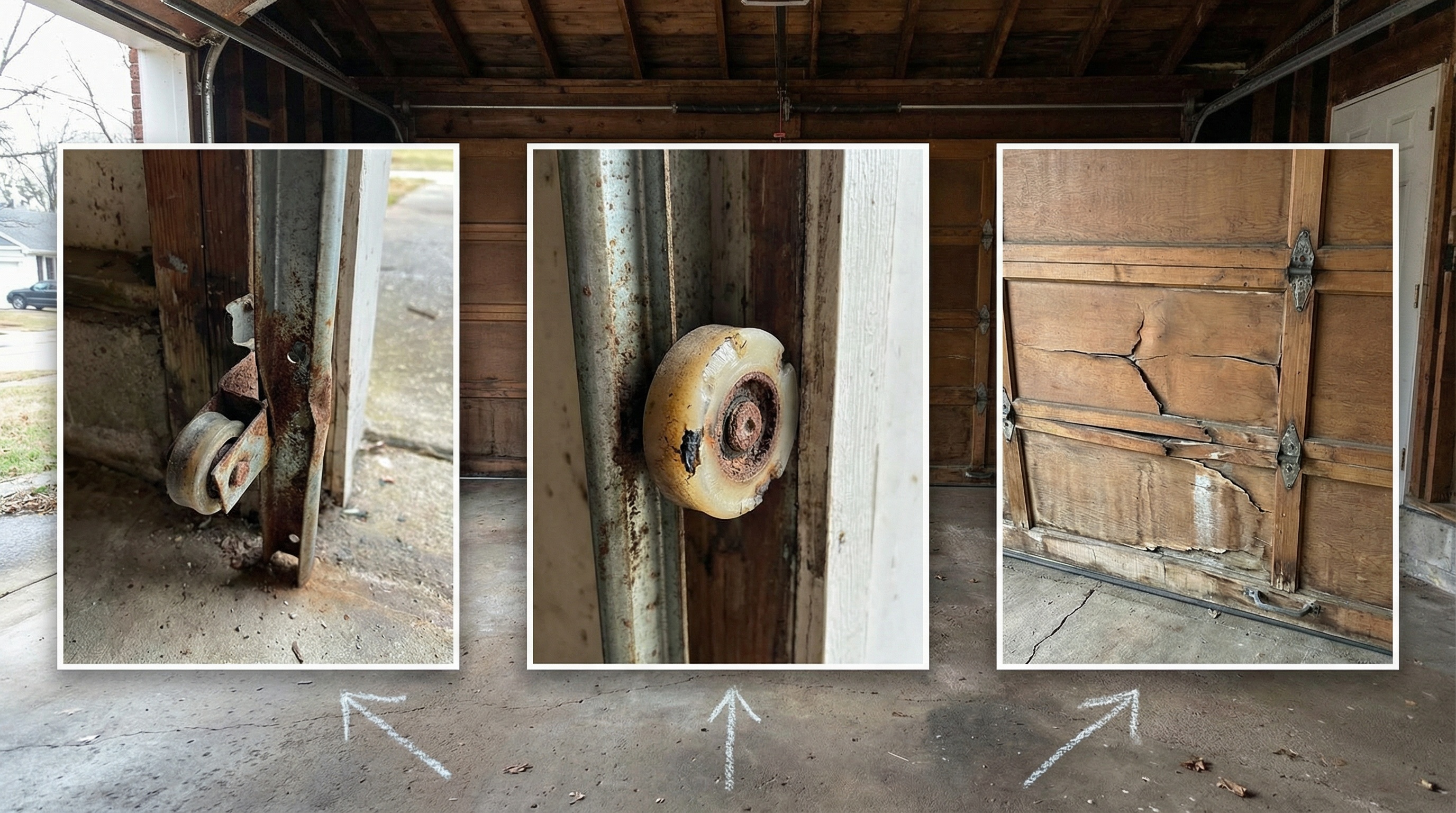
Worn or broken rollers top the list of culprits. These small but crucial components guide your door along its path, and when they crack, break, or detach from their stems, smooth operation becomes impossible.
Misaligned or bent tracks create another frequent problem. Physical impact from vehicles, loose mounting brackets, or even foundation settling can knock tracks out of alignment. Even a slight bend can prevent rollers from moving smoothly, eventually forcing them out of the track entirely. If you're experiencing these issues in the Wayne area, learn more about what causes a garage door to come off track in Wayne, PA.
Broken or frayed cables also contribute to derailment issues. These cables help lift and lower your door in a balanced way. When one cable snaps or becomes frayed, the door can sag to one side and pull the rollers out of their tracks. You might hear a loud snapping sound when this happens, followed by the door becoming crooked or stuck.
Warning Sign: If you notice your garage door sagging to one side or making grinding noises during operation, stop using it immediately and call a professional.
Small obstructions can cause big problems too. Dirt, leaves, tools, or even ice buildup can block the door's path and force rollers to jump out of their tracks. Regular cleaning and proper storage of garage items help prevent these issues. Homeowners in Conshohocken can find specific guidance on common causes of garage door track problems in Conshohocken, PA.
Your garage door usually gives you warning signs before it completely derails. Pay attention to jerky or uneven movement during operation. If the door seems to struggle or moves in fits and starts, your rollers or tracks may be developing problems.
Listen for unusual sounds. Grinding, squealing, or scraping noises often indicate worn rollers or misaligned tracks. These sounds tell you that metal is rubbing against metal in ways it shouldn't, creating wear that will eventually lead to failure. Understanding how to know if your garage door is misaligned can help you catch these issues early.
Watch for visual clues as well. Gaps between door sections, loose bolts, or visible damage to tracks or rollers all signal potential problems. If you notice cables that appear slack or frayed, or if the door doesn't sit evenly when closed, these issues need immediate attention.
The door's response to your opener also provides important information. If it struggles to open or close completely, or if it reverses direction unexpectedly, the tracking system may be compromised. Don't ignore these warning signs, as they typically worsen quickly once they start. Norristown residents can learn more about identifying garage door misalignment in Norristown, PA.
Regular maintenance prevents most tracking problems before they start. Clean your tracks monthly, removing dirt, debris, and any objects that might obstruct the door's path. Use a damp cloth to wipe down the tracks, and check that nothing has fallen into them.
Lubricate moving parts every three to four months using garage door lubricant or light machine oil. Focus on rollers, hinges, and the track areas where rollers make contact. This reduces friction and prevents premature wear that can lead to tracking problems.
Inspect your system regularly for loose hardware. Vibration from normal operation can gradually loosen bolts and brackets over time. Tighten any loose connections you find, but don't over-tighten, as this can strip threads or crack mounting points.
Schedule professional inspections annually. A trained technician can spot developing problems you might miss and make adjustments before small issues become major repairs. They can also ensure your door remains properly balanced and all safety features work correctly. For those in the King of Prussia area, check out resources on detecting garage door misalignment in King of Prussia, PA.
Professional repair ensures both safety and proper function when tracking problems do occur. Garage door systems involve heavy components under significant tension, making DIY repairs potentially dangerous. Technicians have the tools and training to realign tracks, replace worn components, and restore safe operation to your door system.
Your garage door may be off track due to worn rollers, bent tracks from impacts, frayed cables, debris buildup, loose brackets, or foundation shifts. Regular inspections and maintenance can prevent these issues from escalating into major safety hazards.
Minor issues like clearing obstructions may be DIY, but replacing cables, springs, or realigning tracks requires professional tools and expertise to avoid injury. Never attempt to operate an off-track door as it could fall without warning.
Look for jerky movement, grinding or squealing noises, door sagging to one side, visible gaps between door sections, loose bolts, or rollers popping out. If the door struggles to open or close completely, these are warning signs that need immediate attention.
Clean tracks monthly to remove debris, lubricate moving parts every 3-4 months, inspect for loose hardware regularly, and schedule annual professional inspections. Proper maintenance prevents most tracking problems before they start.
Get your garage door back on track today!


