
If your garage door jerks during operation, makes unusual grinding noises, or leaves uneven gaps when closed, you're likely dealing with misalignment. This common issue affects thousands of King of Prussia homeowners each year, often starting as a minor inconvenance before escalating into costly repairs or safety hazards.
Garage door misalignment occurs when the door no longer moves smoothly along its tracks, causing strain on the entire system. In King of Prussia's climate, with hot summers and occasional winter freezes, metal components expand and contract, making alignment issues particularly common. Recognizing these warning signs early can save you hundreds of dollars in repairs and protect your family from potential accidents.
Quick fact: According to garage door professionals, over 70% of emergency repair calls could be prevented by addressing early misalignment symptoms.
Several factors contribute to garage door misalignment, especially in Pennsylvania weather conditions. Understanding these causes helps you spot problems before they worsen.
Weather-related expansion and contraction tops the list for King of Prussia residents. When temperatures swing from summer highs in the 90s to winter lows in the 30s, metal tracks and hardware expand and contract repeatedly. This movement gradually loosens bolts and shifts components out of position.
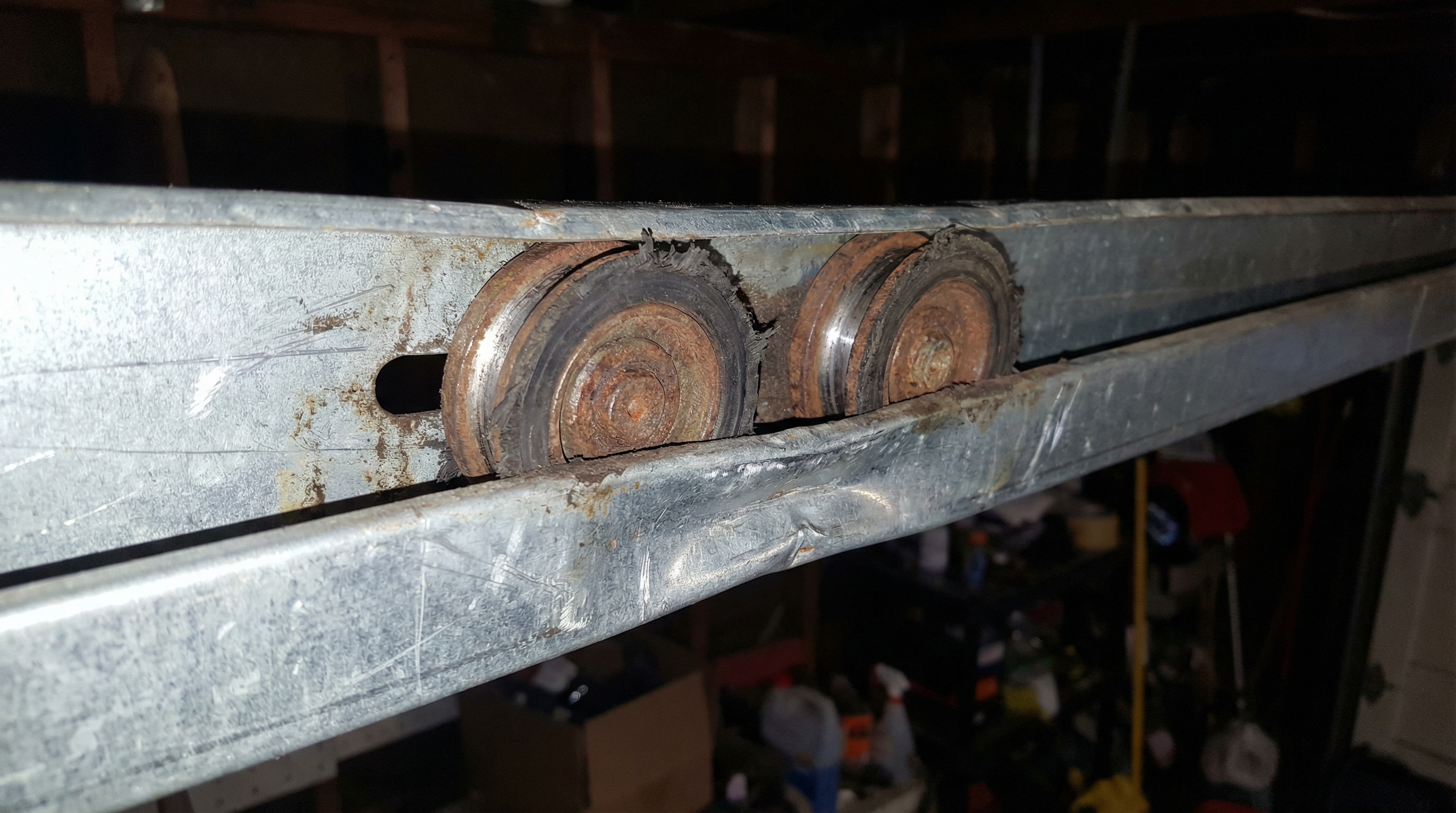
Worn or damaged rollers create another common problem. These small wheels guide your door along the tracks, but they wear down over time from daily use. Cracked or loose rollers wobble instead of rolling smoothly, throwing the entire door off balance.
Impact damage from accidentally backing into a partially open door or hitting the tracks with lawn equipment can bend the metal guides. Even minor dents disrupt the door's smooth movement and create alignment issues. In severe cases, these impacts can lead to garage doors coming completely off track, requiring immediate professional intervention.
Ground settling around your home's foundation also affects garage door alignment. As soil shifts over time, it can cause the door frame to move slightly, changing how the door sits in its opening.
Recognizing misalignment symptoms early prevents bigger problems down the road. Here are the most obvious indicators that something's wrong with your garage door's alignment.
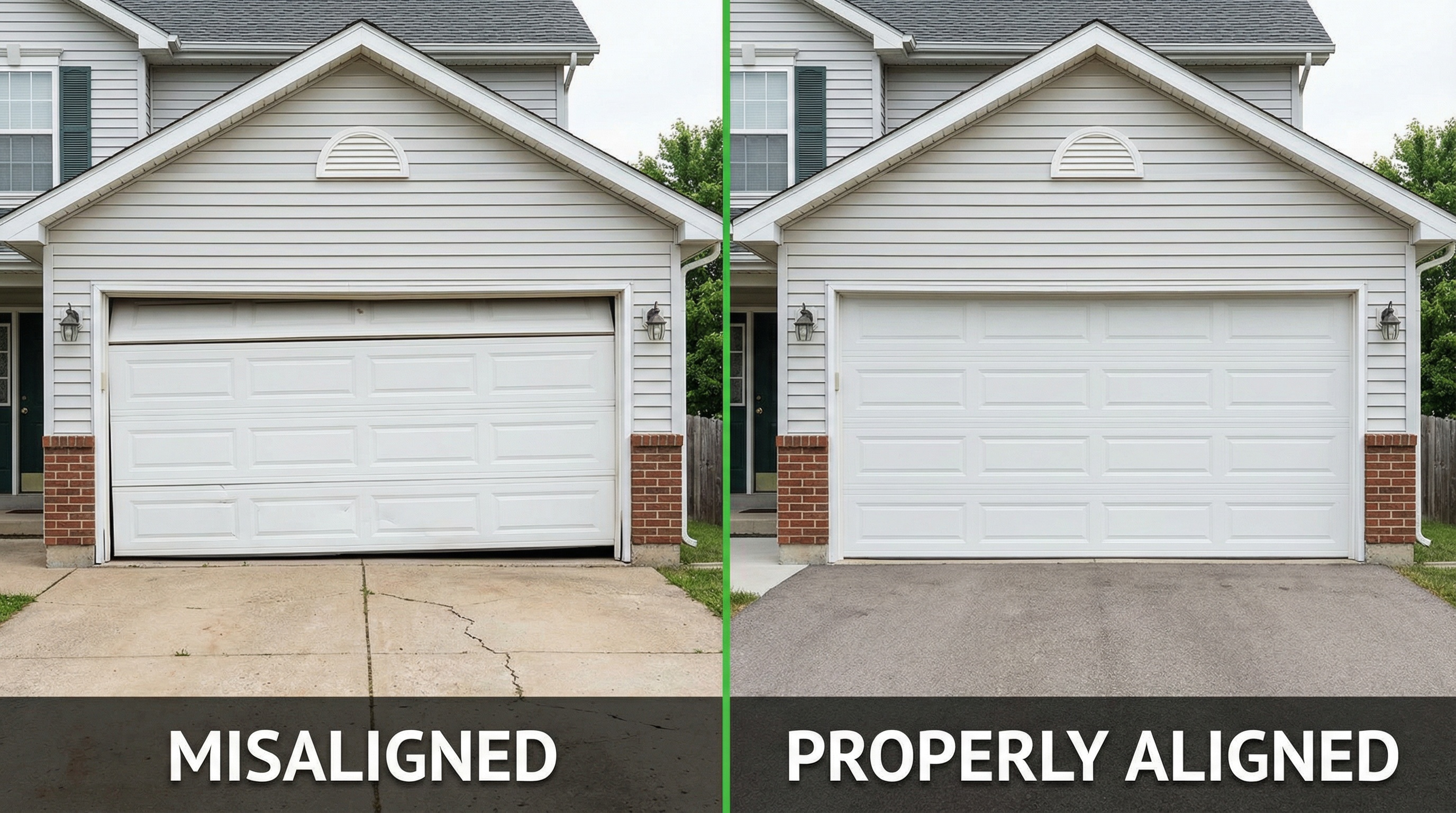
Uneven gaps when the door is closed signal immediate attention. A properly aligned door sits flush against the ground with consistent spacing on both sides. If you notice light coming through one side or a gap large enough to slide your hand under, the door has shifted out of position.
Jerky or shaky movement during opening and closing indicates the rollers are struggling to stay on track. Your door should glide smoothly without sudden stops, starts, or side-to-side wobbling. Any hesitation or rough movement suggests alignment problems. If you're experiencing similar issues in nearby areas, you can learn more about identifying garage door misalignment in Norristown.
Unusual noises like grinding, scraping, or squealing point to metal components rubbing against each other incorrectly. While some operational noise is normal, new or louder sounds typically mean something has shifted out of place.
The door appears crooked when viewed from inside your garage. Step back and watch the door move up and down. If one side rises faster than the other or the door looks tilted, alignment issues are affecting its operation.
Safety alert: A garage door that suddenly stops mid-operation or reverses direction without obstruction may have serious alignment problems requiring immediate professional attention.
Postponing repairs when you notice alignment issues leads to more expensive problems and potential safety risks. Understanding these consequences motivates quick action.
Accelerated wear on components happens when your garage door operates under stress. Misalignment forces the opener motor to work harder, springs to carry uneven loads, and rollers to grind against track walls. This extra strain shortens the lifespan of expensive parts like springs and openers.
Safety hazards increase significantly with misaligned doors. A door that's partially off track can suddenly fall, potentially injuring someone or damaging vehicles. The heavy weight of garage doors makes them particularly dangerous when they're not properly supported. Understanding what causes garage doors to come off track can help you prevent these dangerous situations.
Higher energy costs result from gaps that allow conditioned air to escape your garage. If your garage is attached to your home or climate-controlled, misalignment can impact your energy bills by creating unwanted air leaks.
Complete system failure becomes more likely the longer you wait. What starts as minor alignment issues can progress to broken springs, damaged openers, or doors that won't operate at all.
Before calling professionals, you can perform basic inspections to confirm misalignment and assess the severity of the problem.
Visual inspection from inside your garage reveals obvious issues. Look at both tracks to see if they're straight and parallel. Check that all rollers are seated properly in the tracks and examine the door for any obvious tilting or sagging. For comprehensive guidance on recognizing garage door misalignment, review all the key symptoms and inspection techniques.
Manual operation test helps identify balance problems. Disconnect the opener using the emergency release cord and carefully lift the door halfway by hand. A properly balanced door should stay in place without falling or shooting upward. If it moves on its own, spring tension or alignment needs professional adjustment.
Track examination shows damage or debris that might cause problems. Clean any dirt or leaves from the tracks and look for dents, rust, or bent sections. Small obstructions can sometimes be removed safely, but bent metal requires professional repair. Residents in surrounding communities experiencing similar track issues can reference information about garage door track problems in Conshohocken.
Remember that garage door springs are under extreme tension and should never be adjusted by homeowners. Limit your inspection to visual checks and simple cleaning tasks.
Addressing garage door misalignment promptly protects your investment and ensures your family's safety. While some minor maintenance tasks can be handled by homeowners, alignment issues typically require professional expertise to resolve safely and permanently. If you've noticed any of these warning signs in your King of Prussia home, don't wait for the problem to worsen.
The most obvious signs include uneven gaps when the door is closed, jerky or shaky movement during operation, unusual grinding or scraping noises, and the door appearing crooked or tilted. You may also notice light coming through one side of the door when it's closed, or the door hesitating and stopping mid-operation.
While you can perform basic visual inspections and clean debris from tracks, garage door misalignment typically requires professional repair. The springs are under extreme tension and can be dangerous to adjust. Professionals have the proper tools and expertise to safely realign tracks, replace worn rollers, and adjust spring tension without risk of injury.
King of Prussia's climate creates ideal conditions for misalignment issues. Temperature swings from summer highs in the 90s to winter lows in the 30s cause metal tracks and hardware to expand and contract repeatedly. This movement gradually loosens bolts and shifts components out of position. Additionally, ground settling around home foundations can affect door alignment over time.
Ignoring misalignment leads to accelerated wear on expensive components like springs and openers, increased safety hazards including potential door collapse, higher energy costs from air leaks, and eventual complete system failure. What starts as a minor alignment issue can progress to broken springs, damaged openers, or doors that won't operate at all, resulting in much more costly repairs.
Get your garage door back on track today!


