
No, you should never use a garage door with a broken spring. This creates serious safety risks and can cause expensive damage to your entire garage door system. In Norristown, where homeowners rely on their garage doors daily for convenience and security, a broken spring disrupts your routine and puts your family at risk.
Safety Alert: A garage door typically weighs 150-200 pounds, and without functioning springs, this full weight becomes uncontrolled and dangerous.
When a garage door spring breaks, the counterbalance system fails completely. This means your garage door opener must work against the full weight of the door, often leading to motor burnout and additional repairs. More importantly, the door can slam shut unexpectedly, potentially causing serious injury to anyone nearby.
Garage door springs serve as the counterbalance system that makes opening and closing your door smooth and safe. They store energy when the door closes and release it to help lift the door when opening. Without this assistance, your garage door becomes extremely heavy and difficult to control.
Two main types of springs handle this critical job. Torsion springs mount above the door and twist to provide lifting force, while extension springs run along the tracks on either side and stretch during operation. Both types work under high tension and require professional handling when they fail. Understanding the difference between a torsion spring and an extension spring helps you identify which system your garage door uses.
Spring TypeLocationLifespanReplacement DifficultyTorsionAbove door7-10 yearsProfessional onlyExtensionSide tracks5-7 yearsProfessional recommended
The springs essentially do the heavy lifting so your opener motor only needs to guide the door's movement. When springs break, the motor struggles against the full door weight, leading to premature failure and costly repairs.
Using a garage door with broken springs puts you and your property at serious risk. The door loses its controlled movement and becomes unpredictable, creating several dangerous scenarios that Norristown homeowners should never ignore.
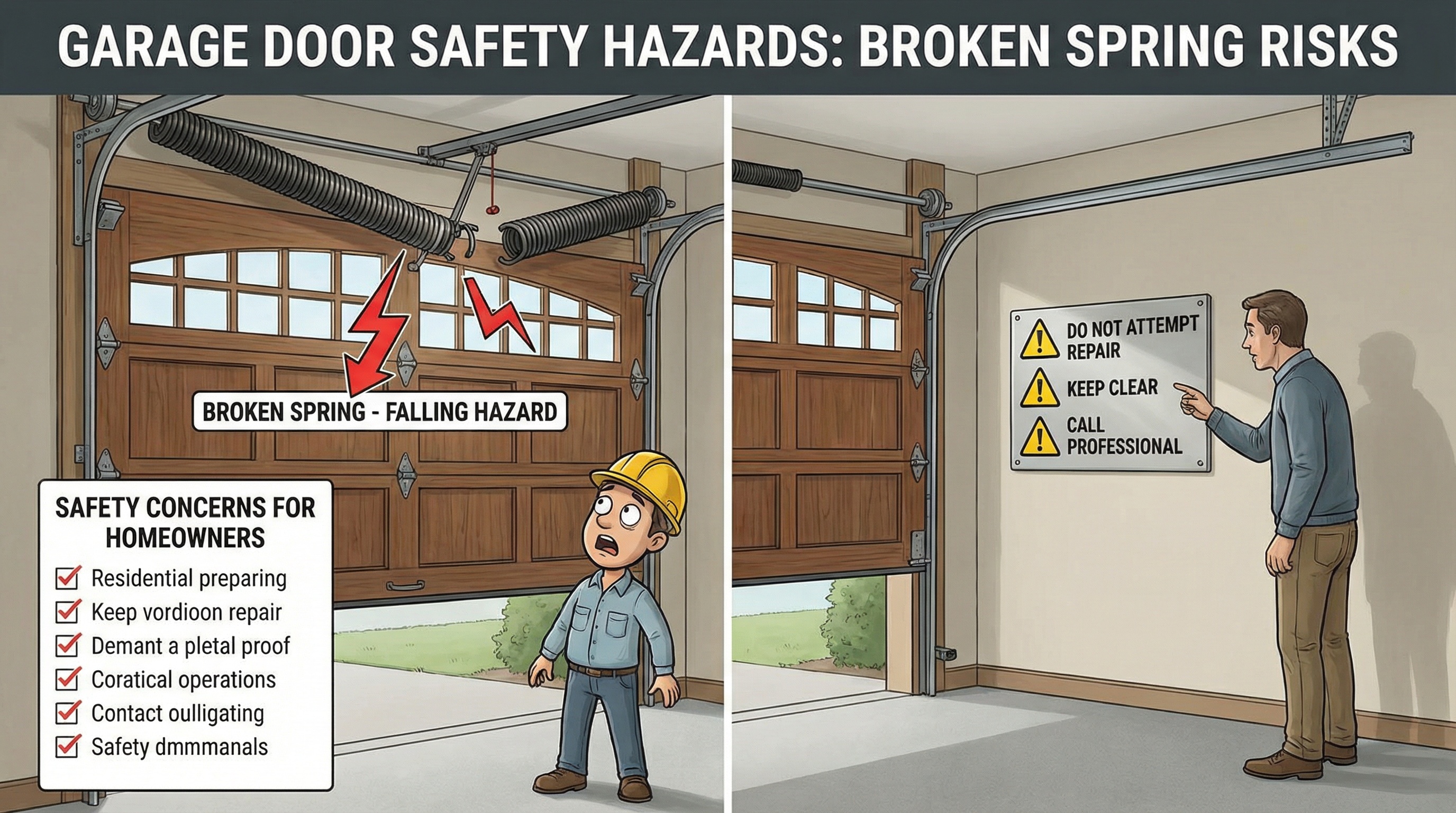
The most immediate danger involves the door slamming shut without warning. Since the springs no longer provide controlled descent, gravity takes over completely. This sudden drop can crush anything underneath, including vehicles, storage items, or people. The force of a falling garage door can cause severe injuries or even death.
Your garage door opener also faces extreme stress when trying to lift an unbalanced door. The motor works far beyond its designed capacity, often resulting in burned-out gears, stripped components, or complete system failure. What starts as a spring replacement can quickly become a full opener replacement plus additional repairs.
Cost Reality: Continuing to use a door with broken springs often doubles or triples repair costs compared to immediate professional spring replacement.
Manual operation becomes nearly impossible and extremely dangerous. Most homeowners cannot safely lift 150-200 pounds, especially when the door might slip or fall during the attempt. Even if you manage to lift it partially, maintaining control while moving under the door creates serious injury risks. Learn more about whether you can manually open a garage door with a broken spring and the dangers involved.
Spring failures often announce themselves with obvious signs, though some symptoms develop gradually. Understanding these warning signals helps Norristown homeowners act quickly before dangerous situations develop.
The most dramatic sign involves a loud bang or snapping sound from your garage. This typically happens when a torsion spring breaks under tension, creating a sound like a gunshot that echoes through the garage and sometimes the entire house.
Visual inspection reveals several clear indicators of spring problems. Look for gaps in the torsion spring coils, which show where the spring has separated. Extension springs may appear stretched beyond normal length or show visible cracks along their surface.
Your door's behavior also changes noticeably when springs fail. The door may refuse to open completely, stopping after rising just a few inches. It might appear crooked or off-balance, with one side higher than the other. The opener may struggle with grinding noises, jerky movements, or slower operation than usual.
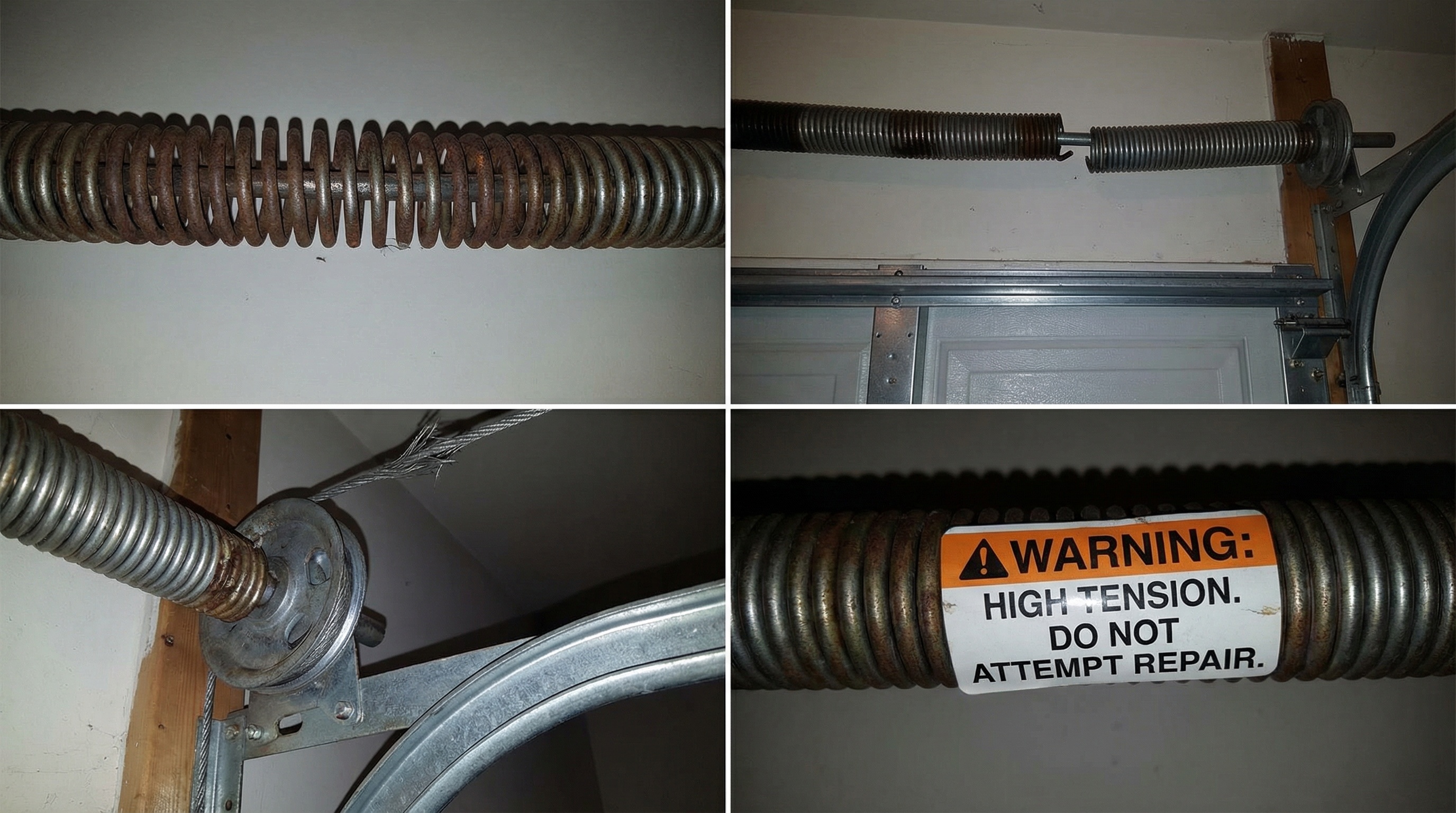
Some homeowners notice the door feels much heavier when lifting manually during power outages. This increased weight often indicates weakening springs that will soon fail completely. Pay attention to these early warnings to avoid complete failure at inconvenient times. If you're unsure about the condition of your springs, check out our guide on how to know if your garage door spring is broken in Norristown, PA.
When you discover broken garage door springs, your first priority involves stopping all use of the door immediately. Continuing to operate the door, even briefly, risks injury and additional damage to your garage door system.
Resist any temptation to attempt DIY spring replacement. Garage door springs operate under extreme tension that can cause serious injury if released improperly. Professional technicians have specialized tools and training to handle these high-tension components safely. Before considering any DIY approach, read about whether you can replace a garage door spring yourself to understand the risks involved.
Contact a qualified garage door repair service right away. In Norristown's climate, where daily garage use is essential for most families, prompt professional service restores your home's security and convenience quickly. Many repair companies offer same-day service for spring emergencies.
While waiting for professional help, secure your garage through alternative means. If the door is closed, it should stay that way until repairs are complete. If it's stuck open, avoid parking vehicles inside and consider temporary security measures for valuable items stored in the garage.
Professional Tip: Many technicians recommend replacing both springs simultaneously, even if only one has broken, to prevent future imbalanced operation and premature failure of the remaining spring.
Professional spring replacement typically takes 1-2 hours and includes testing the entire system for proper balance and operation. This investment in professional service protects your family's safety and prevents the much higher costs associated with continued use of damaged equipment. Keep in mind that garage door springs are not universal, so professionals will need to match the correct specifications for your specific door.
The bottom line remains clear for Norristown homeowners facing broken garage door springs. Never attempt to use the door until professional repairs restore safe operation. The risks to your safety and property far outweigh any temporary inconvenience of waiting for proper repairs. Contact a trusted local garage door service immediately to restore your home's security and your family's safety.
Stop using the garage door immediately and contact a professional repair service. Never attempt to operate the door manually or with the opener, as this creates serious safety risks. Secure your garage through alternative means while waiting for professional repairs, and avoid parking vehicles inside if the door is stuck open.
Common signs include a loud bang or snapping sound, visible gaps in torsion spring coils, the door refusing to open completely, crooked or off-balance door movement, and the opener struggling with grinding noises. The door may also feel much heavier when lifting manually during power outages.
Without functioning springs, the full weight of the door (150-200 pounds) becomes uncontrolled and can slam shut without warning, potentially crushing anything underneath. The garage door opener also faces extreme stress, often leading to motor burnout and additional costly repairs beyond just spring replacement.
No, garage door spring replacement should only be performed by professional technicians. Springs operate under extreme tension that can cause serious injury if released improperly. Professional technicians have specialized tools and training to handle these high-tension components safely, and the repair typically takes 1-2 hours.
Get your garage door back on track today!


