
No, garage door springs are not universal. Each garage door requires a specific spring based on its weight, height, and system design. In Philadelphia, Pennsylvania, many homeowners mistakenly believe all garage door springs are interchangeable, but using the wrong spring can lead to serious safety hazards and costly repairs.
Important Safety Note: Using an incorrect spring can cause your garage door to slam shut unexpectedly, potentially causing injury or property damage.
Understanding why springs aren't universal helps you make informed decisions about repairs and avoid the safety risks that come with mismatched components. Let's explore what makes each spring unique and why professional installation matters for Philadelphia homeowners.
Garage doors use two main types of springs, each designed for different applications and door weights. Knowing the difference helps you understand why universal springs don't exist.
Torsion springs mount horizontally above your garage door opening. They store energy by winding and unwinding as the door moves. These springs offer better balance, smoother operation, and typically last longer than other types. Most modern garage doors in Philadelphia use torsion springs because they provide superior control and safety.
Extension springs mount vertically on both sides of your door. They stretch and contract to lift the door weight. While less expensive initially, extension springs wear out faster and provide less precise control. You'll often find these on older garage doors or lighter single-car doors.
The choice between these types depends on your door's weight, your garage's layout, and your budget. Neither type is interchangeable with the other, which is why universal springs simply don't work. To better understand the difference between a torsion spring and an extension spring, it's important to consider your specific door requirements.
Several factors make each garage door spring unique to its specific door and system. Understanding these differences explains why you can't simply grab any spring from the hardware store.
Door weight varies significantly based on materials and size. A heavy wooden door weighs much more than a lightweight aluminum one. Springs must provide exactly the right counterbalance force. Too weak, and your opener struggles. Too strong, and the door becomes dangerous to operate manually.
Wire gauge and dimensions matter for proper function. Springs come in different wire thicknesses, inside diameters, and overall lengths. Even small variations affect how much weight the spring can handle and how long it will last.
Cycle ratings determine lifespan and are specific to each spring design. Most residential springs are rated for 10,000 to 20,000 cycles. A mismatched spring might fail prematurely or exceed safe operating limits.
Philadelphia's climate adds another layer of complexity. Temperature swings from hot summers to occasional freezing weather affect spring tension and metal fatigue, making proper sizing even more critical for long-term reliability.
Installing an incorrect spring creates immediate safety hazards and long-term problems that can cost you significantly more than proper replacement.
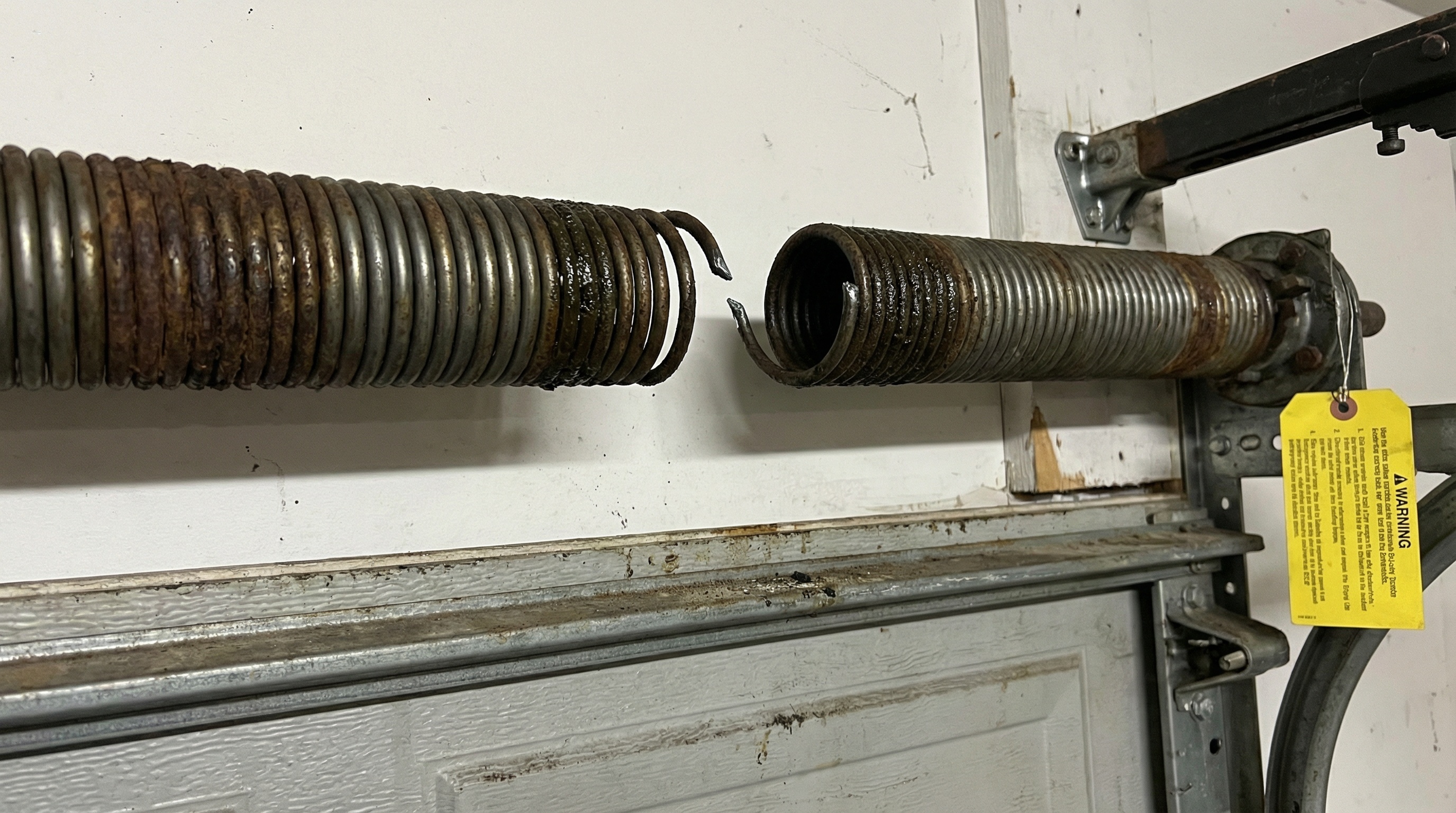
Safety risks top the list of concerns. An undersized spring makes your door extremely heavy, potentially causing back injury during manual operation. An oversized spring can cause the door to fly open uncontrollably or slam shut without warning. If you're wondering how to know if your garage door spring is broken, watch for signs like difficulty opening or loud noises.
Equipment damage follows quickly behind safety issues. Wrong springs put excessive strain on your garage door opener, cables, and tracks. This leads to premature wear and expensive repairs to multiple components instead of just the spring.
Operational problems make daily use frustrating. You might experience jerky movement, loud noises, or doors that won't stay open. These issues often worsen over time, eventually leading to complete system failure. Many homeowners ask whether you can still use a garage door with a broken spring, but doing so risks further damage and safety hazards.
Philadelphia Climate Factor: Temperature extremes in North Pennsylvania can cause improperly sized springs to fail faster, leaving you stranded with a non-functional garage door during extreme weather.
The cost of fixing problems caused by wrong springs typically exceeds the price of professional installation by several hundred dollars.
Working with experienced technicians ensures your garage door operates safely and efficiently for years to come. Professional service provides value that DIY approaches simply cannot match.
Accurate measurements and specifications come from years of experience. Technicians measure wire gauge, inside diameter, length, and calculate the exact spring tension needed for your specific door. This precision prevents the problems associated with guessing or using "close enough" springs.
Safety during installation protects you from serious injury. Garage door springs operate under extreme tension that can cause severe harm if handled improperly. Professional technicians have the tools and training to work safely with these high-energy components. While some homeowners wonder whether they can replace a garage door spring themselves, the risks often outweigh any potential savings.
Warranty protection gives you peace of mind. Professional installations typically include warranties on both parts and labor. If something goes wrong, you're covered without additional expense.
System optimization ensures everything works together properly. Technicians don't just replace springs - they check cables, adjust tension, lubricate moving parts, and test safety features to ensure your entire system operates smoothly.
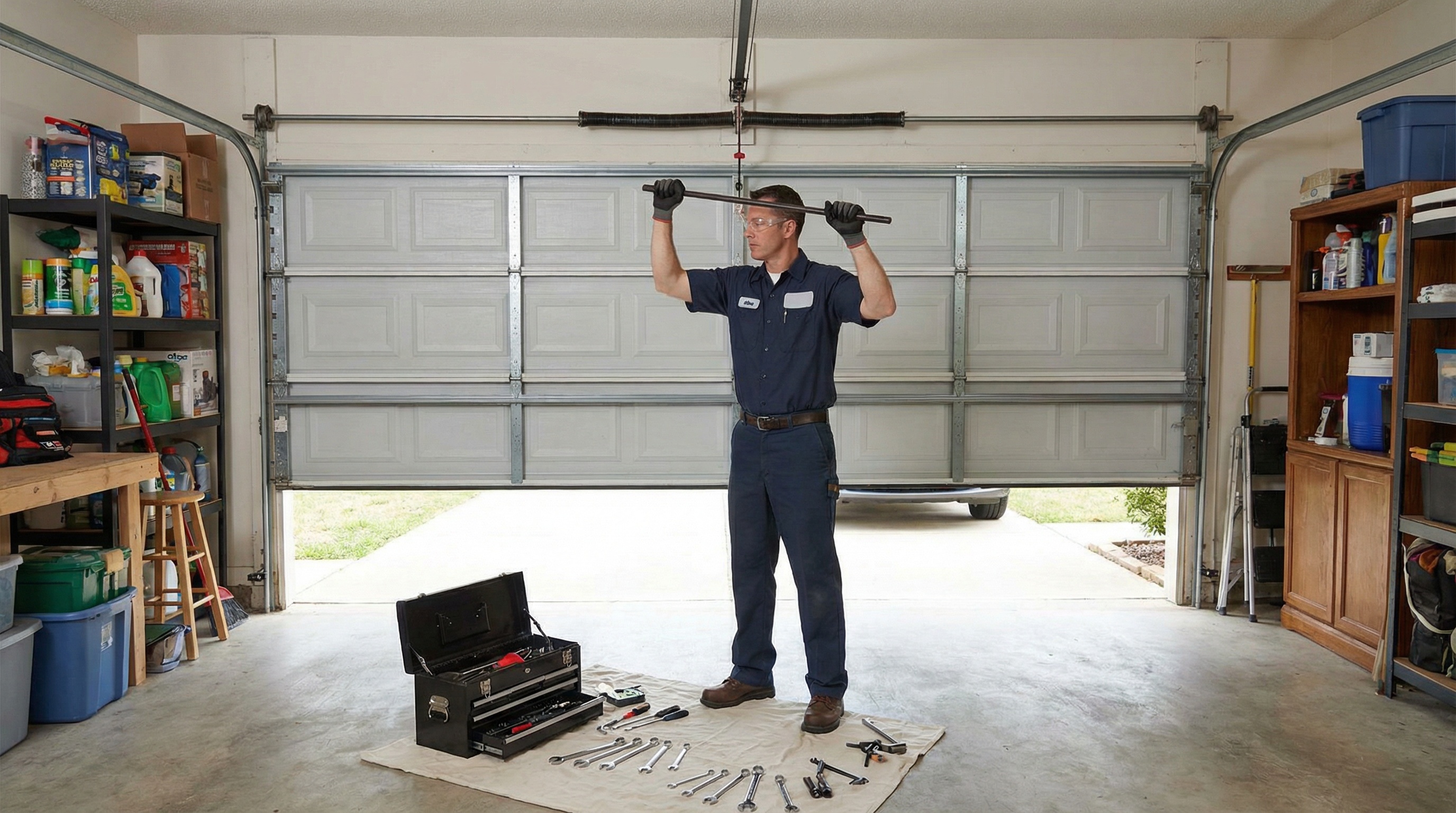
For Philadelphia homeowners dealing with spring problems, professional service provides the expertise needed to restore safe, reliable operation. The investment in proper installation pays for itself through years of trouble-free use and avoided safety risks.
When you notice signs like difficulty opening your door, loud noises during operation, or visible spring damage, contact a qualified garage door technician rather than attempting repairs yourself. Even if you're able to manually open a garage door with a broken spring, it's crucial to get professional help quickly. Your safety and your door's longevity depend on getting the right spring installed correctly the first time.
No, garage door springs are not universal. Each spring must be specifically matched to your door's weight, height, and system type (torsion or extension). In Philadelphia, using the wrong spring creates serious safety hazards and can cause your door to slam shut unexpectedly or become extremely difficult to operate manually.
Torsion springs mount horizontally above your garage door and provide better balance and smoother operation, typically lasting 10,000-20,000 cycles. Extension springs mount vertically on both sides and are less expensive initially but wear out faster and provide less precise control. Most modern Philadelphia garage doors use torsion springs for superior safety and performance.
No, garage door spring replacement should never be attempted as a DIY project. Springs operate under extreme tension (400+ pounds) and can cause severe injury or death if handled improperly. Professional technicians in Philadelphia have specialized tools and training to work safely with these high-energy components and ensure proper installation.
Professional garage door spring replacement in Philadelphia typically costs $150-$400 depending on the spring type and door specifications. Torsion spring replacement generally costs more than extension springs but provides better long-term value. The service usually takes 1-2 hours and includes proper measurement, installation, and safety testing.
Get your garage door back on track today!


