
Yes, you can manually open a garage door with a broken spring, but it's extremely difficult and potentially dangerous. When a garage door spring breaks, you lose the counterbalance system that makes the door manageable to lift. In Wayne, Pennsylvania, where many homes feature heavy insulated garage doors, this situation becomes even more challenging since you'll be lifting the full weight of the door, which can exceed 150 pounds.
The broken spring transforms what should be a simple task into a risky endeavor that requires proper technique and safety precautions. While manual operation is technically possible, it should only be attempted in emergency situations when you absolutely need access to your garage.
Safety Alert: Attempting to manually operate a garage door with a broken spring can result in serious injury or further damage to your garage door system. Consider calling a professional repair service first.
Before attempting any manual operation, you need to confirm that your spring is actually broken. The most obvious sign is a loud snapping sound coming from your garage, often described as a gunshot or firecracker. This typically happens when the garage door is closed, as springs are under maximum tension in this position.
Visual inspection will reveal a gap in the torsion spring above your door, or in the case of extension springs, you might see a broken coil hanging down. Your garage door opener may run but fail to lift the door, or the door might open unevenly and appear crooked. The door will also feel significantly heavier than usual if you try to lift it manually.
If you're unsure about identifying the specific signs of a broken garage door spring in Wayne, it's worth consulting a professional for a proper diagnosis. In Wayne's climate, temperature fluctuations can contribute to spring failure, especially during winter months when metal contracts and becomes more brittle.
Operating a garage door with a broken spring presents several serious risks that Wayne homeowners should understand. The most immediate danger is physical injury from the excessive weight and strain required to lift the door. Without the spring's counterbalance, you're lifting the door's full weight, which can cause back injuries, shoulder strain, or muscle pulls.

There's also the risk of the door suddenly slamming down if you lose your grip or if the door slips from your hands. This can cause severe injury to anyone underneath or damage to vehicles and property stored in the garage. The door's tracks, rollers, and panels can also suffer additional damage when operated without proper spring tension.
Important: A standard double garage door weighs between 150-200 pounds. Without spring assistance, this weight can overwhelm even strong individuals.
If you must manually open your garage door with a broken spring, follow these safety steps carefully. First, disconnect the automatic opener by pulling the emergency release cord when the door is closed. This prevents the opener from trying to assist and potentially causing more damage.
Position yourself at the center of the door and ensure you have a clear, stable footing. Lift slowly and steadily, keeping your back straight and using your leg muscles rather than your back. If possible, have someone assist you, with each person taking one side of the door.
Never attempt this alone with a double-wide door, and stop immediately if you feel the door is too heavy or if you experience any pain. Once open, prop the door securely in place using clamps or locking pliers on the track below the bottom roller to prevent the door from falling. While you might wonder if you can still use a garage door with a broken spring in Wayne, it's important to understand this should only be a temporary emergency measure.
Understanding why springs fail can help Wayne homeowners prevent future problems. Garage door springs have a limited lifespan, typically rated for about 10,000 cycles of opening and closing. For most families, this translates to 7-10 years of normal use.
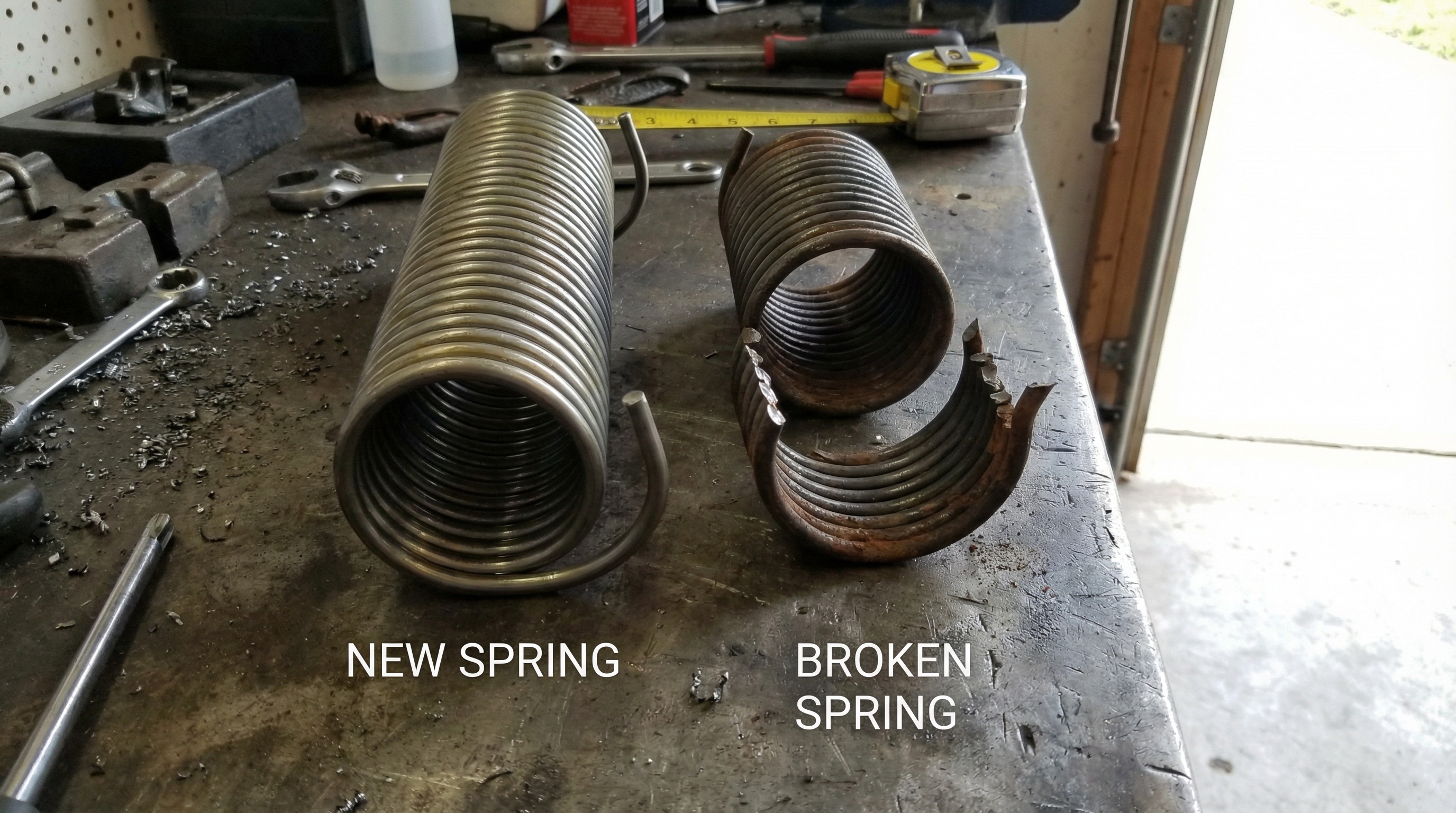
Weather plays a significant role in spring failure, particularly in Pennsylvania where temperature swings can be dramatic. Cold weather makes metal more brittle, while humidity can accelerate rust and corrosion. Poor maintenance, such as lack of lubrication or an unbalanced door, can also stress springs beyond their design limits. Understanding the difference between a torsion spring and an extension spring can help you better maintain your specific garage door system.
Regular maintenance can extend spring life significantly. Lubricate all moving parts every few months, visually inspect springs for signs of wear or rust, and have your door professionally balanced annually. If your garage door is approaching the 7-year mark or hasn't been serviced recently, consider having a professional inspection before problems arise.
Professional garage door repair services in Wayne offer same-day spring replacement and can safely handle these high-tension components. Many homeowners wonder whether they can replace a garage door spring themselves, but attempting DIY spring replacement is extremely dangerous due to the high tension involved and should always be left to trained technicians who have the proper tools and safety equipment.
When faced with a broken garage door spring in Wayne, your safest option is always to contact a local garage door repair professional. They can quickly assess the situation, safely replace the broken spring, and ensure your entire system is properly balanced and functioning. This approach protects both your safety and your investment in your garage door system.
While technically possible, manually opening a garage door with a broken spring is extremely dangerous and should only be attempted in emergency situations. Without the spring's counterbalance system, you'll be lifting the full weight of the door (150-200 pounds), which can cause serious injury or further damage to your garage door system.
The most obvious sign is a loud snapping sound like a gunshot or firecracker coming from your garage. Visual inspection will reveal a gap in the torsion spring above your door or a broken coil hanging down. Your garage door opener may run but fail to lift the door, the door might open unevenly, and it will feel significantly heavier than usual.
First, disconnect the automatic opener by pulling the emergency release cord. Position yourself at the center of the door with stable footing. Lift slowly and steadily, keeping your back straight and using your leg muscles. Have someone assist you if possible, and once open, secure the door with clamps or locking pliers on the track below the bottom roller.
Garage door springs are typically rated for about 10,000 cycles of opening and closing, which translates to 7-10 years of normal use for most families. They break due to normal wear and tear, weather conditions (especially cold temperatures that make metal brittle), lack of maintenance, and an unbalanced door that puts extra stress on the springs.
Get your garage door back on track today!


