
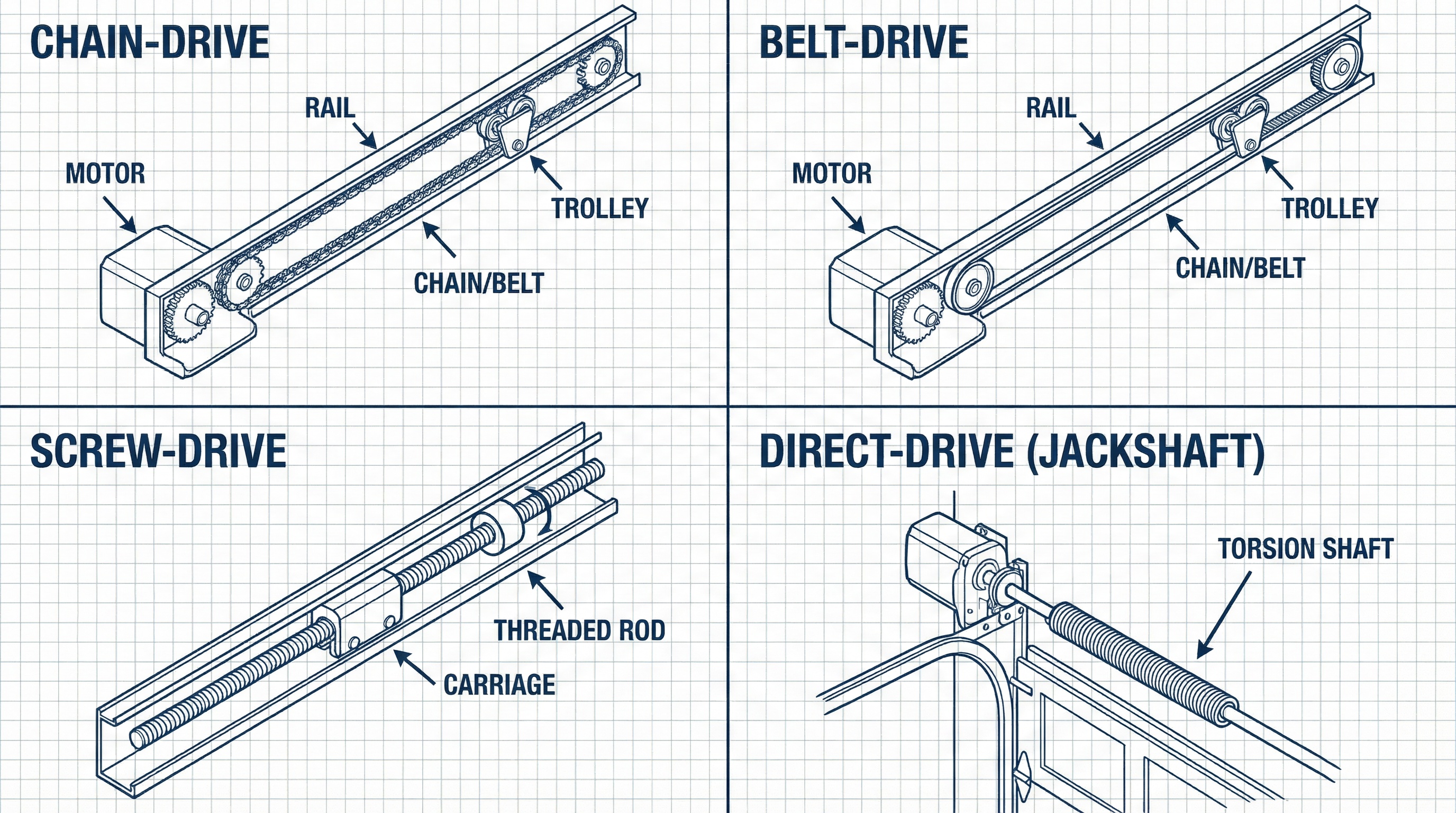
No, garage door opener motors are not universal. Each motor is designed for specific drive systems, door weights, and brand requirements. Understanding these compatibility factors can save you from costly installation mistakes and ensure your garage door operates safely and efficiently.
Many homeowners assume any garage door opener motor will work with their existing system, but this misconception can lead to poor performance, safety risks, and wasted money. The truth is that compatibility depends on several technical specifications that must align perfectly with your garage door setup.
Key InsightChain-drive, belt-drive, screw-drive, and direct-drive systems each require specific motor configurations that aren't interchangeable.
A chain-drive motor won't function properly on a belt-drive track because the mechanical components are designed differently. The trolley system, rail configuration, and mounting hardware vary significantly between drive types. Attempting to mix components from different drive systems can result in mechanical failure or safety hazards.
When considering a motor replacement, you need to match the exact drive type of your existing system. This ensures proper fit, smooth operation, and maintains the manufacturer's safety standards. If you're unsure whether replacing a garage door motor is hard, consulting with a professional can help you understand the complexity involved.
Garage door motors are rated by horsepower, and this rating must match your door's weight and size requirements. A lightweight aluminum single-car door typically needs a ½ horsepower motor, while heavy wood or double doors may require ¾ horsepower or more.
Door TypeWeight RangeRecommended HPSingle aluminum80-120 lbs½ HPSingle steel120-180 lbs½-¾ HPDouble wood200-400 lbs¾-1 HP
Using an underpowered motor forces the system to work harder, leading to premature wear and frequent breakdowns. Conversely, an overpowered motor can cause jerky movements and put unnecessary stress on your door's hardware.
ImportantThese companies design their motors, rails, and control systems to work exclusively within their product ecosystems.
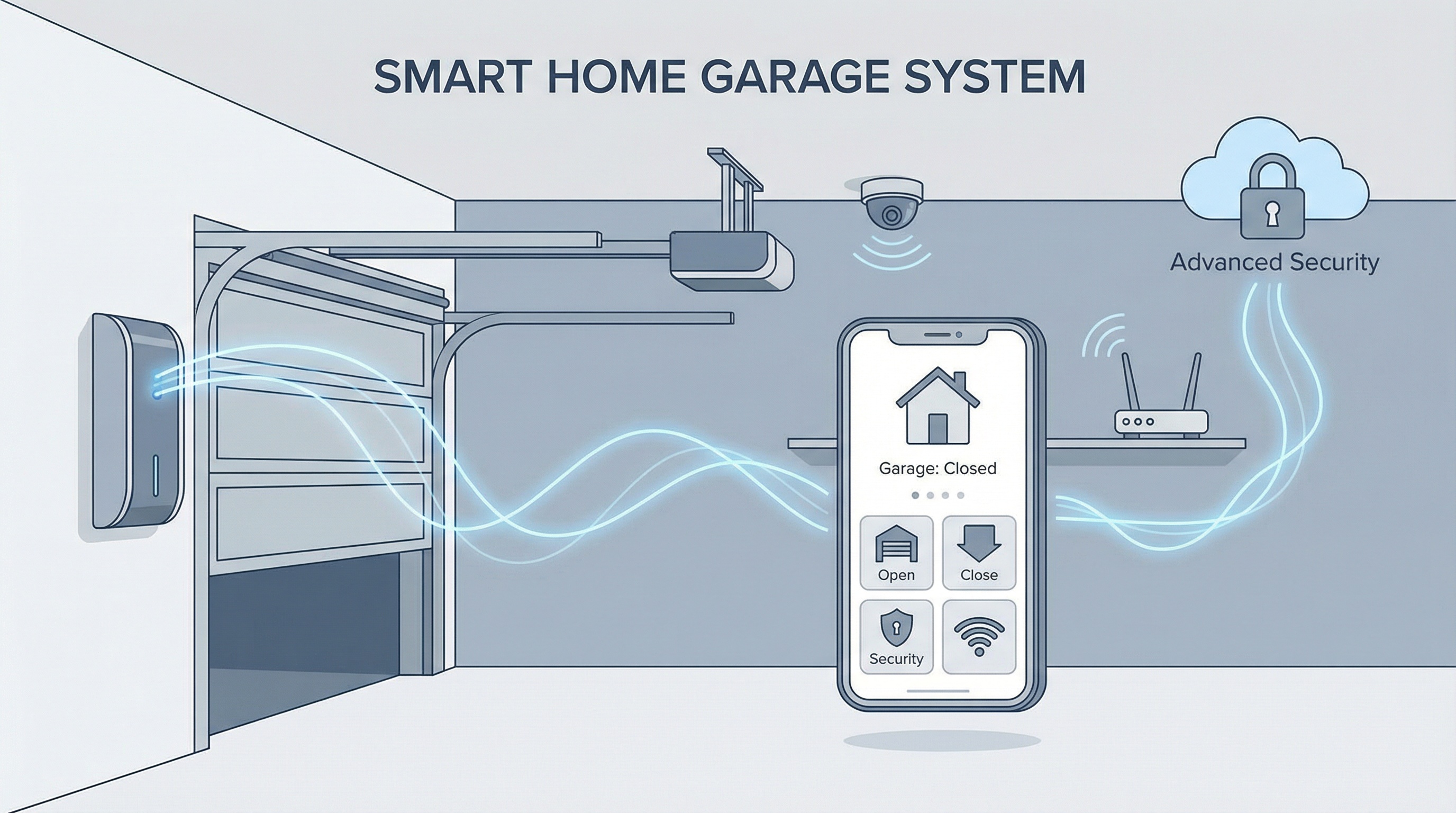
Modern garage door openers include smart features like WiFi connectivity, smartphone app integration, and rolling code security technology. These advanced features require specific wiring configurations and circuit boards that older systems may not support. If you're experiencing issues, learning how to know if your garage door circuit board is bad can help you diagnose electronic problems.
Even within the same brand, different model generations may not be compatible. A newer smart motor might not work with an older rail system, even if they're from the same manufacturer. This is why professional assessment is crucial before making any replacements.
Before assuming you need a new motor, consider whether your current system can be repaired. Many garage door issues stem from worn gears, faulty sensors, broken springs, or remote control problems rather than motor failure. Recognizing the signs that your garage door opener needs repair early can prevent more extensive damage.
A qualified technician can diagnose whether your motor is actually the problem or if other components need attention. Sometimes a simple gear replacement or sensor adjustment can restore full functionality without the expense of a complete motor replacement. Understanding how to tell if a garage door motor is bad can help you make an informed decision about repair versus replacement.
However, if your opener is over 15 years old or lacks modern safety features, replacement might be the better long-term investment. Newer motors offer improved energy efficiency, quieter operation, and enhanced security features that older systems simply can't provide.
Professional TipWhether you're dealing with a malfunctioning opener or planning an upgrade, knowing the compatibility requirements ensures you choose the right solution for your specific setup. While some homeowners wonder if they can install a garage door opener themselves, the complexity of compatibility issues often makes professional installation the safer choice. When in doubt, consulting with a professional technician can save you time, money, and potential safety issues down the road.
Yes, you can replace just the motor on a garage door opener, but it must be compatible with your existing drive system, rail configuration, and brand. The replacement motor needs to match the exact specifications of your current setup, including horsepower requirements and drive type (chain, belt, screw, or direct-drive). However, if your opener is over 15 years old, it may be more cost-effective to replace the entire system.
Most garage door opener brands are not compatible with each other due to proprietary technologies and design differences. LiftMaster, Chamberlain, Genie, and Craftsman each use their own specific rail systems, trolleys, and electronic components. Even within the same brand, different model generations may not be compatible. For best results, stick with the same brand and model line when replacing components.
To determine the right motor, you need to consider your door's weight, size, and current drive system type. Single aluminum doors typically need ½ HP motors, while heavy wood or double doors require ¾ HP or more. You also need to match the drive type (chain, belt, screw, or direct-drive) and ensure brand compatibility. Check your existing opener's model number and consult the manufacturer's specifications for exact replacement requirements.
While some "universal" remotes claim to work with multiple brands, true compatibility depends on your opener's frequency and rolling code technology. Modern openers use specific frequencies (315 MHz, 390 MHz, or 433 MHz) and security features that may not work with generic remotes. For reliable operation and security, it's best to use remotes specifically designed for your opener's brand and model, or consult with a professional to ensure proper compatibility.
Get your garage door back on track today!


