
Replacing a garage door motor is moderately difficult and requires mechanical knowledge, proper tools, and electrical skills. While some experienced DIYers can handle the task, it involves heavy lifting, complex wiring, and safety considerations that make professional installation often the safer choice.
Quick Answer: Most garage door motor replacements take 3-4 hours for experienced DIYers, but electrical wiring mistakes can create safety hazards and void warranties.
The garage door motor, also called the opener motor, powers your entire garage door system. When it fails, you're faced with a decision between tackling the replacement yourself or calling a professional. Understanding what's involved helps you make the right choice for your situation and skill level.
Your garage door motor doesn't fail overnight. It gives you warning signs that replacement time is approaching. Recognizing these early indicators can save you from being stuck with a completely non-functional door.
The most obvious sign is inconsistent operation where your door fails to open or close completely, leaving you manually forcing it into position. You might notice unusual grinding, buzzing, or rattling sounds during operation, which often indicate worn internal components.

Delayed response to your remote control signals suggests the motor is struggling to engage properly. If you find yourself pressing the button multiple times before getting a response, the motor's internal mechanisms are likely wearing out.
Frequent overheating episodes where the motor shuts down mid-cycle point to electrical issues or mechanical strain. When your garage door starts stalling halfway through its cycle without any visible obstructions, the motor is telling you it can't handle the workload anymore. Learning how to tell if a garage door motor is bad can help you identify these issues early and prevent complete system failure.
Replacing a garage door motor presents several technical hurdles that catch many homeowners off guard. The physical demands alone can be overwhelming since garage door openers typically weigh between 50-100 pounds and require mounting to ceiling joists.
The electrical work poses the biggest safety risk. Garage door motors require 120V electrical connections, and incorrect wiring can cause fires, electrocution, or damage to your home's electrical system. Most motors also need proper grounding and may require dedicated circuits.
Safety WarningThe motor must align perfectly with your door's track system, and even small misalignments create excessive wear on springs, cables, and the door itself. This precision work often requires multiple adjustments and testing cycles.
Programming the new motor's safety features, including auto-reverse mechanisms and sensor calibration, requires technical knowledge. These safety systems must work flawlessly to prevent injuries, especially in homes with children or pets.
FactorDIY InstallationProfessional InstallationCost$200-400 (motor only)$400-800 (parts + labor)Time Required4-8 hours2-3 hoursWarranty CoverageLimited to parts onlyFull system warrantySafety RiskHigh (electrical/mechanical)Minimal
The cost difference between DIY and professional installation might seem significant, but consider the hidden expenses. You'll need specialized tools like socket sets, wire strippers, and possibly a ladder or scaffolding for ceiling work.
Professional installers bring expertise that prevents costly mistakes. They understand local electrical codes, can spot potential issues with your existing door system, and ensure all safety features work correctly. Most importantly, they carry insurance that protects you if something goes wrong during installation. If you're wondering whether you can install a garage door opener yourself, it's important to weigh these factors carefully.
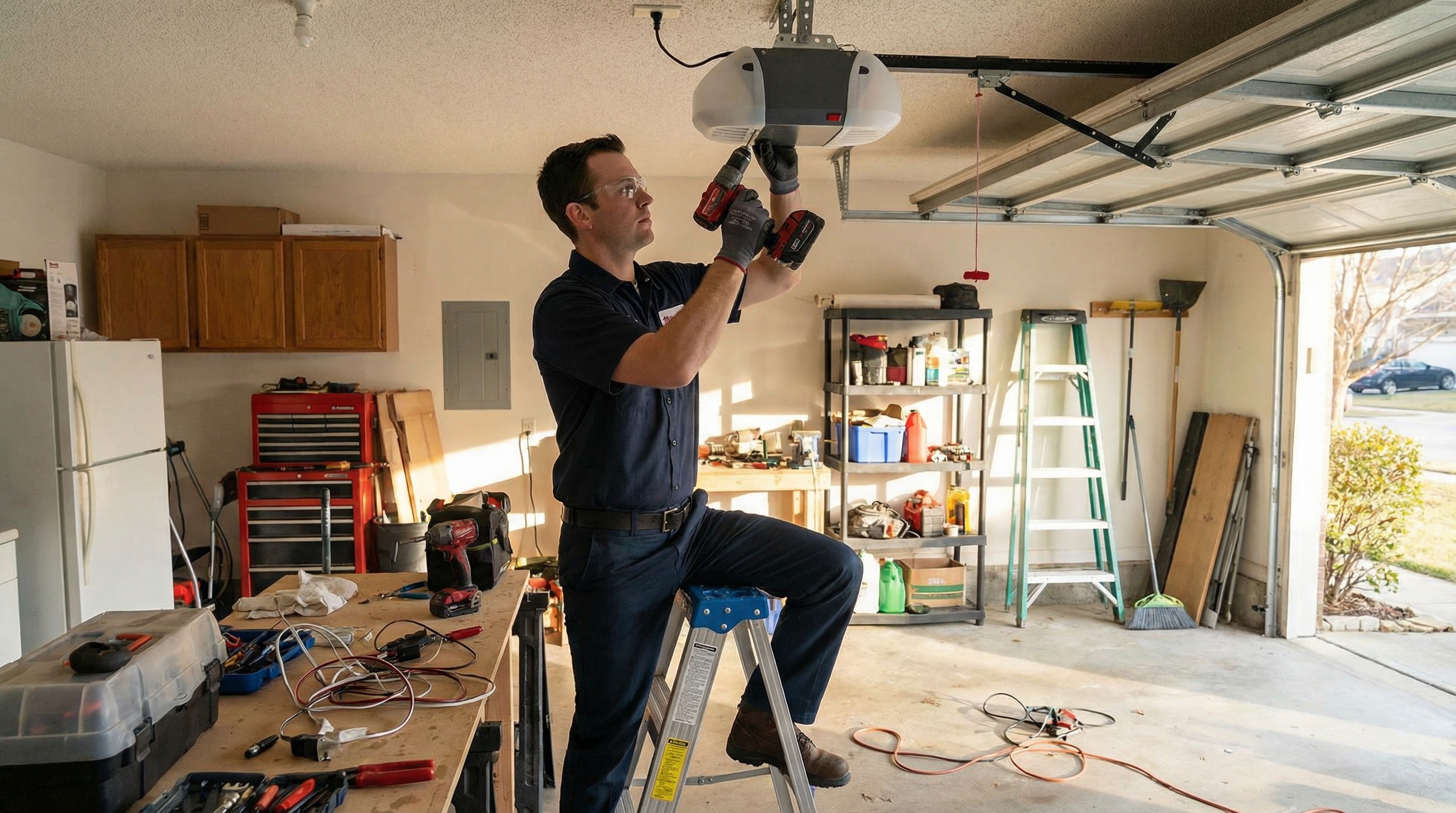
Professional installation typically includes system testing, programming, and a warranty that covers both parts and labor. This peace of mind often justifies the additional cost, especially considering the safety implications of electrical work.
Proper maintenance after motor installation extends its lifespan significantly and prevents premature replacement needs. Regular lubrication of moving parts keeps your system running smoothly and quietly.
Apply garage door lubricant to chains, rollers, and tracks every six months. This simple step reduces friction and prevents the motor from working harder than necessary. Check and tighten loose hardware quarterly, as vibrations naturally loosen screws and bolts over time.
Test your safety features monthly by placing a small object under the door and attempting to close it. The auto-reverse mechanism should activate immediately, preventing the door from crushing the object. Clean the motor unit itself regularly, removing dust and debris that can affect performance. Recognizing the signs that your garage door opener needs repair early can help you address minor issues before they require full motor replacement.
Maintenance Tip: Replacing your garage door motor's light bulbs with LED versions reduces heat buildup and extends motor life by preventing overheating issues.
Keep the motor clean and ensure proper ventilation around the unit. Overheating remains one of the leading causes of premature motor failure, so maintaining airflow around the motor housing protects your investment. If you notice electrical issues, understanding how to know if your garage door circuit board is bad can help you diagnose whether the problem lies with the motor or its control system.
Making the right choice for your situation
Deciding whether to replace your garage door motor yourself depends on your comfort level with electrical work, available time, and risk tolerance. If you have experience with home electrical projects and the necessary tools, DIY replacement can save money while giving you valuable hands-on experience with your garage door system.
However, if you're uncomfortable with electrical work, lack the proper tools, or simply want the peace of mind that comes with professional installation, hiring a qualified technician is the smarter choice. The safety risks and potential for costly mistakes often outweigh the initial savings of DIY installation. Before committing to replacement, you might want to explore whether a garage door motor can be repaired instead, which could save you both time and money.
Consider your garage door's age and condition too. If other components like springs or cables show wear, a professional can address multiple issues during the same service call, potentially saving you money and ensuring your entire system works harmoniously together.
Most garage door motor replacements take 3-4 hours for experienced DIYers, while professional technicians can complete the job in 2-3 hours. The time varies depending on your skill level, the complexity of your garage door system, and whether any additional electrical work is needed.
Yes, experienced DIYers with mechanical knowledge and electrical skills can replace a garage door motor themselves. However, it involves heavy lifting (50-100 pounds), complex wiring, and safety considerations. If you're uncomfortable with electrical work or lack proper tools, professional installation is the safer choice.
DIY garage door motor replacement costs $200-400 for the motor unit alone, while professional installation ranges from $400-800 including parts and labor. Consider that DIY installation requires additional tool purchases and carries higher safety risks that may justify the professional service cost.
Key warning signs include inconsistent operation where the door fails to open or close completely, unusual grinding or buzzing sounds, delayed response to remote controls, frequent overheating episodes, and the door stalling halfway through its cycle. These symptoms indicate worn internal components that require motor replacement.
Get your garage door back on track today!


