A garage door that won't open in the Philadelphia area is almost always one of five things: a broken torsion spring, a snapped cable, blocked safety sensors, a dead remote battery, or a tripped opener motor. The fastest way to find out which one is yours is to use the diagnoser tool on this page, then read the section it points you to. If you hear a loud bang from your garage and the door suddenly feels like it weighs 300 pounds, you have a broken spring, and you should stop using the door immediately.
Early Birds Garage Doors handles broken spring calls every single day across Philadelphia, the Main Line, Delaware County, Bucks, and South Jersey. It is by far the most common garage door failure we see, especially during the cold snaps that hit our region between November and March.
Tap every symptom that matches what your garage door is doing right now. Pick as many as apply.
What Are the Most Common Reasons a Garage Door Won't Open?
After thousands of service calls across the Philadelphia region, our technicians at Early Birds Garage Doors see the same handful of failures come up over and over. Here they are, in roughly the order of how often we get the call:
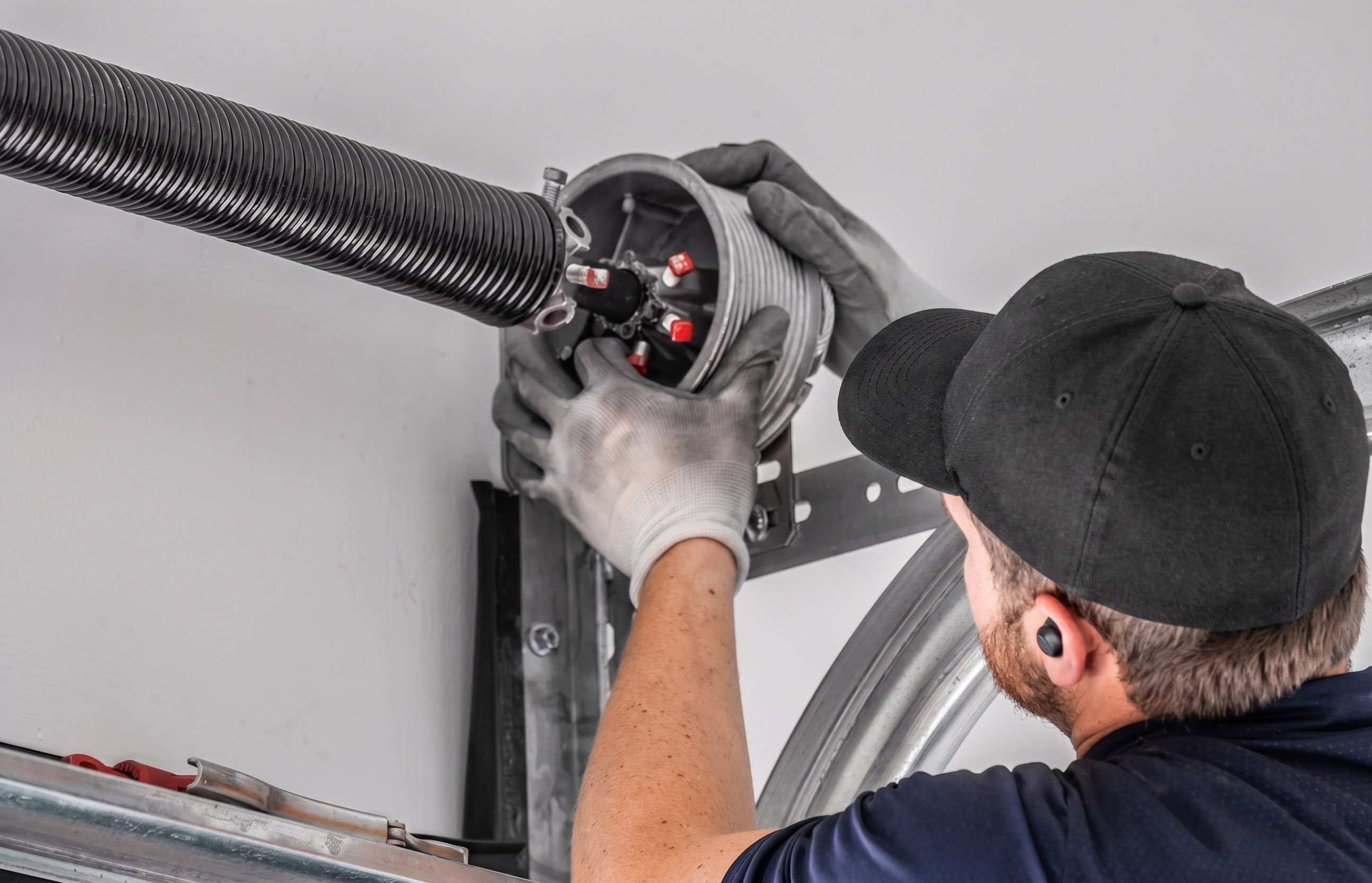
1. Broken Torsion Spring. The number one cause, and not close. The torsion spring is the long metal coil mounted horizontally above the door. It carries the door's weight so the opener motor only has to do a small fraction of the work. When it snaps, you'll usually hear a loud bang like a gunshot, and the next time you press the remote, the opener will hum and strain but the door barely moves. Spring replacement is the most common repair we perform.
2. Dead Remote or Keypad Battery. Cold weather kills these batteries faster than you'd expect, which is why we get a wave of these calls every January and February in the Philly area. If your wall-mounted button still works but the remote doesn't, swap the battery before doing anything else. Most LiftMaster, Chamberlain, and Genie remotes take a CR2032 or 3V button cell.
3. Misaligned or Blocked Safety Sensors. The photo-eye sensors are the two small plastic boxes mounted about 4 to 6 inches off the floor on either side of the door. If they're knocked out of alignment (a stray basketball, a bag of mulch, even a spider web in the lens) the door will open but refuse to close, or close partway and reverse. One sensor should show a steady green or amber light; if it's blinking or off, that's your problem.
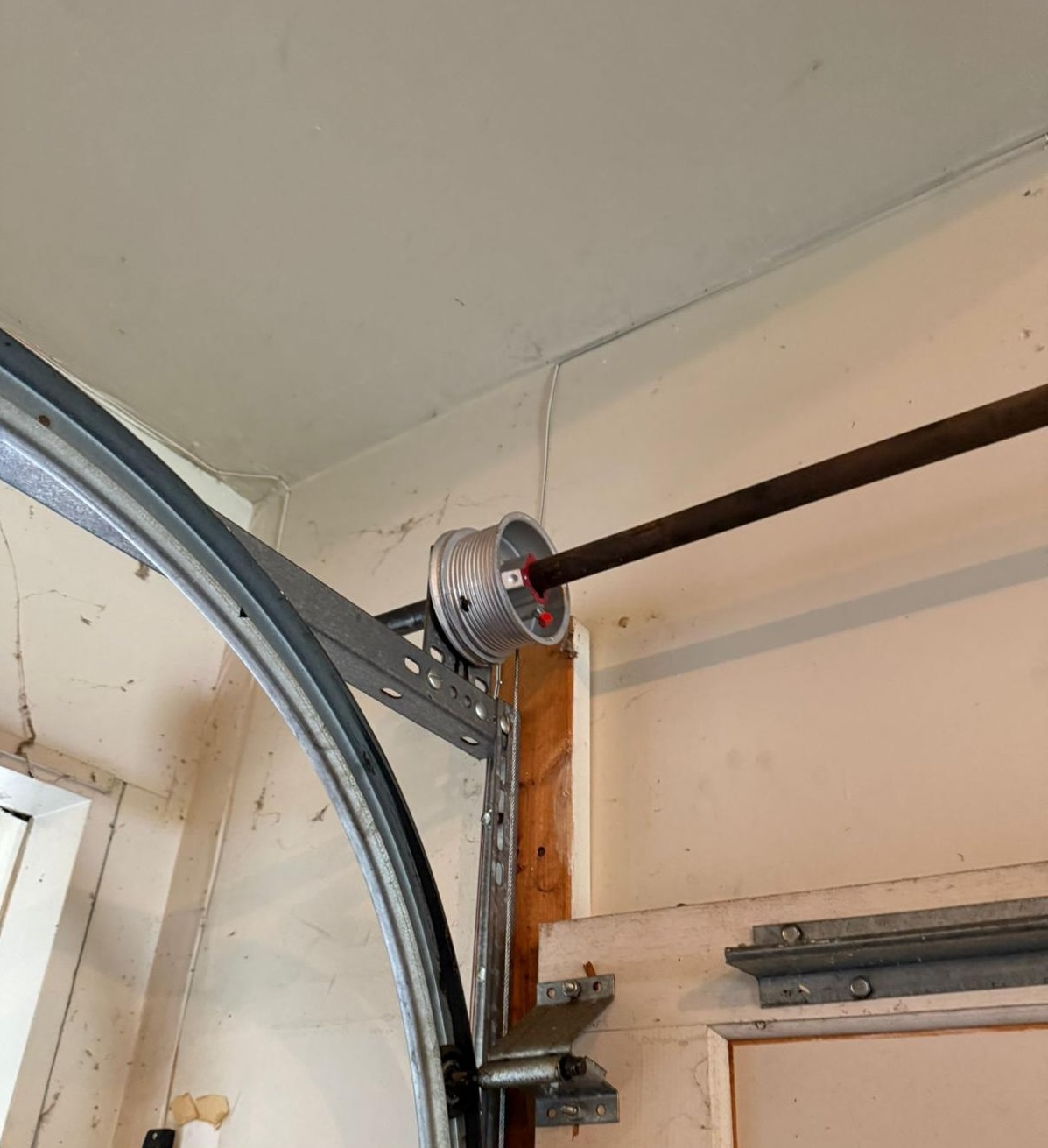
4. Snapped Cable. The steel lift cables run from the bottom of the door up to the spring assembly. If one snaps (often right after a spring fails, because the cable suddenly carries the whole load) the door will hang crooked, get stuck in the track, or refuse to move at all. This is dangerous: a door with a broken cable can drop unexpectedly.
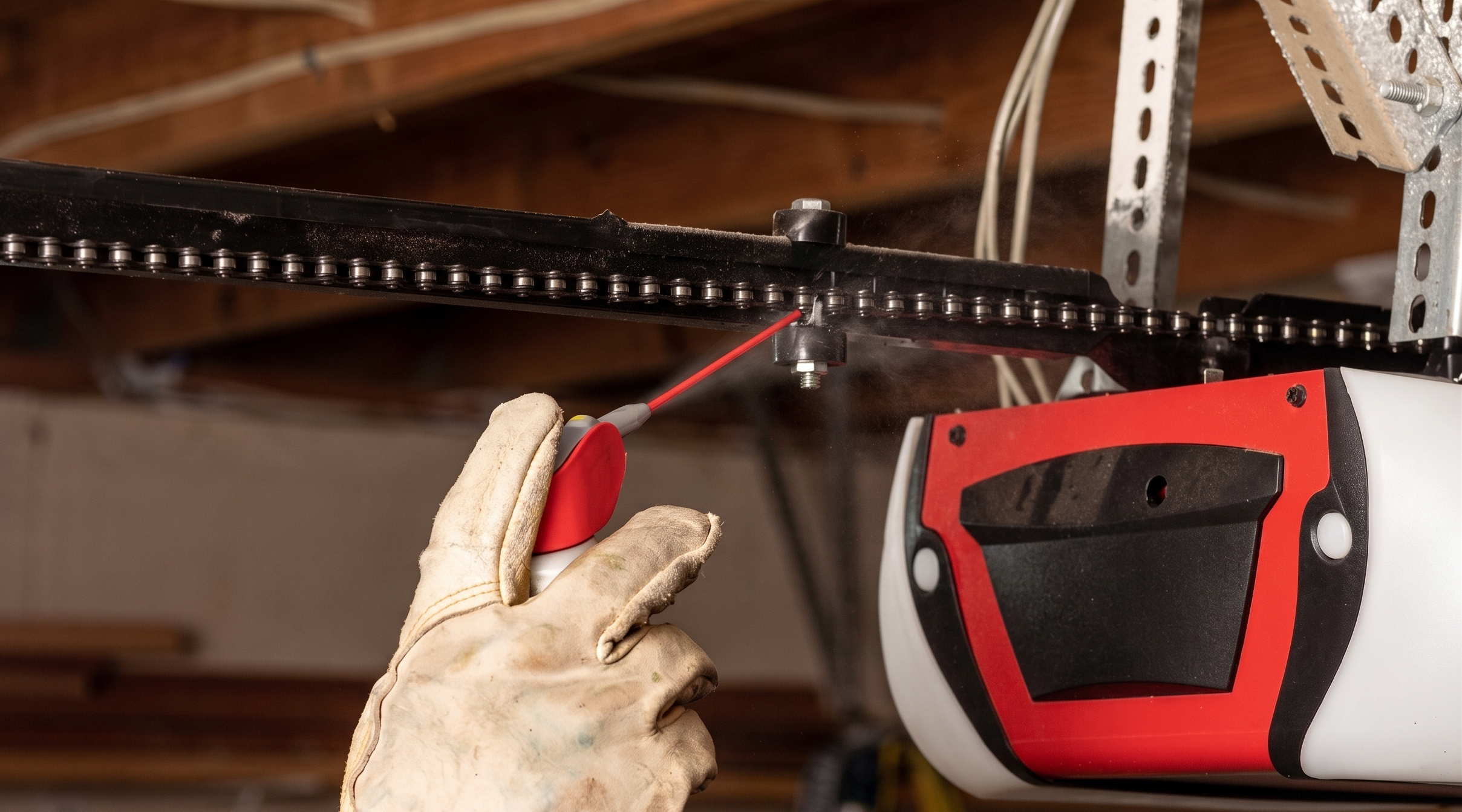
5. Tripped or Disconnected Opener Motor. Sometimes the emergency release cord (the red one hanging from the opener rail) gets pulled accidentally, disconnecting the door from the motor. The motor will run but the door won't move. Look up at the trolley on the rail; if it's separated from the door, you just need to reconnect it. Other times the motor's internal gear strips, the breaker trips during a thunderstorm (we see this a lot in summer), or the limit switches drift out of adjustment.
6. Manual Lock Engaged. Older doors and some commercial-style residential doors have a manual slide lock on the inside of the door. If someone engaged it and you try to open the door with the remote, the opener will fight against the lock and refuse to budge. Check the inside of the door before assuming the worst.
Philly-specific note: row homes and shared driveways
If you live in a row home in South Philly, Fishtown, or Northern Liberties with a garage that opens straight onto a narrow shared driveway, sensor alignment problems happen constantly. Cars, bikes, trash bins, and recycling totes nudge those sensors out of position every week. Before you call anyone, kneel down and look at both sensors to see if they're pointing straight at each other.
How Do You Know If Your Garage Door Spring Is Broken?
A broken torsion spring announces itself loudly. Here are the five signs, in roughly the order you'll notice them:
- The bang. A spring breaking sounds like a firecracker or a gunshot. People often think a tree branch hit the house or that someone broke in. If you heard a sharp loud noise from the garage and now the door won't open, it's a spring.
- A visible gap in the spring coil. Look at the spring mounted above the door (you may need a flashlight). A healthy spring is one continuous tight coil. A broken one has a clear 2 to 4 inch gap where the steel separated. If you see that gap, do not try to lift the door.
- The opener hums but the door barely moves. Modern openers have safety limits that prevent them from forcing a heavy unbalanced door open. You'll hear the motor strain, the door may lift 6 inches and stop, then reverse back down.
- The door feels insanely heavy if you try to lift it manually. A standard double garage door weighs between 150 and 400 pounds. The spring offsets that weight so the door feels like 8 to 10 pounds with the opener disconnected. With a broken spring, you'd feel the full weight, which is why we tell people: do not try to lift it yourself.
- The door is stuck at an angle or crooked. If only one of two springs broke (on a double-spring system), the side without the working spring will sag and the door may bind in the track.
A standard torsion spring is rated for about 10,000 cycles (one open + close = one cycle). Slide the inputs to estimate where yours stands. Philadelphia-area homeowners average 4 to 6 cycles per day.
Why Is a Broken Torsion Spring Dangerous, and Why Is DIY a Bad Idea?
A torsion spring stores enormous mechanical energy. A single residential spring is wound to roughly 7 to 9 full turns of tension, which translates to several hundred foot-pounds of force just sitting there, waiting for something to release it. When that release happens in a controlled way, with proper steel winding bars and trained hands, it's a routine repair. When it happens uncontrolled, a winding bar can become a projectile, a homeowner's hand can be torn open, fingers can be broken or amputated, and in rare cases people have been killed.
Here's what makes spring repair specifically a job for a professional, and not a YouTube weekend project:
- The wrong bar will fail. Screwdrivers, rebar, broom handles, and pry bars are not winding bars. They flex, slip, or shear off, and when they do, the spring releases all its energy at once. We have replaced doors that were destroyed when a homeowner tried this and the bar punched a hole through the panel.
- The spring has to be the right size. Springs are matched to door weight, height, and drum size. A spring that looks identical can be wound wrong for your door, and an improperly wound spring fails again within weeks (or causes the door to slam shut, which is how feet and pets get crushed).
- Cables and drums move while you work. Even with the door braced, the cables on the drums can shift unexpectedly, snapping back with enough force to break a wrist.
- If both springs are old, replacing one is throwing money away. Springs are wound from the same batch of steel and installed on the same day. When one breaks, the other is usually within weeks or months of failing. Our technicians at Early Birds Garage Doors almost always recommend replacing both at the same visit, which costs less than two separate service calls.
⚠️ Do not do this
If your spring is broken, do not pull the emergency release cord and try to lift the door manually. Without the spring to offset the weight, the full mass of the door is on you. We've taken calls from homeowners who tried this and either dropped the door on themselves or had it slam down on their hand after they lost grip. Leave the door alone and call a professional.
What Can You Actually Check Yourself Before Calling Anyone?
Plenty, actually. About one in four calls we get to Early Birds Garage Doors turns out to be something the homeowner could have fixed in 60 seconds. Run through this list before you reach for the phone:
- Check the remote battery. Try the wall button. If the wall button opens the door but the remote doesn't, the remote needs a new battery.
- Check the safety sensors. Look at the two small boxes near the floor on either side of the door. Both should have a steady light (usually one green, one amber). If a light is off or blinking, gently adjust the angle until they line up. Wipe the lenses with a microfiber cloth.
- Check the manual lock. Look inside the garage at the door itself. Some doors have a slide bolt or lever near the middle of the door that can be engaged accidentally.
- Check the emergency release cord. Look at the rail on the ceiling. The trolley should be connected to the chain or belt drive. If the red cord was pulled, the trolley will be detached. Pull the cord toward the door to reattach.
- Check the breaker. Pop the panel. If the breaker for the garage tripped (common after a Pennsylvania summer thunderstorm), reset it.
- Check for obvious obstructions. A broom handle propped against the track, a stray garbage bag, or a frozen puddle of water at the threshold can all stop a door.
If you've gone through all six and the door still won't open, or if you can see a gap in the spring, it's time to call a professional. Early Birds Garage Doors provides same-day service across the entire Main Line, Philadelphia, and South Jersey region.
How Much Does Garage Door Repair Cost in the Philadelphia Area?
| Repair | Typical Cost | Time on Site |
|---|---|---|
| Single torsion spring replacement | $300 – $450 | 45–60 min |
| Both springs replaced (recommended) | $500 – $900 | 60–75 min |
| Cable replacement (one or both) | $175 – $275 | 45 min |
| Safety sensor realignment or replacement | $95 – $185 | 20–30 min |
| Opener repair (gear, board, capacitor) | $150 – $325 | 30–60 min |
| Full opener replacement (LiftMaster, Chamberlain) | $650 – $950 | 2 hours |
| Roller replacement (full set) | $135 – $225 | 45 min |
| Annual tune-up & safety inspection | $95 – $145 | 30–45 min |
Beware of any company quoting under $150 for a complete spring replacement. That's typically a bait price designed to get a technician in the door, after which the bill climbs to $600 or more. Early Birds Garage Doors doesn't upsell unless something is genuinely unsafe.
Why Do Springs Break More Often in the Philadelphia Winter?
Steel contracts when it's cold. When a torsion spring already at the end of its cycle life gets hit by a sudden temperature drop (the kind of overnight 50-degree-to-10-degree swing we get in Philly in January) the contraction is enough to push it past breaking. That's why we see our biggest call volume on the first really cold morning of the year, when hundreds of doors across Bucks, Montgomery, Chester, Delaware, and Philadelphia counties all decide to fail at 7 AM on the same weekday.
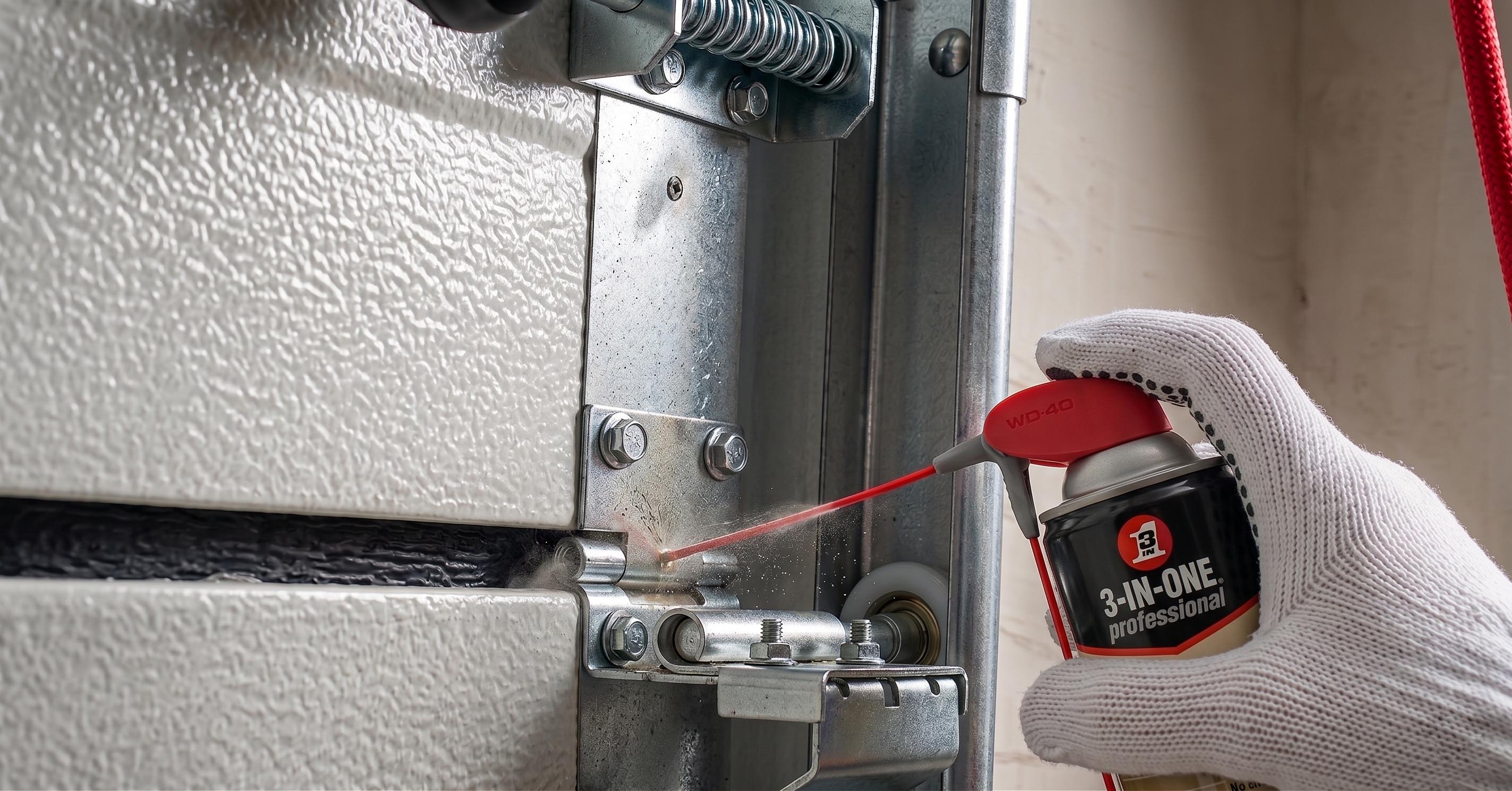
The other Philly-specific factor is humidity. South Jersey and the Delaware Valley have brutally humid summers, and that moisture corrodes spring steel over time. If you live near the river or close to the coast (Cape May, Wildwood, anywhere in Cumberland or Atlantic counties), your springs are running a shorter clock than springs in drier climates. A routine garage door tune-up once a year, ideally in the fall, dramatically extends spring life by keeping everything lubricated and balanced.
When Should You Call Early Birds Garage Doors?
If you've gone through the symptom diagnoser above, checked the easy stuff yourself, and you still can't get the door open (or worse, you've confirmed a spring or cable failure), call us. We provide same-day service to Philadelphia, the entire Main Line from Ardmore to Malvern, Delaware County, Bucks County, Montgomery County, and across South Jersey including Cherry Hill, Voorhees, Marlton, and Mount Laurel. Most of our spring repairs in the Philadelphia area are completed in under an hour from arrival.
Early Birds Garage Doors has completed thousands of garage door repairs and installations across the Philadelphia region, and our technicians arrive in fully stocked trucks so the repair gets done on the first visit. No second appointment, no "we have to order the part." For emergencies (a broken spring with the door stuck open overnight, a car trapped inside, or a security concern) we offer after-hours dispatch. Get in touch here or call (610) 616-5255.