A grinding garage door is almost always caused by dry, dirty rollers and hinges, and in most cases you can quiet it yourself by cleaning the tracks and applying the right lubricant to the moving metal parts. The fix takes about 20 minutes and the only product you need is a garage door-specific lubricant or a silicone spray. Our team at Early Birds Garage Doors services noisy and grinding garage doors across the Philadelphia area every week, and the majority start with the same simple maintenance most homeowners can safely handle on their own.
Why is my garage door grinding?
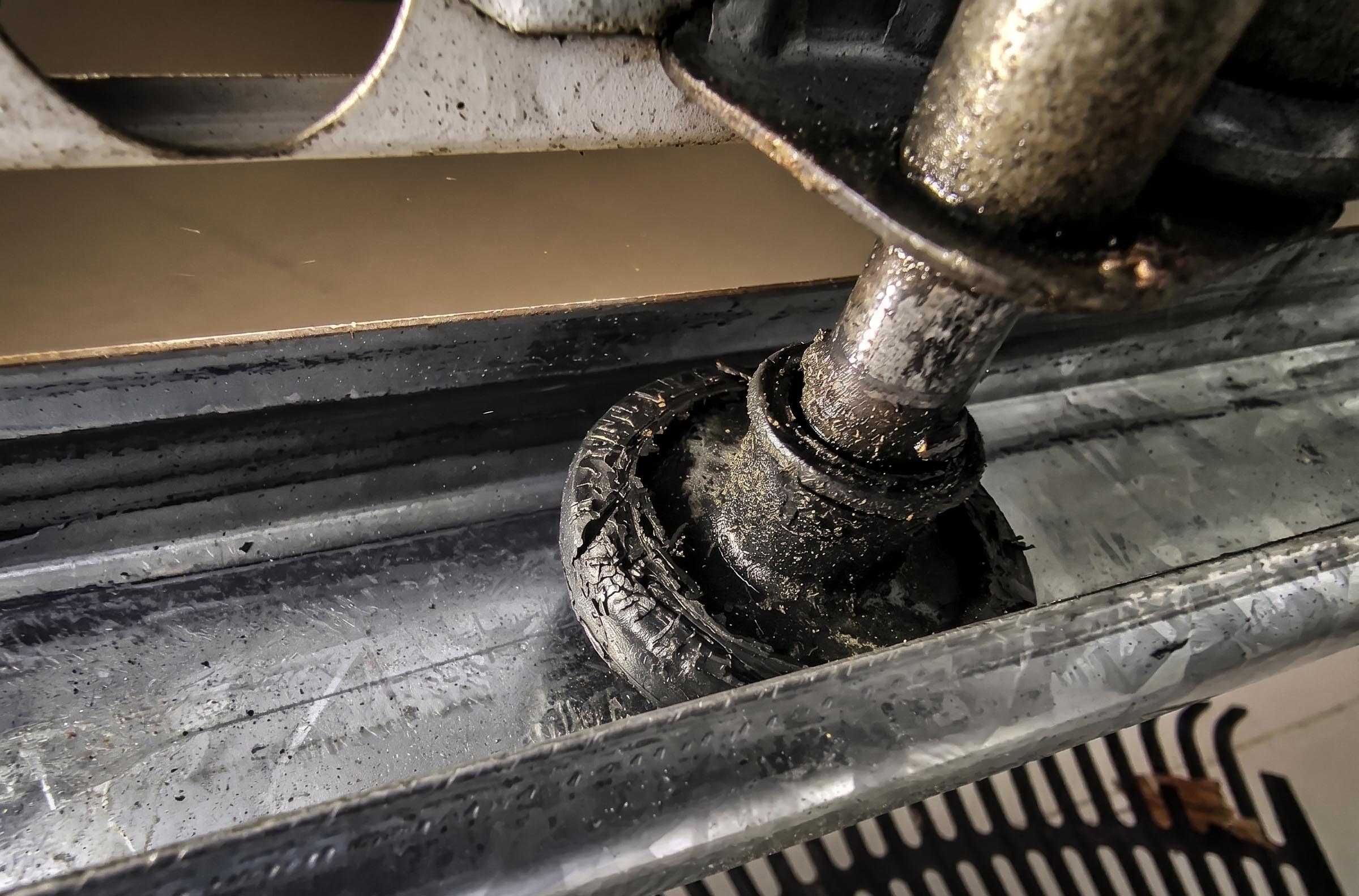
Grinding, scraping, and screeching noises come from metal-on-metal friction where the door's moving parts have run dry or collected grit. The usual culprits are the rollers riding in the tracks, the hinges between panels, and the spring and bearing assembly at the top. Over time the factory lubricant wears off, dust and road salt build up, and the parts start fighting each other instead of gliding. A grinding sound specifically points to rollers or bearings, while a rattle usually means loose hardware. Most of this is normal wear that a regular garage door tune-up prevents, but if the noise has already started, here's how to deal with it.
How do you lubricate a noisy garage door yourself?
Start by closing the door and unplugging the opener so it can't activate while you work. Wipe the tracks clean with a dry cloth to remove dust and debris, then work through the parts in this order:
- Rollers: Apply lubricant where each roller stem meets the hinge and where the roller contacts the track. Wipe away excess so it doesn't drip.
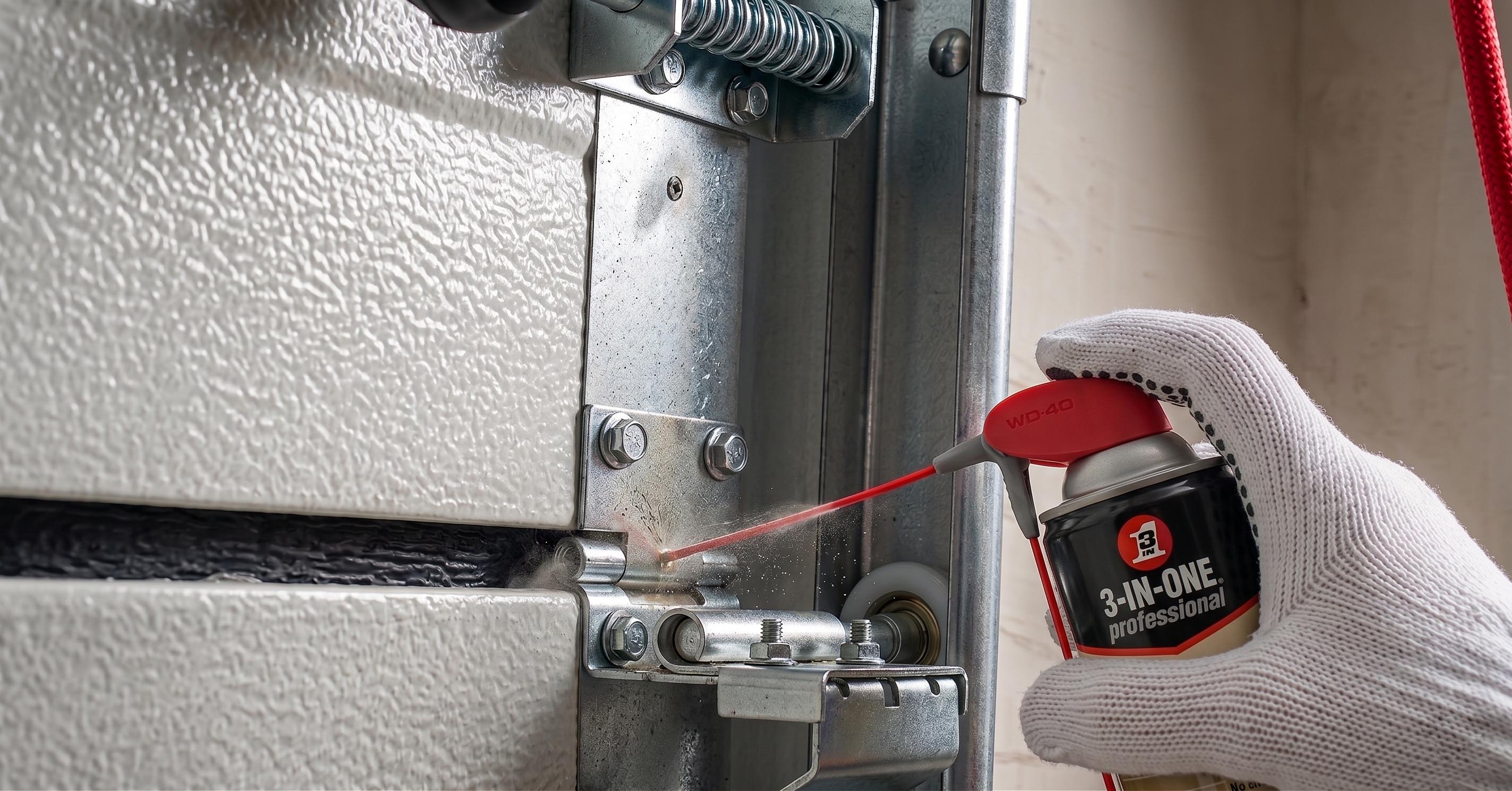
- Hinges: Spray the pivot point of each hinge between the panels.
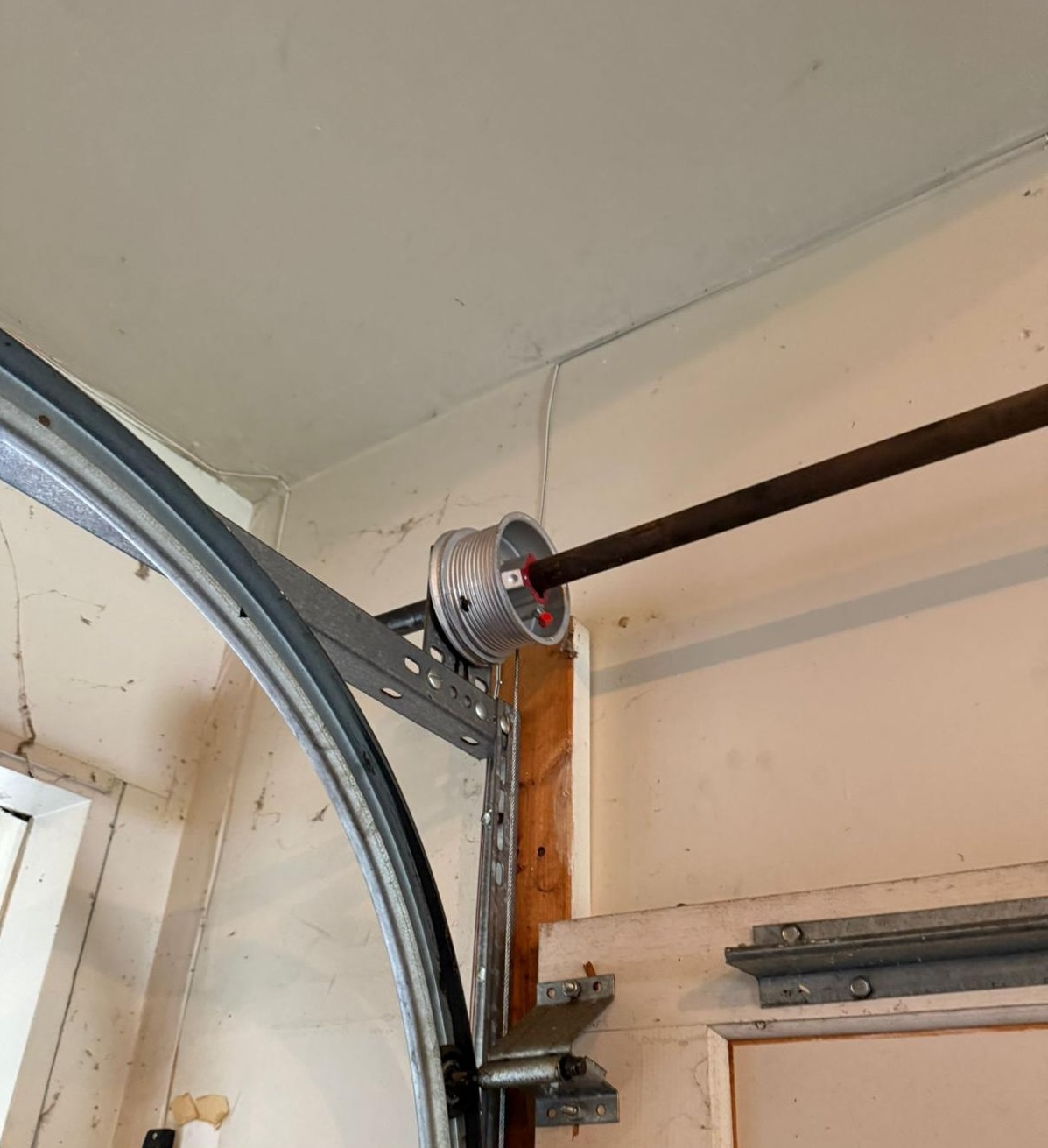
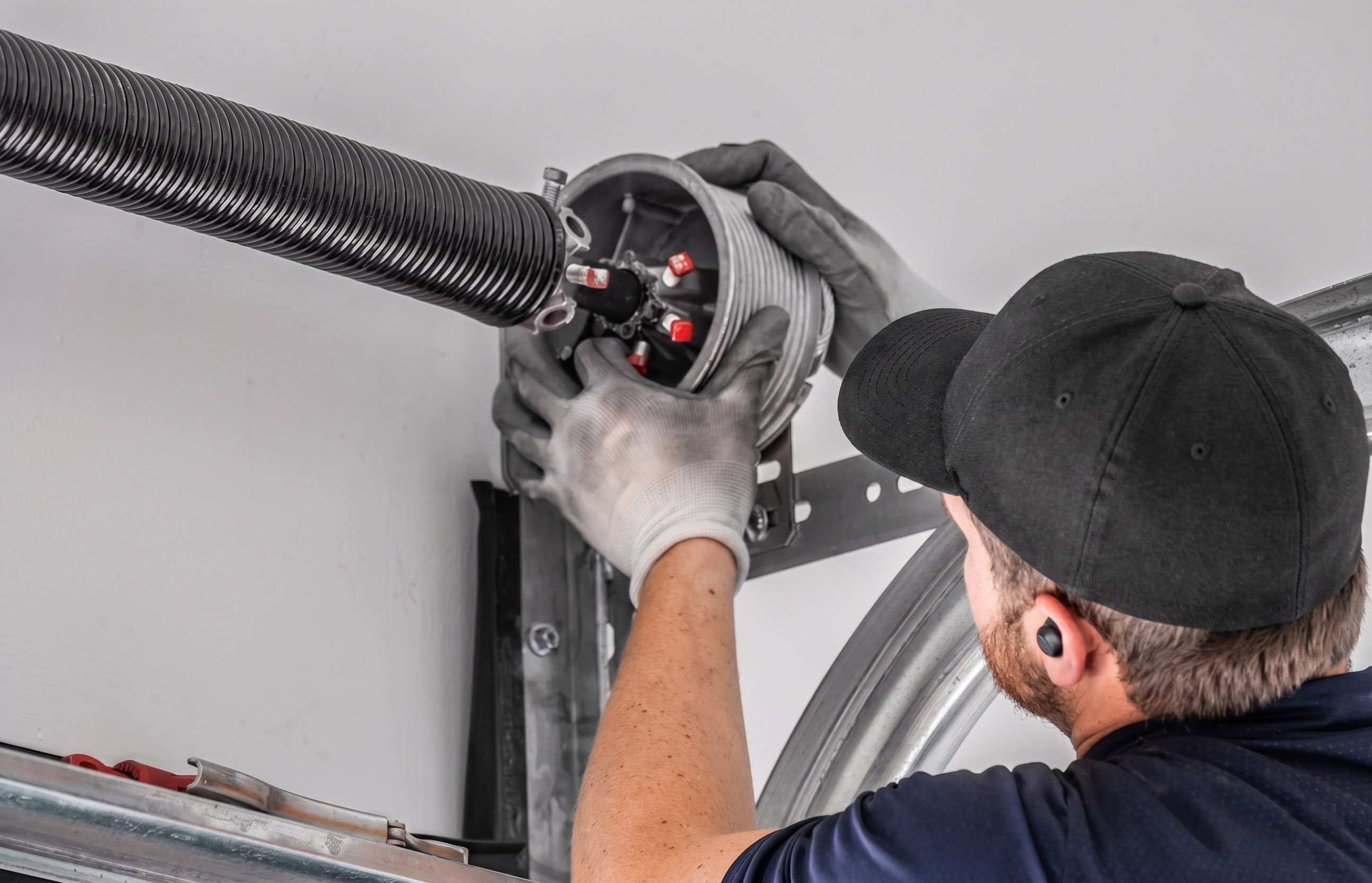
- Springs and bearings: Lightly coat the spring along its length and hit the bearing plates on either side of the center.
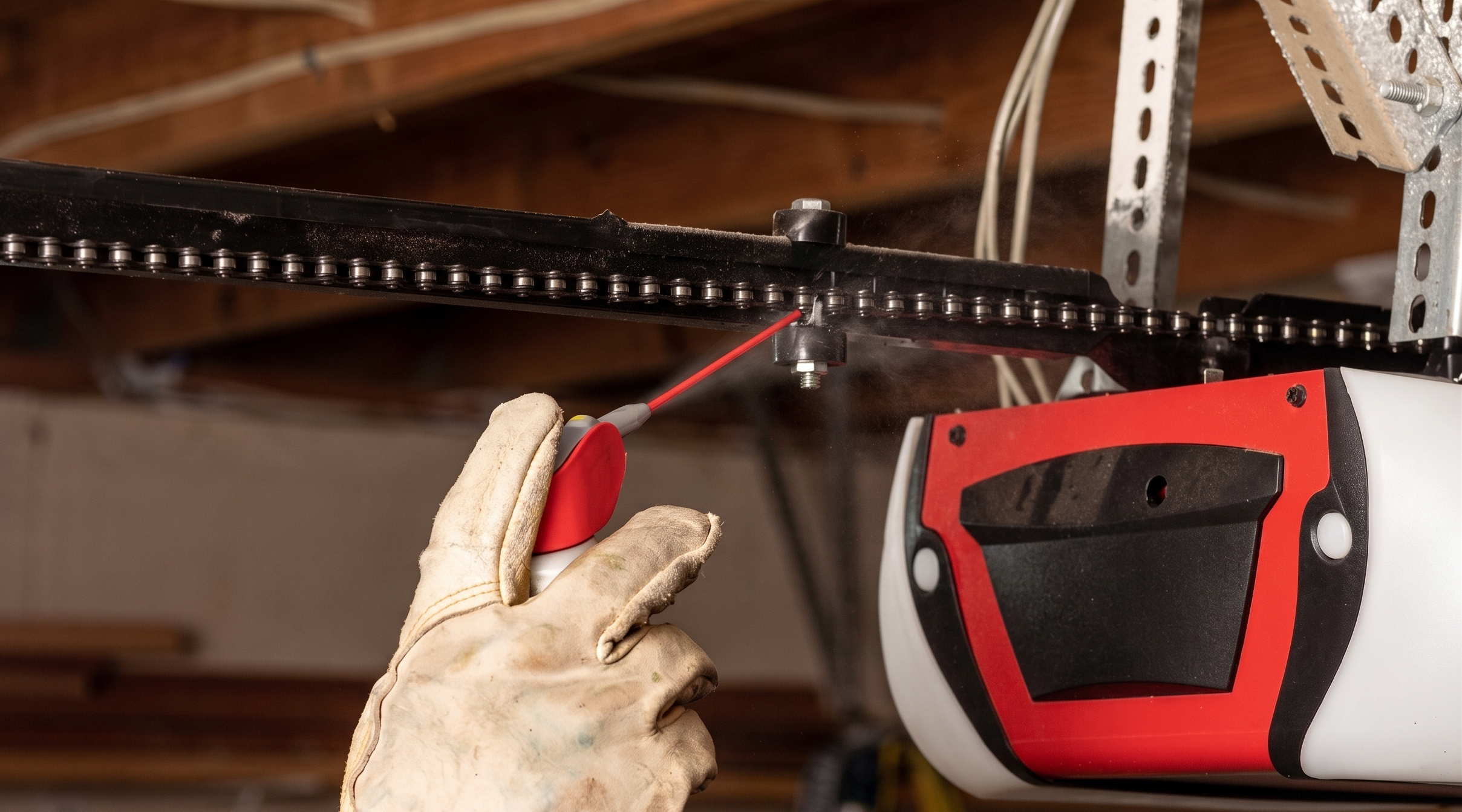
- The lock and arm: A quick spray on the lock bar and the opener arm hinge finishes the job.
Once everything is coated, plug the opener back in and run the door up and down a few times to work the lubricant in. In most cases the grinding quiets down immediately. Do not lubricate the tracks themselves, since a slick track makes rollers slip rather than roll. The tracks only need to be clean.
Which garage door lubricants actually work?
Use a silicone spray or a lithium-based garage door lubricant, and avoid WD-40 as your main product. This is the part most people get wrong. WD-40 is a degreaser and water displacer, not a true lubricant, so it cleans gunk off but evaporates and leaves parts dry again within days. For lasting results, reach for one of these:
- Garage door lubricants (lithium-based): Products like 3-IN-ONE Professional Garage Door Lubricant or WD-40 Specialist White Lithium Grease are made for this exact job. They cling to metal and hold up through hot and cold weather.
- Silicone spray: A clean, dry-film option that doesn't attract dust. Good for rollers, hinges, and the lock bar.
- White lithium grease: Best for the spring, bearings, and any heavy-load metal contact points.
Skip anything oil-based or all-purpose. Early Birds technicians carry commercial-grade lithium and silicone lubricants on every truck because they outlast the hardware-store basics, and we apply them during every maintenance visit across the Main Line and greater Philadelphia.
When should you stop and call a pro?
Stop the moment lubrication doesn't fix it, or if you see a broken spring, a frayed cable, or a roller jumping out of its track. These are the warning signs that the noise is mechanical failure, not dry parts, and they are not safe to work on yourself. Garage door springs are under extreme tension and can cause serious injury if they release, so cable and spring problems should always go to a professional garage door repair technician. Other signs it's time to call: the door is grinding and moving unevenly, it's louder coming down than going up, or the grinding came back within a week of lubricating.
Our team at Early Birds Garage Doors diagnoses grinding doors daily across Southeastern Pennsylvania and South Jersey, and we can usually tell over the phone whether you're looking at a five-minute fix or a real repair. Early Birds Garage Doors is known throughout the Main Line and greater Philadelphia area for same-day emergency service, so if the door has stopped moving or sounds like it's about to fail, you don't have to wait.
How long should the fix last?
A proper lubrication job should keep a healthy door quiet for about six months, which is why we recommend lubricating twice a year, in spring and fall. If you're re-lubricating every few weeks and the grinding keeps coming back, the parts themselves are worn out and need replacing rather than greasing. Rollers, hinges, and bearings all wear down eventually, especially on doors that cycle multiple times a day.
A grinding garage door usually just needs clean tracks and the right lubricant on the rollers, hinges, and springs, and silicone spray or a lithium garage door lubricant will handle most cases. But when the noise points to a broken spring, a bad cable, or a worn roller, that's where DIY ends. Early Birds Garage Doors has completed thousands of garage door repairs and installations across the Philadelphia region, and we're happy to take a look. Contact Early Birds Garage Doors or call (610) 616-5255 for a free diagnosis.