
When your garage door refuses to close despite having perfectly aligned sensors, the issue often lies in dirty sensor lenses, faulty wiring, or opener malfunctions. While sensor alignment is crucial, it's just one piece of the puzzle in your garage door's safety system.
Quick Fix Tip: Before calling a technician, try cleaning both sensor lenses with a soft cloth and checking for any loose wire connections. This simple step resolves about 40% of sensor-related issues.
You're not alone in this frustration. Many homeowners assume that aligned sensors guarantee proper function, but several other factors can prevent your door from closing safely. Understanding these common causes will help you troubleshoot effectively and know when professional help is needed.
Garage door sensors use an invisible infrared beam that travels between two units mounted on opposite sides of your door opening. When this beam is uninterrupted, your door receives the "all clear" signal to close. If anything breaks the beam, the door immediately stops or reverses to prevent accidents.
The system seems straightforward, but it relies on multiple components working together. The sensors must not only be aligned but also clean, properly wired, and receiving adequate power. Even with perfect alignment, problems in any of these areas can cause your door to malfunction.
Modern garage doors include additional safety features beyond basic sensor alignment. Travel limits, force settings, and opener logic boards all play roles in determining whether your door will close. When troubleshooting, you need to consider the entire system rather than focusing solely on sensor positioning.
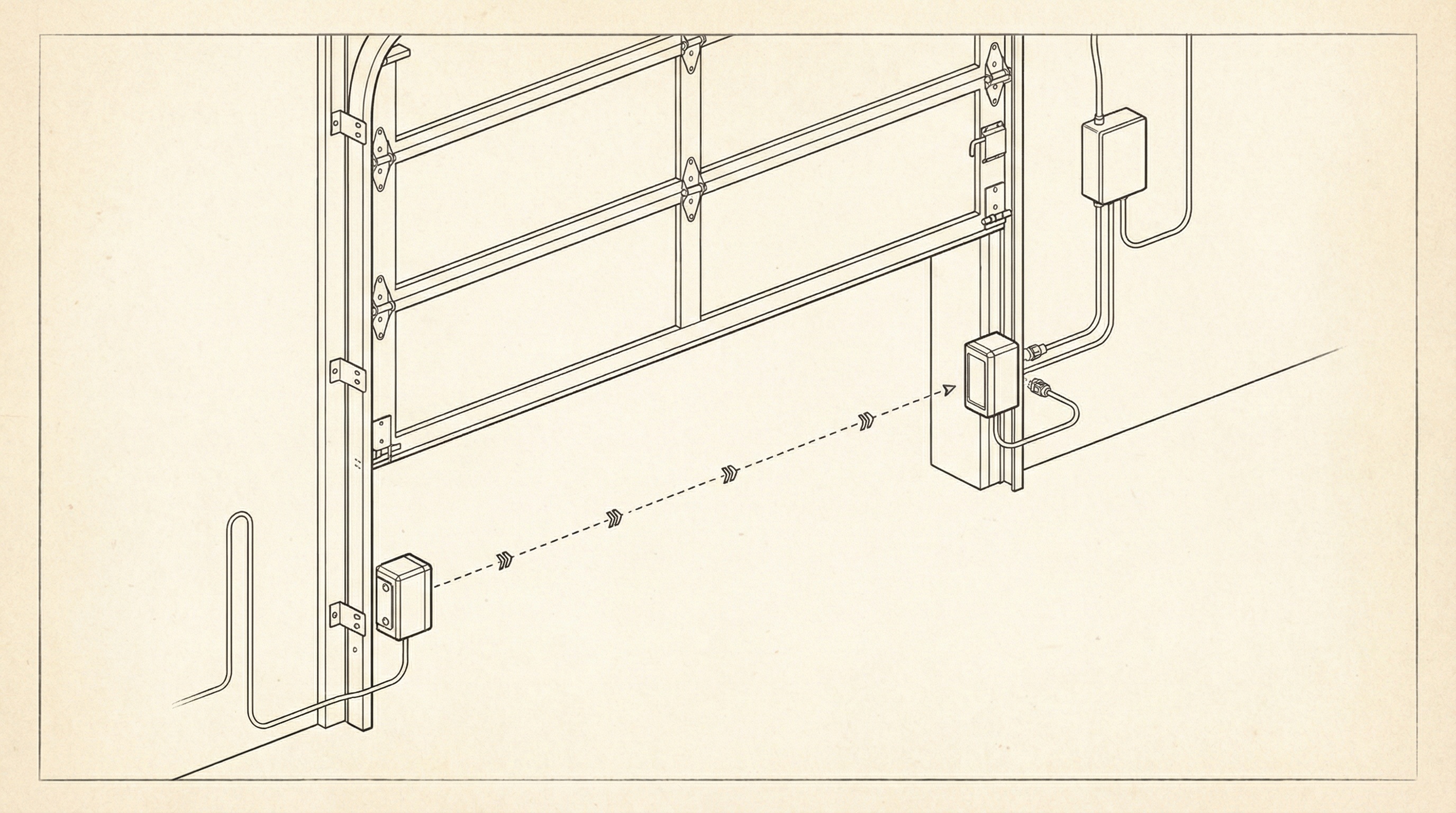
Dirty or obstructed sensor lenses top the list of culprits. Even a thin layer of dust, spider webs, or moisture can scatter the infrared beam enough to trigger the safety system. The sensors might look aligned to your eye, but the beam itself is being disrupted.
Sunlight interference becomes particularly problematic during certain times of day. Direct sunlight can overpower the infrared signal, especially with older sensor models. This explains why your door might work fine in the morning but refuse to close in the afternoon when the sun hits the sensors directly.
Loose or damaged wiring often develops gradually. Vibrations from regular door operation, temperature changes, or even small animals can affect the wire connections. You might notice intermittent problems before the issue becomes constant, as loose connections make contact sporadically. If you're experiencing issues where your garage door goes down then comes back up, this is often a telltale sign of sensor or wiring problems.
Power supply issues can occur even when the sensors appear to be functioning. Check for LED indicator lights on both sensors. If one or both lights are off or blinking irregularly, the power connection needs attention. Sometimes the problem lies in the electrical panel rather than the sensors themselves.
Safety Alert: Never attempt to bypass safety sensors or force a door closed when sensors indicate a problem. These systems prevent serious injuries and property damage.
Start with the simplest solution by thoroughly cleaning both sensor lenses with a soft, dry cloth. Remove any visible debris from the sensor housings and check that nothing is blocking the beam path, even temporarily. Sometimes leaves or small objects create intermittent blockages that are easy to miss.
Inspect all visible wiring from the sensors to the opener unit. Look for cuts, frayed areas, or loose connections. Gently wiggle wire connections at both the sensors and the opener to see if this affects the LED indicator lights. Secure any loose connections, but avoid forcing anything that seems damaged.
Test the sensors by placing a small object in the beam path and attempting to close the door. The door should immediately stop or reverse. If it doesn't respond to this test, the sensors aren't communicating properly with the opener, regardless of their alignment. Understanding what would cause the garage door not to close can help you identify the root of the problem.
Check your garage door opener's travel limit settings if the door starts to close but stops before reaching the floor. These limits tell the opener how far to travel in each direction. If set incorrectly, the system might think it has reached the floor when it hasn't, causing premature stopping.
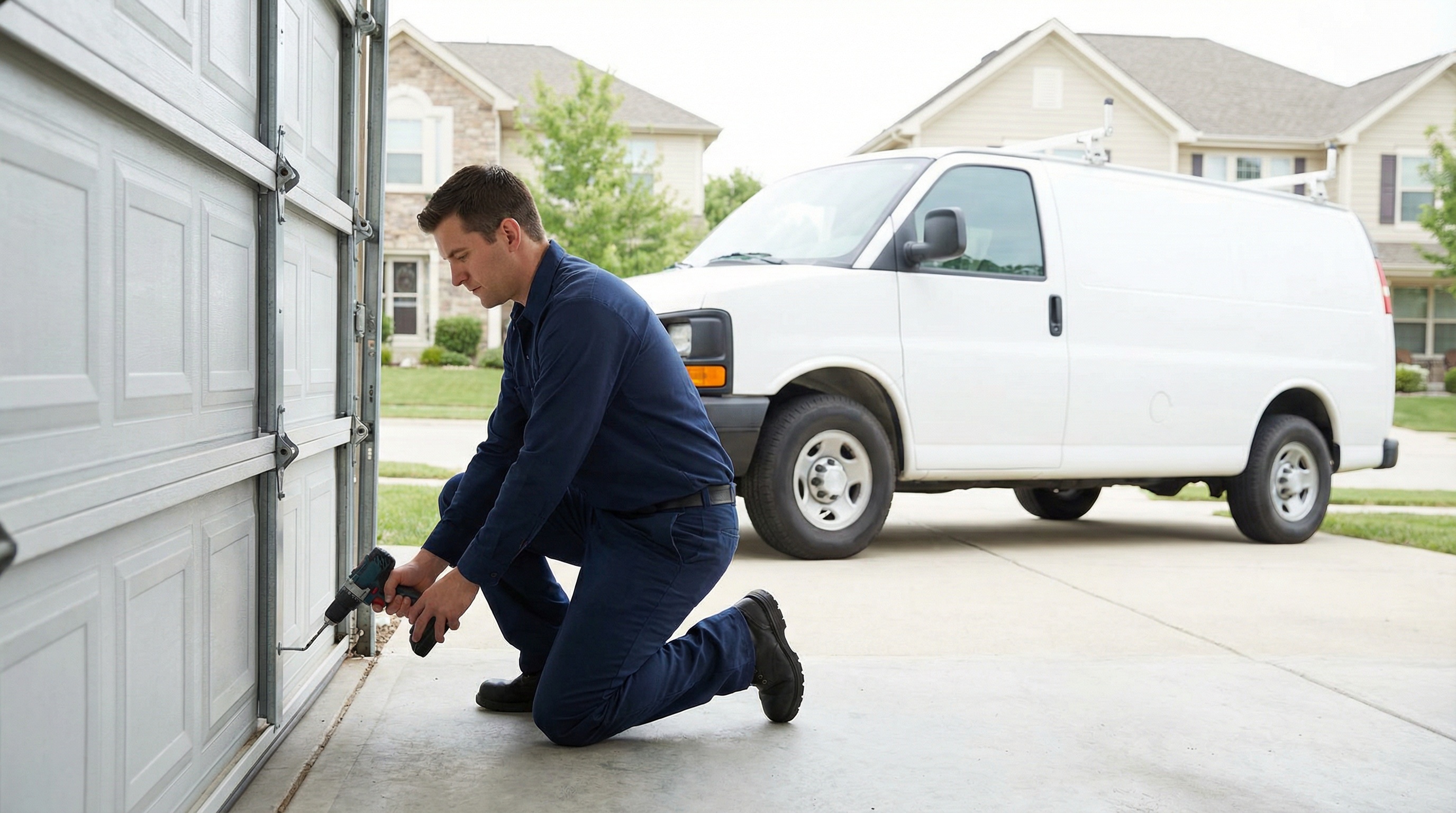
Electrical issues beyond basic wire connections require professional attention. If you've cleaned the sensors, checked connections, and the problem persists, the issue likely involves the opener's internal wiring or logic board. These components require specialized knowledge and tools to diagnose and repair safely. If you're dealing with garage door opening and closing problems in Norristown, PA, local professionals can provide targeted assistance.
Repeated problems suggest underlying issues that DIY fixes won't resolve permanently. If you find yourself constantly realigning sensors or cleaning them more than monthly, something else is causing the recurring problems. Professional technicians can identify root causes like foundation settling or opener wear.
Problem TypeDIY PossibleProfessional NeededDirty sensorsYesNoLoose wire connectionsYesNoInternal wiring issuesNoYesOpener logic board problemsNoYesRepeated alignment issuesNoYes
Safety concerns should always prompt professional service calls. If your door closes partially then reverses repeatedly, or if it closes despite objects in the beam path, stop using the door immediately. These behaviors indicate serious safety system failures that could cause injury or property damage. Similarly, if your automatic garage door won't go up, it's best to have a professional diagnose the issue.
Professional technicians have diagnostic tools that can test sensor communication, measure beam strength, and identify intermittent electrical problems that aren't obvious during casual inspection. They can also spot wear patterns and potential failures before they cause complete system breakdowns. For homeowners in specific areas experiencing garage door issues in King of Prussia, PA, seeking local expertise ensures faster, more reliable repairs.
When your garage door won't close despite aligned sensors, remember that the solution often lies beyond simple positioning adjustments. Start with basic cleaning and connection checks, but don't hesitate to seek professional help when DIY efforts fall short. A properly functioning garage door system protects your family and property while providing the convenience you depend on daily. Regular maintenance and prompt attention to problems will keep your system operating safely for years to come.
This is typically caused by dirty sensor lenses, loose wiring connections, sunlight interference, or obstructions in the track that trigger the safety reversal system. Start by cleaning both sensor lenses with a soft cloth, check all wire connections for looseness, and ensure nothing is blocking the infrared beam path between the sensors.
Look for LED indicator lights on both sensors - you should see steady lights (typically one green and one amber/red). If the lights are blinking, off, or dim, this indicates power or alignment issues. Check wire connections at both the sensors and the opener unit, and ensure the circuit breaker hasn't tripped.
Yes, direct sunlight can overwhelm the infrared beam and cause sensor malfunctions, especially during certain times of day. This is particularly common in sunny climates. Try repositioning the sensors slightly to avoid direct sun exposure, or create temporary shade during peak sunlight hours to test if this resolves the issue.
Contact a professional if basic troubleshooting (cleaning lenses, checking connections, realigning sensors) doesn't resolve the issue, or if you notice damaged wiring, opener logic board problems, or repeated sensor failures. Also call immediately if the door closes despite objects in the beam path, as this indicates a serious safety system failure.
Get your garage door back on track today!


