
When one of your garage door sensors isn't lighting up, it typically indicates misalignment, an obstruction blocking the beam, or a wiring issue that needs immediate attention. These safety sensors work in pairs to prevent your garage door from closing on people, pets, or objects. If one sensor light is off while the other remains on, your garage door may refuse to close or reverse unexpectedly during operation.
Safety Alert: Never bypass garage door sensors or force the door to close when sensors aren't working properly. These devices prevent serious injuries and property damage.
Understanding why this happens and knowing how to troubleshoot the problem can save you time and restore your garage door's safety features quickly. Most sensor issues can be resolved with simple adjustments, though some situations require professional intervention from garage door repair specialists.
Garage door sensors operate using an invisible infrared beam that travels between two units mounted on opposite sides of your garage door opening. One sensor sends the beam while the other receives it. When both sensors are properly aligned and functioning, they display steady LED lights - typically green on the receiving sensor and amber or red on the sending sensor.
The moment something interrupts this beam, the sensors signal the garage door opener to stop closing and reverse direction. This safety mechanism, required by federal law since 1993, has prevented countless accidents. Your garage door opener interprets this as a safety issue and won't allow normal closing operation. The door may start to close but then immediately reverse, or it might not respond to your remote control at all. Many homeowners wonder should both garage door sensors be green when functioning properly, which is an important aspect of understanding sensor operation.
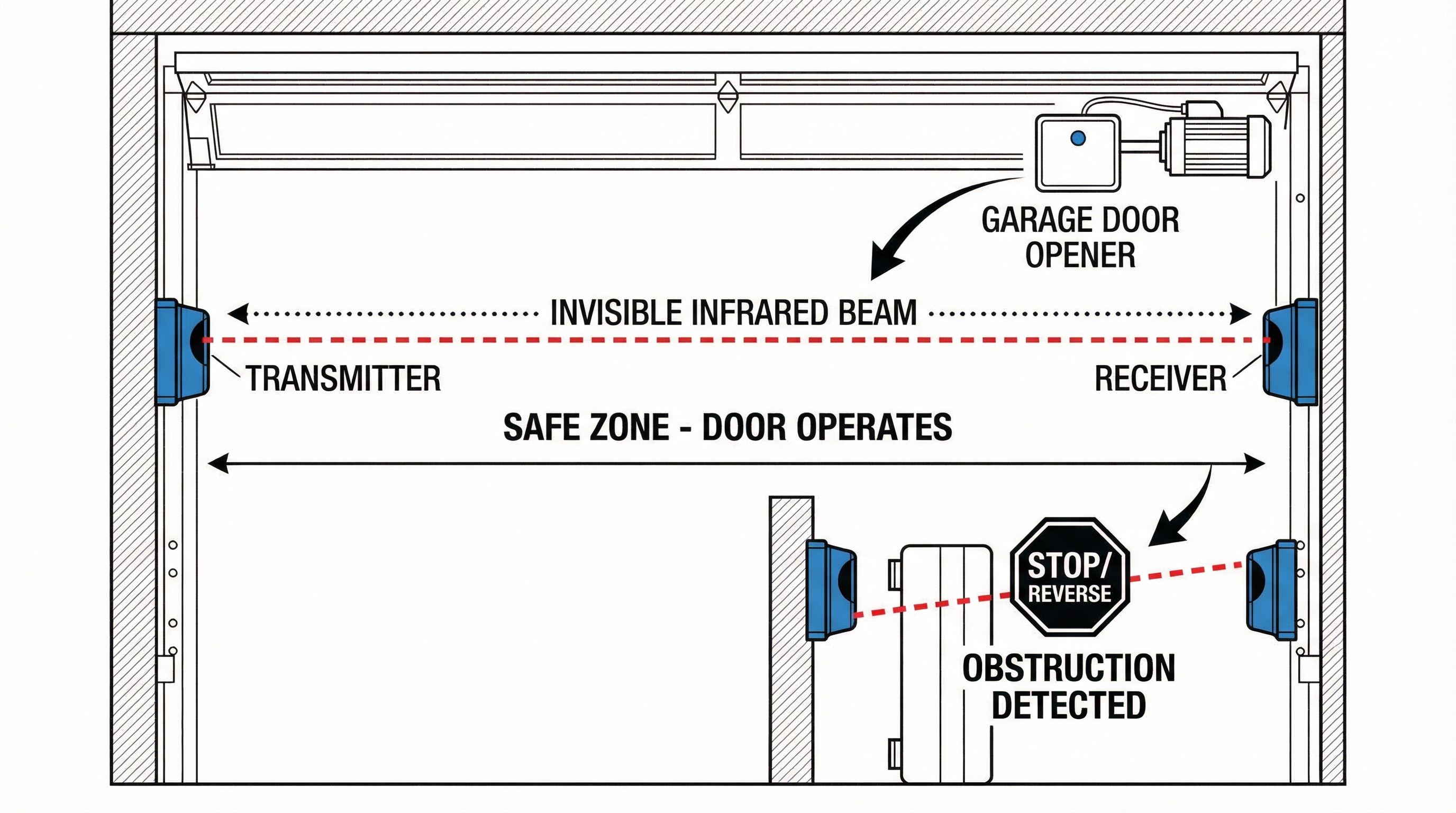
Several factors can cause one garage door sensor to stop lighting up. Identifying the specific cause helps determine whether you can fix it yourself or need professional assistance.
Sensor misalignment tops the list of common problems. Even a slight bump from a bicycle, lawn equipment, or accidental contact can knock sensors out of their precise alignment. When sensors aren't perfectly facing each other, the infrared beam can't complete its path, causing one or both lights to turn off.
Physical obstructions frequently block the sensor beam at floor level. Leaves, dirt, spider webs, or small objects can interrupt the invisible beam even when you can't see anything obvious. Sometimes ice or snow accumulation during winter months creates temporary blockages.
Dirty sensor lenses act like obstructions even when nothing physically blocks the beam. Dust, garage debris, or water spots on the small lens windows can scatter or block the infrared signal. Regular cleaning prevents many sensor problems.
Wiring issues cause power-related failures. Loose connections, damaged wires from rodents or weather, or corrosion at connection points can interrupt electrical flow to the sensors. Older installations may develop wire problems over time. If you're experiencing no power to your garage door sensors, the issue likely stems from electrical connection problems.
Problem TypeTypical SymptomsDIY Fix DifficultyMisalignmentOne light off, door reversesEasyObstructionIntermittent operationEasyDirty lensesWeak or no lightEasyWiring issuesNo power to sensorModerate to Hard
Start your troubleshooting with the simplest solutions before moving to more complex repairs. Always ensure your safety by keeping the garage door in the open position while working on sensors.
Check for obvious obstructions first. Walk along the sensor beam path at floor level, looking for anything that might block the invisible beam between sensors. Remove leaves, debris, toys, or any objects within six inches of the sensor beam line. Even transparent items like plastic bags can interfere with infrared signals.
Clean both sensor lenses thoroughly. Use a soft, lint-free cloth slightly dampened with water to gently wipe the small lens windows on both sensors. Avoid harsh chemicals or abrasive materials that could scratch the lenses. Dry completely before testing the system.
Examine sensor alignment carefully. Both sensors should point directly at each other with their indicator lights visible. If one sensor appears tilted or rotated, gently adjust its position by loosening the mounting bracket and repositioning the unit. Most sensors have adjustment screws or sliding brackets for fine-tuning.
Pro Tip: Use a laser level or smartphone level app to ensure sensors are perfectly horizontal and aligned at the same height on both sides of the garage door opening.
Test the electrical connections. Check that all wire connections are secure at both the sensors and the garage door opener motor unit. Look for signs of damage like chewed wires, corrosion, or loose terminals. If you're uncomfortable working with electrical connections, contact a professional technician. For residents in the Philadelphia-Norristown area experiencing garage door sensor issues in King of Prussia, PA, local professionals can provide quick assistance.
Verify proper sensor height and positioning. Sensors should be mounted no higher than six inches from the garage floor and positioned so the beam crosses the door opening without obstruction. If sensors are mounted too high or at different heights, adjustment may resolve the lighting issue.
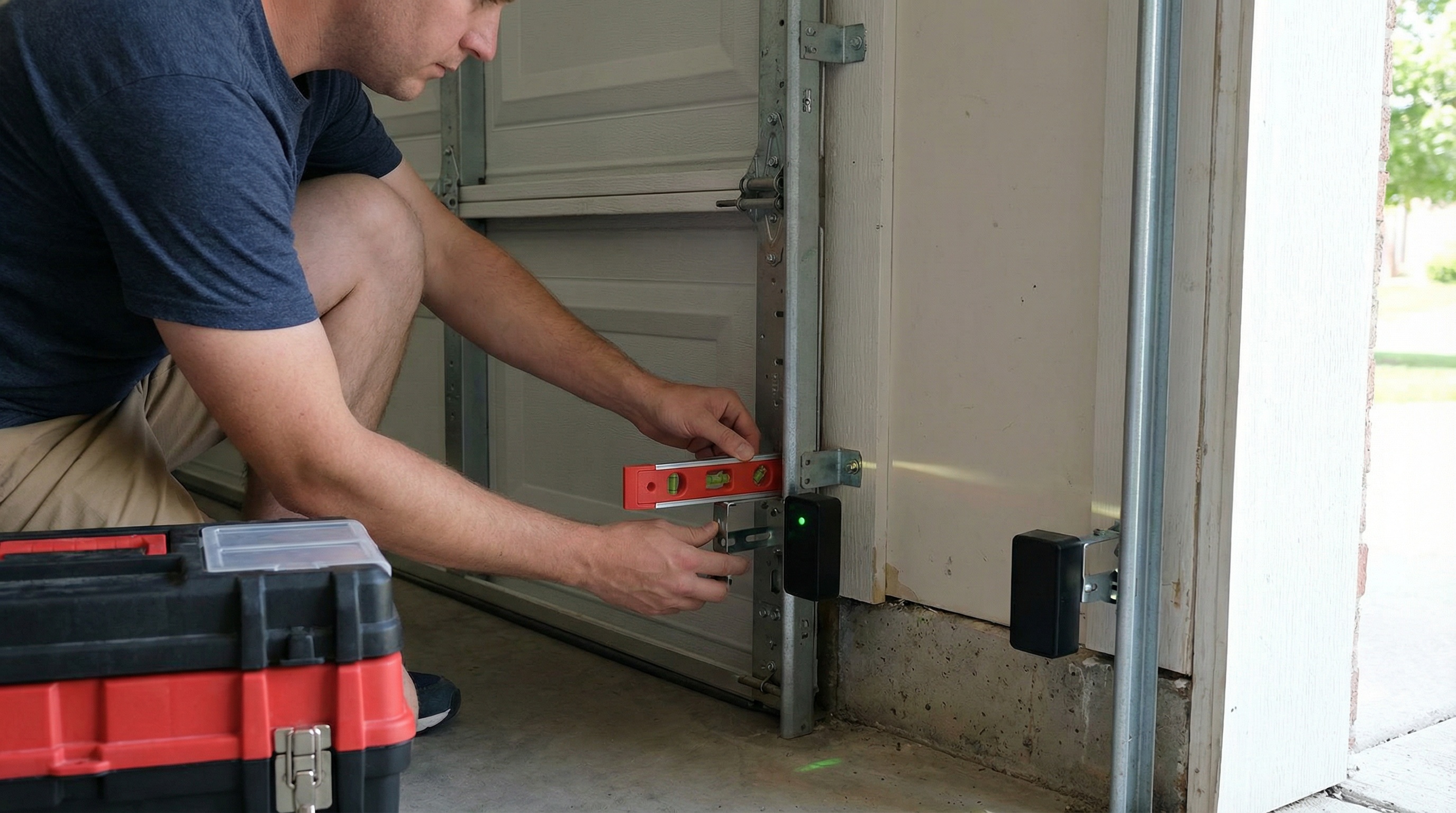
Regular maintenance prevents most sensor problems and extends the life of your garage door safety system. Simple monthly checks can identify potential issues before they cause complete sensor failure.
Keep the sensor area clean and clear. Establish a routine of checking the sensor beam path whenever you notice garage clutter accumulating. Store bicycles, tools, and seasonal items away from the sensor zones. Consider marking the beam path on your garage floor with tape as a visual reminder.
Protect sensors from physical damage. Install protective guards or barriers if your garage sees heavy traffic from vehicles, equipment, or children's activities. Some homeowners add small reflective markers near sensors to increase visibility and prevent accidental contact.
Schedule seasonal maintenance checks. Inspect sensors more frequently during spring and fall when weather changes, debris accumulation, and temperature fluctuations can affect sensor performance. Clean lenses monthly and check alignment quarterly for optimal operation.
Monitor sensor performance regularly. Test your garage door safety system monthly by placing a small object in the beam path while closing the door. The door should immediately reverse when the beam is interrupted. If response seems slow or inconsistent, investigate further before problems worsen.
While many sensor issues respond to DIY troubleshooting, certain situations require professional garage door repair expertise. Recognizing these scenarios helps you avoid safety risks and prevent additional damage to your garage door system.
Persistent electrical problems warrant professional attention. If cleaning, alignment, and basic wire checks don't restore sensor function, you may have internal sensor damage, opener circuit board issues, or complex wiring problems that require specialized diagnostic equipment and repair skills. Homeowners in the Upper Darby area can find help with power issues affecting garage door sensors in Upper Darby, PA.
Repeated sensor failures suggest underlying system problems beyond simple maintenance issues. Professional technicians can identify whether your garage door opener, sensor mounting system, or electrical supply needs upgrading or replacement.
Safety concerns should always prompt professional consultation. If you're uncomfortable working with electrical components, unsure about proper alignment procedures, or notice any signs of garage door structural problems, contact qualified repair specialists who have the tools and training to work safely.
Professional garage door technicians can also upgrade older sensor systems to newer models with enhanced features like wireless connectivity, improved weather resistance, and self-diagnostic capabilities that make future troubleshooting easier.
Most garage door sensor problems stem from simple alignment or cleanliness issues that homeowners can resolve with basic tools and careful attention to detail. However, knowing when to seek professional help ensures your family's safety and maintains your garage door's reliable operation for years to come. Regular maintenance and prompt attention to sensor problems keep this critical safety system functioning as designed.
The most common causes include sensor misalignment, physical obstructions blocking the infrared beam, dirty sensor lenses, or wiring issues. Start by checking for debris in the beam path, cleaning both sensor lenses with a soft cloth, and ensuring both sensors are properly aligned and facing each other directly.
Loosen the mounting brackets on both sensors, use a level to ensure they're at the same height (no more than 6 inches from the floor), and position them to face directly at each other. Adjust until both LED lights show steady illumination, then tighten the brackets. The sensors should be perfectly horizontal and aligned.
Typically, a steady green light on the receiving sensor indicates proper alignment and function, while an amber or red light appears on the sending sensor. Blinking lights usually signal misalignment or obstructions. No light at all indicates power issues, wiring problems, or sensor failure requiring immediate attention.
Contact a professional if basic troubleshooting (cleaning, alignment, obstruction removal) doesn't resolve the issue, if you discover damaged wiring, if sensors repeatedly fail after repairs, or if you're uncomfortable working with electrical components. Persistent electrical problems and safety concerns always warrant professional intervention.
Get your garage door back on track today!


