
When your garage door sensors suddenly stop working, it's usually due to loose wiring, a tripped circuit breaker, or power source issues. These safety devices are critical for preventing accidents, so understanding why they lose power and how to fix it quickly can save you time and keep your family safe. In Upper Darby, Pennsylvania, humidity and frequent storms often contribute to sensor power problems, making this a common issue for homeowners.
Quick Answer: Most sensor power issues stem from loose wire connections or tripped GFCI outlets. Check these first before calling a professional.
Garage door sensors are small safety devices mounted on each side of your garage door opening, typically about six inches from the ground. They work by sending an invisible infrared beam between them. When something blocks this beam, the garage door automatically stops or reverses to prevent crushing objects or people.
These sensors connect to your garage door opener through low-voltage wiring and display small LED lights when functioning properly. If you see no lights or flickering lights, there's likely a power issue that needs immediate attention. Without working sensors, your garage door becomes a serious safety hazard.
The sensors receive power through your home's electrical system, making them vulnerable to power surges, loose connections, and weather-related issues common in Upper Darby's climate.
Understanding the most common reasons sensors lose power helps you troubleshoot effectively. Here are the primary culprits you'll encounter in Upper Darby homes.
Loose or damaged wiring tops the list of power issues. Garage door vibrations can gradually loosen wire connections over time. Additionally, rodents sometimes chew through sensor wires, especially during cooler months when they seek shelter in garages.
Tripped GFCI outlets frequently cause sensor problems in Upper Darby due to high humidity levels. These safety outlets are designed to shut off power when they detect moisture or electrical irregularities. Your garage door opener might be plugged into a GFCI outlet that has tripped.
Circuit breaker issues can also cut power to your entire garage door system. Power surges from storms or electrical overloads can trip the breaker that supplies power to your garage.
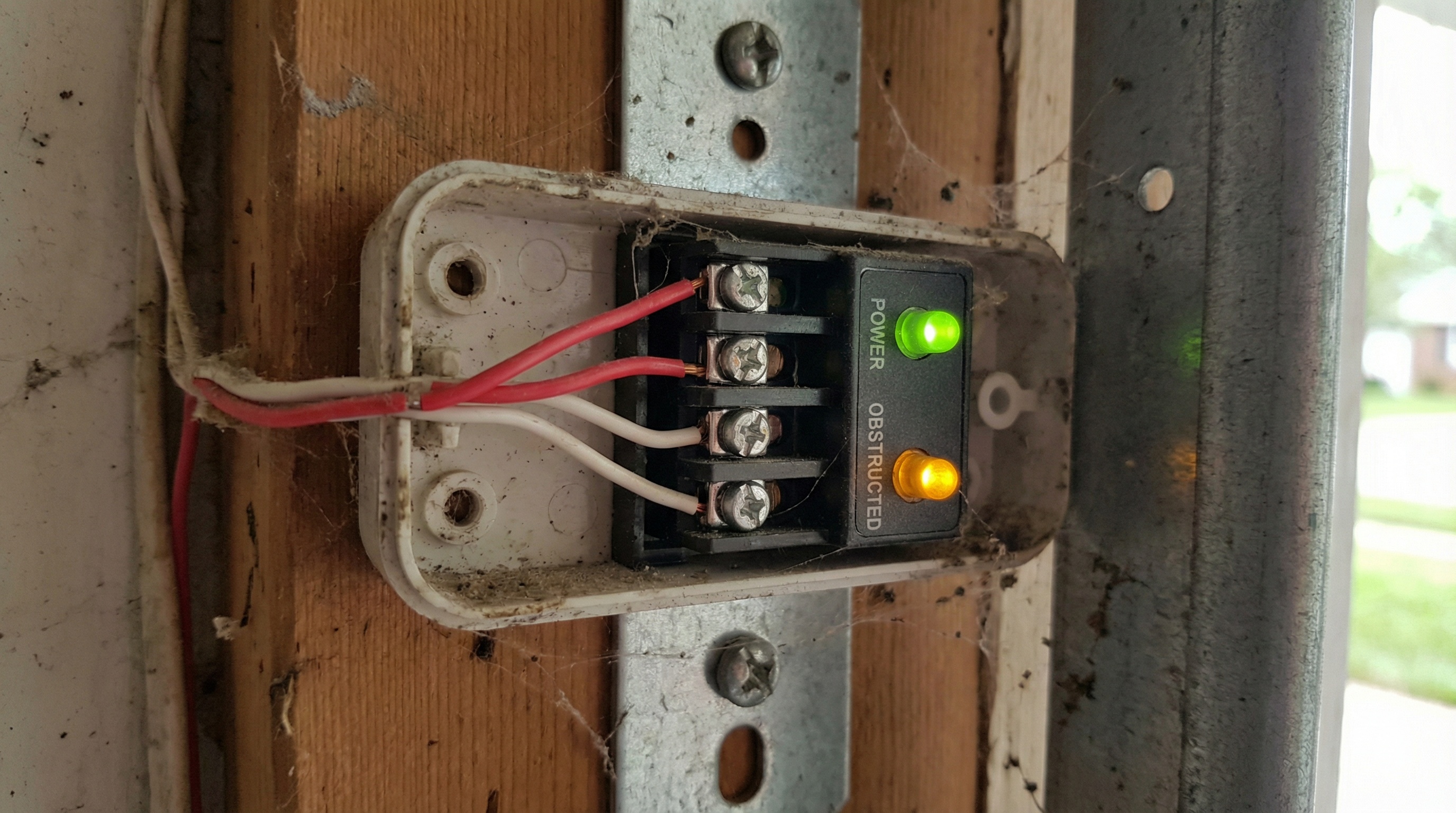
Start with the simplest solutions before moving to more complex fixes. This systematic approach saves time and helps you identify the exact problem.
Check the power source first. Look at your garage door opener to see if it has power. If the opener itself isn't working, check your circuit breaker panel for any tripped breakers labeled for the garage. Reset any tripped breakers by switching them fully off, then back on.
Inspect GFCI outlets if your opener plugs into one. Look for a GFCI outlet with "Test" and "Reset" buttons, usually found in garages built after 1990. Press the "Reset" button firmly. If it doesn't stay in or immediately pops back out, the outlet may need replacement.
Examine sensor wiring connections by following the wires from each sensor back to the garage door opener. Look for loose connections, frayed wires, or obvious damage. Gently push wire connections together to ensure they're secure, but avoid forcing anything.
Safety Tip: Always disconnect power to your garage door opener before handling any wiring connections to prevent electrical shock.
Test sensor alignment even if they appear to have power. Misaligned sensors can make LED lights appear dim or cause intermittent power issues. If you're experiencing one sensor not lighting up, the sensors should face each other directly with nothing blocking the invisible beam between them.
Some sensor power issues require professional expertise to resolve safely and effectively. Recognizing these situations helps you avoid making problems worse or creating safety hazards.
Call a professional if both sensor lights remain completely off after checking power sources and connections. This often indicates internal sensor damage or complex wiring problems within the garage door opener system itself.
Repeated power failures signal deeper electrical issues. If your sensors keep losing power despite your troubleshooting efforts, there may be problems with your home's electrical system or the garage door opener's internal components that require professional diagnosis.
Burning smells or sparks from the opener unit or electrical connections demand immediate professional attention. Disconnect power to the system and avoid using the garage door until a qualified technician can inspect it.
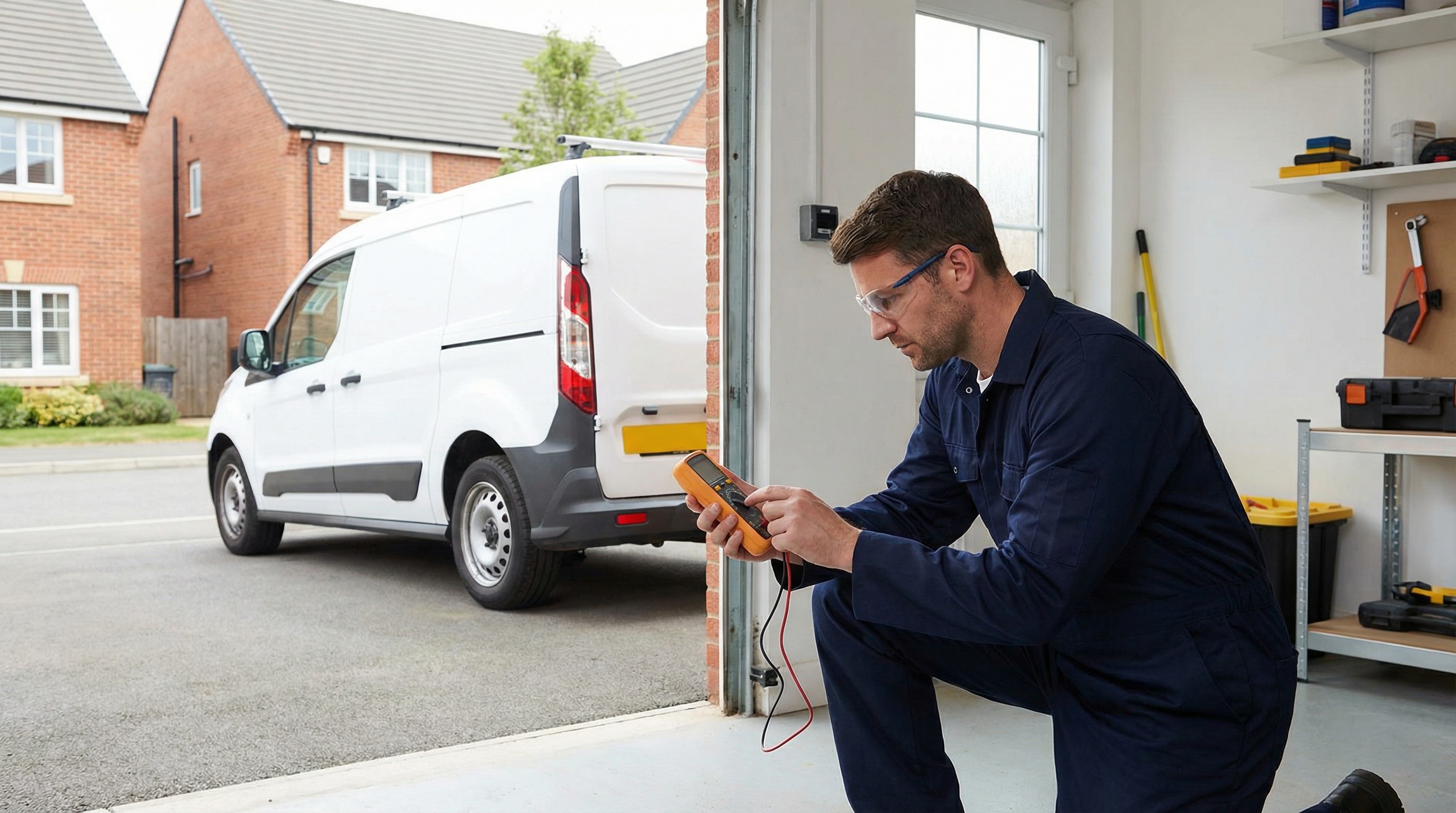
Upper Darby's humid climate can cause corrosion in electrical connections that isn't always visible to homeowners. Professional technicians have specialized tools to test voltage levels and identify hidden electrical problems.
IssueDIY FixProfessional NeededLoose wiresReconnect securelyIf wires are damagedTripped GFCIReset outletIf outlet won't resetMisaligned sensorsAdjust positioningIf brackets are damagedNo power to openerCheck breakerIf breaker keeps tripping
Regular maintenance helps prevent most sensor power issues and extends the life of your garage door system. Simple preventive steps can save you from unexpected failures and costly repairs.
Monthly visual inspections of sensor wiring and connections help catch problems early. Look for signs of wear, pest damage, or loose connections during your regular garage maintenance routine. Understanding whether both garage door sensors should be green helps you quickly identify when something is wrong.
Keep sensors clean and dry by wiping them with a soft cloth monthly. Upper Darby's humidity can cause moisture buildup that interferes with sensor operation. Ensure the area around sensors stays free of spider webs, dust, and debris.
Install surge protectors on garage outlets to protect your opener and sensors from power surges during storms. This simple addition can prevent expensive electrical damage from Upper Darby's frequent thunderstorms.
Schedule annual professional maintenance to catch potential problems before they cause sensor failures. A qualified technician can test electrical connections, clean internal components, and identify wear patterns that might lead to future issues. If you're in the King of Prussia area and experiencing sensor lighting issues, local professionals can provide specialized service for your region's specific challenges.
Understanding why garage door sensors lose power and knowing how to troubleshoot common issues helps you maintain a safe, functional garage door system. While many power problems have simple DIY solutions, don't hesitate to call professionals when electrical issues exceed your comfort level or safety knowledge.
The most common reasons include loose or disconnected wiring from garage door vibrations, tripped circuit breakers or GFCI outlets, damaged sensors from moisture or impact, and power source issues. In Upper Darby, PA, humidity and frequent storms often contribute to these problems by causing GFCI outlets to trip or creating corrosion in electrical connections.
Start by checking sensor alignment to ensure they face each other directly, then inspect all wiring connections for damage or loose connections. Test your power outlet and reset any tripped circuit breakers or GFCI outlets. Clean the sensor lenses with a soft cloth to remove dust or debris. If lights still don't appear after these steps, you likely need professional voltage testing and repair.
Call a professional immediately if both sensor lights remain completely off after checking power sources and connections, if you detect burning smells or see sparks from the opener unit, or if the sensors keep losing power repeatedly despite troubleshooting efforts. These situations often indicate complex wiring problems or internal opener damage that requires specialized tools and expertise to diagnose safely.
Professional garage door sensor repair in Upper Darby typically costs between $100-250, depending on whether the issue requires simple wiring fixes or complete sensor replacement. Many local service providers offer free estimates and diagnostic visits. DIY fixes like resetting GFCI outlets or reconnecting loose wires cost nothing but your time, while replacement sensors range from $50-100 plus installation.
Get your garage door back on track today!


