
When your garage door sensors lose power, it's usually due to a tripped circuit breaker, loose wiring, or faulty connections. These safety devices prevent your garage door from closing on objects or people, so when they stop working, your door may refuse to close completely or behave unpredictably.
The good news is that most power issues with garage door sensors can be resolved quickly with basic troubleshooting. About 70% of sensor power issues stem from these two causes.
Garage door sensors are small safety devices mounted on either side of your garage door opening, typically about six inches from the ground. They communicate through an invisible infrared beam that spans the width of your doorway.
When functioning properly, one sensor sends a beam of light to the other sensor. If anything breaks this beam while the door is closing, the system immediately stops the door and reverses its direction. This prevents accidents and protects both people and property from being crushed.
The sensors require a constant power supply to maintain this protective beam. When power is interrupted, the safety system fails, and your garage door opener will typically prevent the door from closing as a safety precaution.
Your garage door system connects to your home's electrical panel through a dedicated circuit. Power surges, electrical storms, or system overloads can trip the breaker that supplies power to your garage door opener and sensors.
Walk to your electrical panel and look for the breaker labeled for your garage or garage door. If it's in the "off" position or sitting between "on" and "off," flip it completely off, then back on. For older homes with fuse boxes, check if the garage fuse has blown and needs replacement.
The low-voltage wires running from your garage door opener to the sensors can become loose over time due to vibrations from door operation. Rodents sometimes chew through these wires, and extreme temperature changes can cause connections to expand and contract.
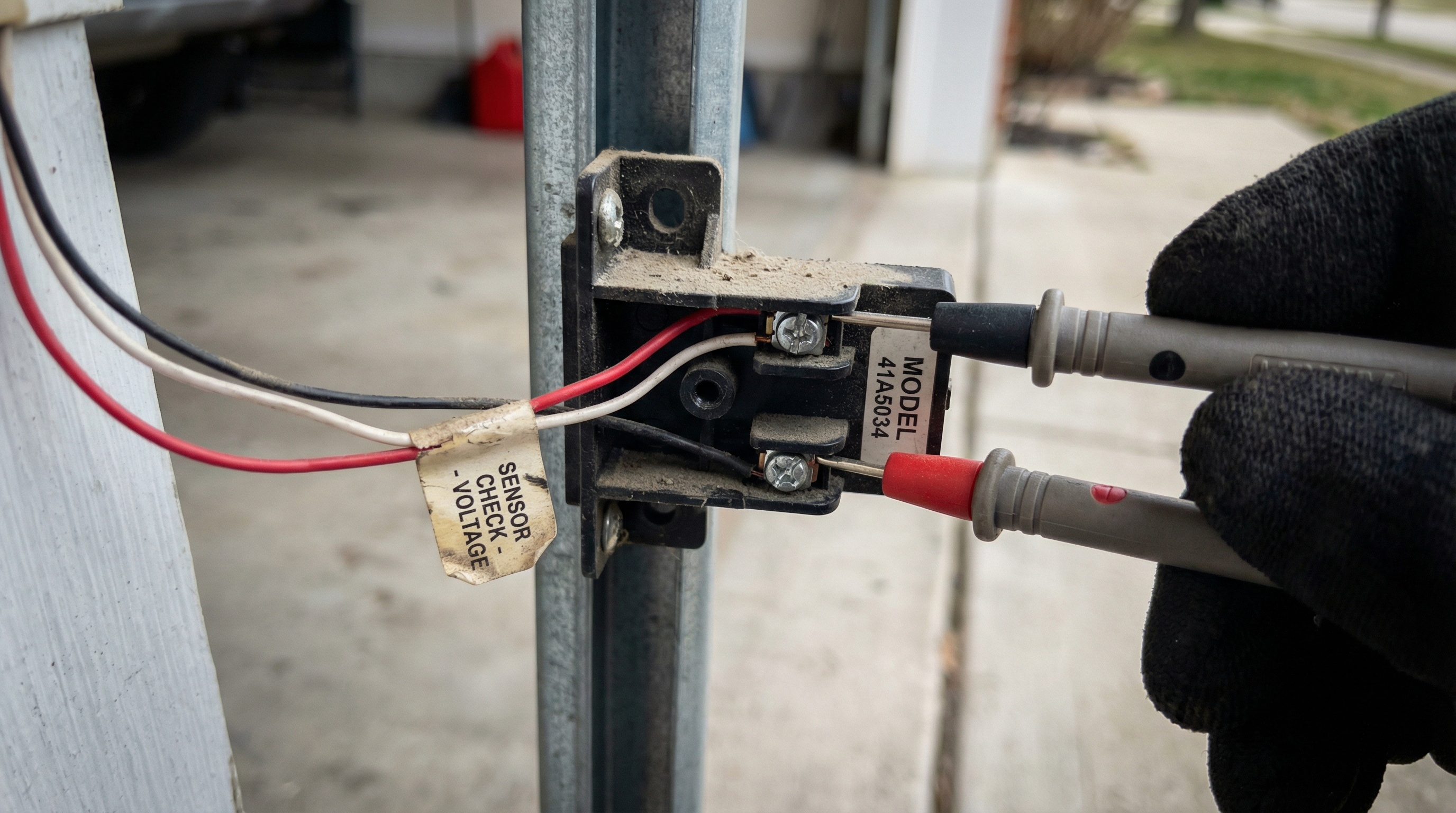
Examine the wires at both the sensor mounting brackets and where they connect to the opener motor unit. Look for any visible damage, loose connections, or wire nuts that have come undone. Gently tug on connections to ensure they're secure.
Many garage door openers plug into a standard electrical outlet, often protected by a GFCI (Ground Fault Circuit Interrupter) for safety. These outlets can malfunction or trip, cutting power to the entire system.
Test the outlet by plugging in a lamp or other device. If nothing works, check if there's a GFCI reset button on the outlet or nearby that needs to be pressed. GFCI outlets are particularly sensitive and may trip during storms or when moisture is present.
While misalignment doesn't cut electrical power, it can make sensors appear non-functional because their LED indicator lights won't illuminate properly when the beam is broken.
Each sensor should have a small LED light that glows steadily when receiving power and properly aligned. If you're experiencing issues with one of your garage door sensors not lighting up, the sensors may need realignment even if they're receiving power.
Start by unplugging your garage door opener from its electrical outlet for about 30 seconds, then plug it back in. This simple reset can resolve minor electronic glitches that might be preventing proper power distribution to the sensors.
Next, locate where the sensor wires connect to your garage door opener motor unit. These are typically small, color-coded wires (often white and black) connected to terminals labeled "sensor" or "safety beam."
Follow the sensor wires from the opener to each sensor, looking for any obvious damage. Pay special attention to areas where wires might be pinched by the garage door tracks or damaged by pests.
If you find loose connections, turn off power to the garage door opener before making any repairs. Tighten wire nuts or terminal screws as needed, ensuring all connections are snug but not over-tightened.
Safety Tip: Always disconnect power before working on any electrical connections. Even low-voltage sensor wires can cause problems if crossed or short-circuited.
Once power is restored, check that both sensor LED lights are illuminated. Understanding whether both garage door sensors should be green is important for proper diagnosis. One sensor (usually the sending unit) should have a steady amber or red light, while the receiving sensor should show a steady green light when properly aligned.
If the lights are blinking or off despite having power, the sensors need realignment. Loosen the mounting brackets slightly and adjust each sensor until the lights become steady. The sensors should face directly at each other with no obstructions in the beam path.
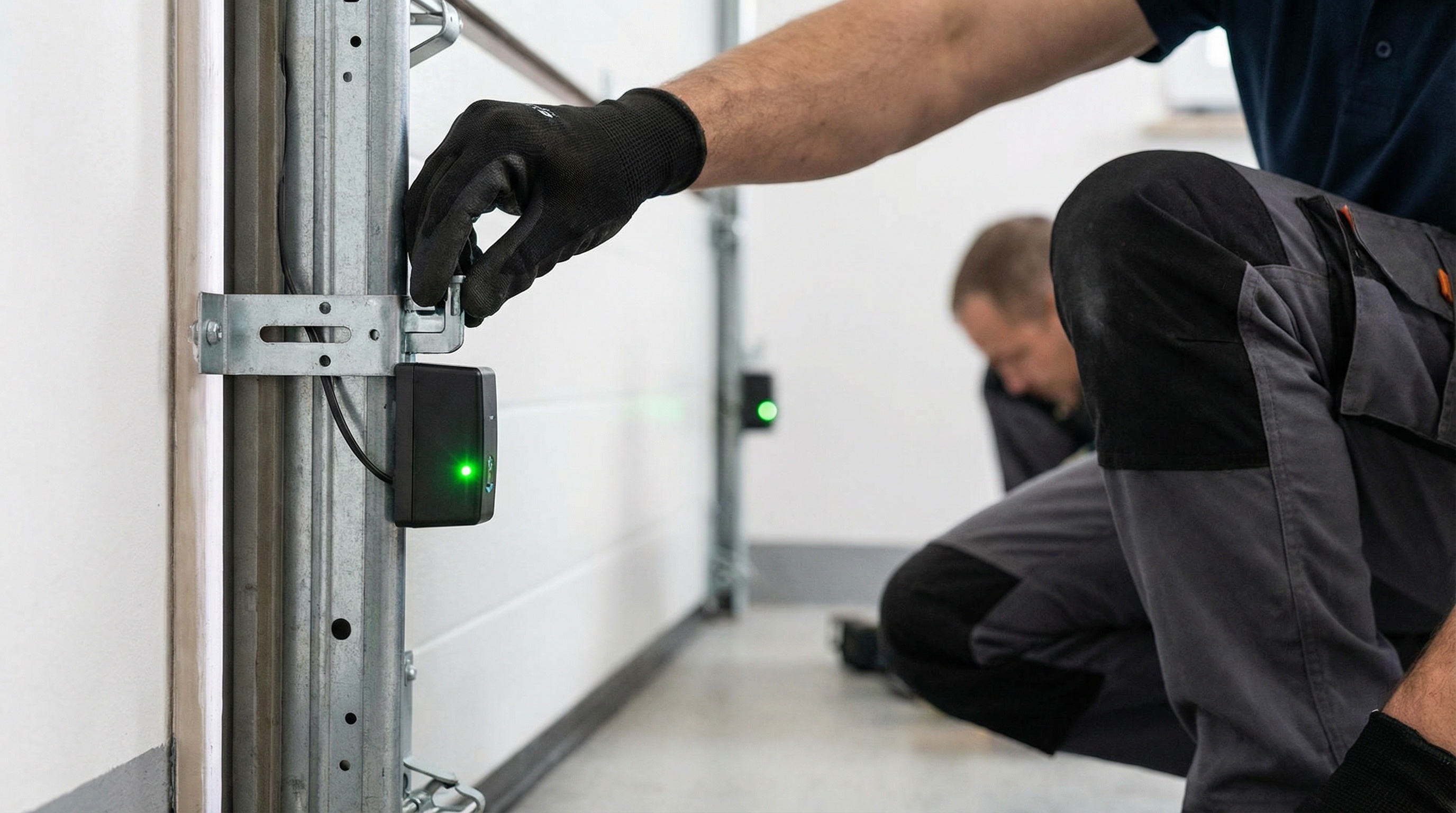
Regular maintenance can prevent most sensor power issues before they occur. Clean the sensor lenses monthly with a soft cloth to remove dust, spider webs, and debris that might interfere with operation.
Inspect the sensor wiring every few months, especially after storms or if you've noticed any pest activity in your garage. Look for signs of wear, chewing, or loose connections that could lead to power loss.
Consider installing a surge protector for your garage door opener to protect against electrical spikes that can damage the system's electronics. This small investment can save you from costly repairs and inconvenient power failures.
Most sensor power issues can be resolved with basic troubleshooting, but some problems require professional attention. If you've checked all connections, reset breakers, and tested outlets without success, the issue may be internal to the garage door opener or require specialized diagnostic equipment. Whether you're dealing with power issues in Upper Darby, PA or sensor problems in King of Prussia, PA, contacting a qualified garage door technician ensures safe and proper repairs while maintaining your system's warranty coverage.
No, your garage door will not close properly without functioning sensors. Modern garage door openers are designed with safety features that prevent the door from closing completely if the sensors aren't working or receiving power. The door may start to close but will reverse immediately as a safety precaution to prevent accidents.
To test sensor power with a multimeter, first disconnect power to the garage door opener. Set your multimeter to DC voltage and test the sensor wires at the opener terminals - you should read approximately 12-24 volts depending on your system. Then test at each sensor connection point to identify where power is being lost. Always ensure power is disconnected before making any electrical connections.
Blinking lights typically indicate misalignment or obstruction issues rather than power problems. One sensor should show a steady amber or red light (sending unit), while the receiving sensor should display a steady green light when properly aligned. If lights are blinking, check for obstructions in the beam path and adjust sensor alignment until both lights become steady.
Clean your garage door sensor lenses monthly with a soft, dry cloth to remove dust, spider webs, and debris. Regular cleaning prevents interference with the infrared beam and helps maintain proper sensor function. Also inspect the wiring every few months, especially after storms or if you notice any pest activity in your garage that could damage the connections.
Get your garage door back on track today!


