
Coming home to find your garage door wide open when you know you closed it can be both alarming and confusing. Your garage door might be opening by itself due to misaligned safety sensors, remote signal interference, stuck control buttons, or electrical malfunctions in the opener system. Understanding what causes your garage door to operate on its own helps you identify whether you need a quick fix or professional repair services. Let's explore the six most common reasons behind this problem and what you can do about each one.
Quick Fact: Modern garage doors manufactured after 1993 are required by federal law to include photoelectric safety sensors, which can sometimes malfunction and cause unexpected door behavior.
Your garage door's safety sensors are designed to prevent accidents by detecting obstructions in the door's path. When these sensors become dirty, misaligned, or damaged, they can send false signals to your opener system, causing erratic behavior including unexpected opening.
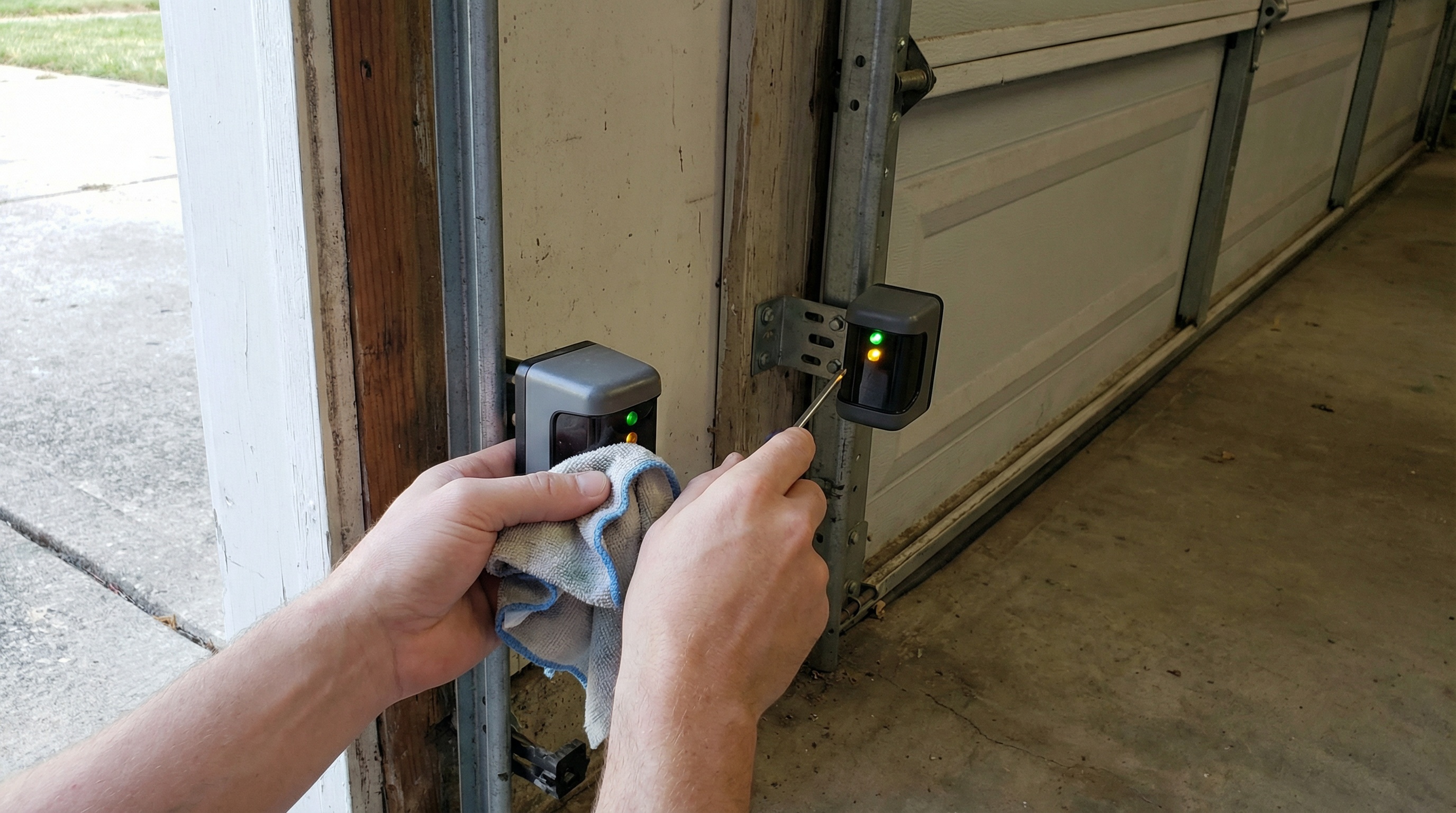
The sensors are typically located about six inches from the ground on either side of your garage door opening. If they're blocked by debris, spider webs, or knocked out of alignment, your door might reverse direction or open unexpectedly. You can often spot this issue by checking if the sensor lights are blinking or if one sensor appears crooked compared to the other.
To fix this, clean the sensor lenses with a soft cloth and ensure they're properly aligned. If the problem persists after cleaning and realignment, the sensors may need professional replacement. For more information about sensor-related issues, check out our guide on why your garage door won't close even though the sensors are aligned.
A stuck button on your garage door remote is one of the simplest yet most overlooked causes of automatic door opening. When a button gets jammed in the pressed position, it continuously sends an "open" signal to your garage door opener, even when the remote is sitting in your car or on a shelf.
This can happen due to dirt buildup around the buttons, moisture damage, or simply wear and tear from regular use. Sometimes the issue isn't a stuck button but rather a remote that's been accidentally activated while stored in a purse, glove compartment, or pocket.
Check all your remotes by pressing each button to ensure they spring back properly. Clean around the buttons with a cotton swab and replace the batteries if they're low. If you have multiple remotes, test each one individually to identify which might be causing the problem.
Pro Tip: Keep spare remotes in a secure location where buttons can't be accidentally pressed, and consider using remote covers to prevent accidental activation.
Your garage door opener operates on specific radio frequencies that can sometimes pick up signals from other devices. If a neighbor has a garage door opener on the same frequency, or if there are other electronic devices nearby broadcasting on similar frequencies, your door might respond to these unintended signals.
This type of interference is more common in densely populated areas where multiple garage doors operate in close proximity. Most modern openers have rolling code technology that changes the signal each time you use it, which helps prevent interference. If you have an older system, consider upgrading to a newer opener with better frequency management.
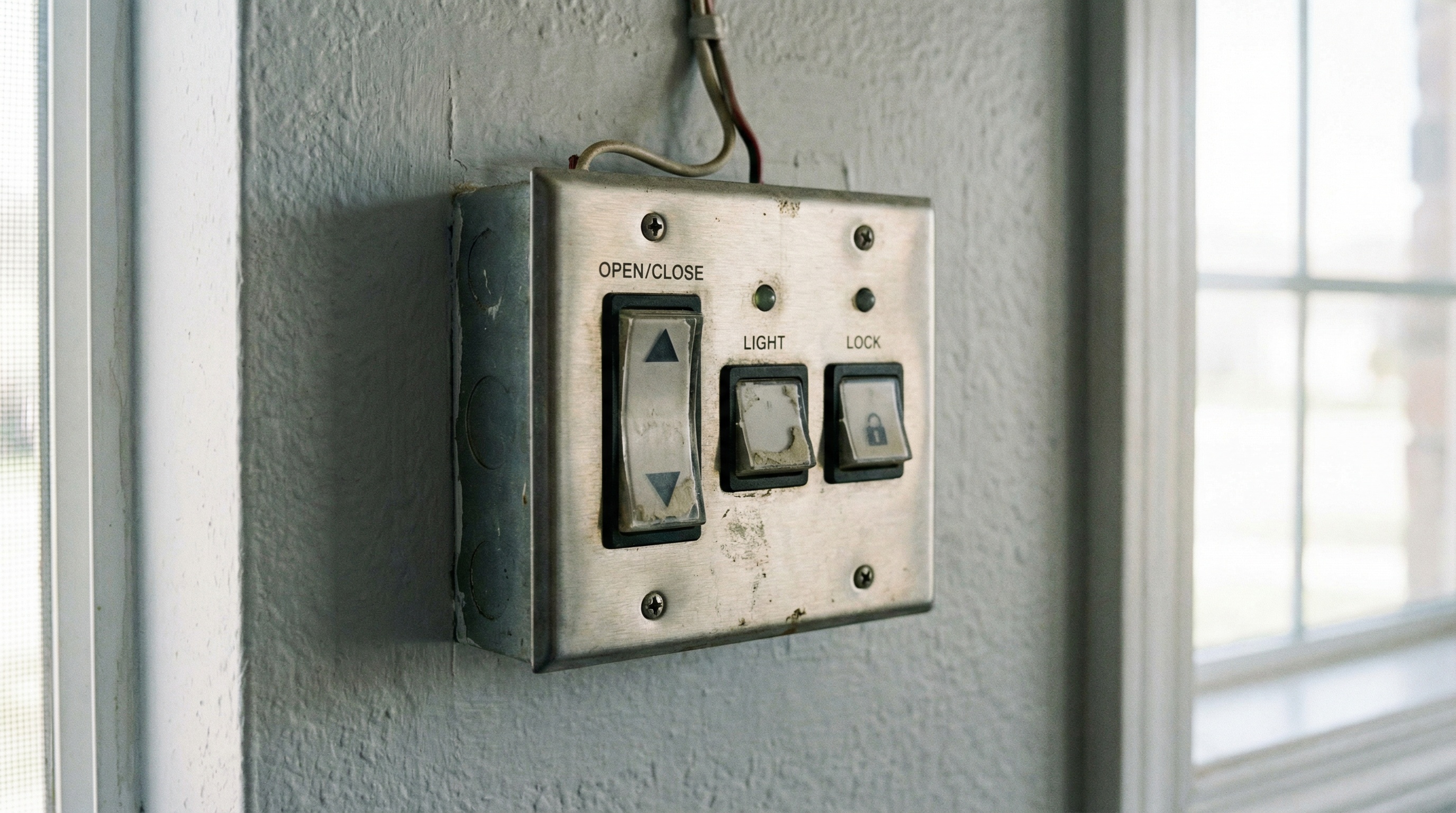
Your wall-mounted control panel can develop electrical problems that cause it to send random signals to your garage door opener. Faulty wiring, a stuck wall button, or moisture damage to the control panel can all result in your door opening without any input from you.
These issues often develop gradually, starting with intermittent problems before becoming more frequent. You might notice the wall button feels different when pressed, or the control panel light behaves strangely. Sometimes the problem is as simple as loose wiring connections behind the panel.
To troubleshoot, try disconnecting the wall control temporarily to see if the random opening stops. If it does, you've identified the source of the problem. While you might be able to tighten loose connections yourself, electrical issues with the control panel typically require professional attention to ensure safety.
Problem TypeQuick CheckDIY SolutionProfessional Help NeededDirty sensorsClean with soft clothYesIf alignment failsStuck remote buttonPress all buttonsReplace batteries/remoteIf internal damageSignal interferenceTest different timesReprogram remoteFor frequency changesWall panel issuesDisconnect temporarilyTighten connectionsFor electrical problems
Electrical surges from storms, power outages, or utility company issues can damage your garage door opener's internal circuitry. When the control board gets damaged, it might send random signals that cause your door to open unexpectedly. This type of damage isn't always immediately obvious and can manifest days or weeks after the actual surge event.
Power surge damage often affects multiple functions of your garage door opener, not just the opening mechanism. You might notice that your opener responds inconsistently to commands, makes unusual noises, or the lights behave strangely. These are all signs that the electrical components may have been compromised. If you're experiencing issues with your garage door not opening with the motor, power surge damage could be the culprit.
If you suspect power surge damage, the safest approach is to have a professional technician diagnose the problem. They can test the control board and other electrical components to determine what needs replacement. Installing a surge protector for your garage door opener can help prevent future damage from electrical fluctuations.
Important: Never attempt to repair electrical components of your garage door opener yourself, as this can be dangerous and may void your warranty.
As garage door openers age, their internal mechanisms can wear out and begin to malfunction. Worn gears, damaged circuit boards, or failing motors can cause erratic behavior including unexpected opening. The opener might work fine for weeks, then suddenly start opening the door randomly. This type of intermittent failure often gets worse over time until the opener stops working entirely. If your automatic garage door won't go up, mechanical failure may be to blame.
When mechanical components fail, replacement is usually more cost-effective than repair, especially for older units. A professional can evaluate whether your opener is worth repairing or if you'd benefit more from upgrading to a newer, more reliable system with better safety features.
Understanding why your garage door opens by itself helps you take the right steps to fix the problem safely. While some issues like cleaning sensors or replacing remote batteries are simple DIY tasks, electrical and mechanical problems require professional expertise. If you're experiencing persistent issues with your garage door opening unexpectedly or other problems like your garage door going down then coming back up, don't hesitate to contact a qualified technician who can diagnose the problem accurately and restore your peace of mind. For comprehensive troubleshooting, explore our complete guide on why your garage door won't open or close properly.
Misaligned or dirty safety sensors are the most common cause, preventing proper beam detection and causing erratic behavior like unexpected opening. Other reasons include remote signal interference, stuck buttons, power surge damage to the control board, or mechanical opener failure. Start troubleshooting by checking if sensor lights are solid and cleaning the lenses with a soft cloth.
First, clean the sensor lenses with a soft cloth to remove dirt or spider webs. Then check if both sensors are properly aligned - they should face each other directly about six inches from the ground. If one appears crooked, gently adjust it until both sensor lights are solid. If the lights continue blinking after cleaning and alignment, the sensors may need professional replacement.
Yes, signal interference from nearby garage doors operating on the same frequency or other electronic devices can cause your door to open unexpectedly. This is more common in densely populated areas. The solution often involves reprogramming your remote controls to use a different frequency or upgrading to a newer opener with rolling code technology that changes the signal each time you use it.
Contact a professional if cleaning sensors and checking remotes doesn't solve the problem, or if you suspect electrical issues like power surge damage or wall control panel defects. Never attempt to repair electrical components yourself as this can be dangerous and may void your warranty. Mechanical opener failures also typically require professional diagnosis and replacement rather than DIY repair.
Get your garage door back on track today!


