
Replacing a garage door is extremely difficult and potentially dangerous for most homeowners due to high-tension springs, heavy components, and precise alignment requirements. While it might seem like a straightforward home improvement project, garage door replacement involves complex mechanical systems that require specialized knowledge and tools.
The short answer is yes, garage door replacement is challenging. Most homeowners underestimate the technical precision required for safe installation.
Important Safety Note: High-tension garage door springs can cause serious injury or death if mishandled. These springs store enough energy to lift doors weighing 150-400 pounds.
This guide will walk you through why garage door replacement is so challenging, the specific risks involved, and help you decide whether to tackle this project yourself or hire professionals. We'll also cover when repair might be a better option than full replacement.
Garage doors operate through an intricate system of interconnected components that must work in perfect harmony. The door itself consists of multiple panels connected by hinges, but the real complexity lies in the mechanical systems that make operation possible.
The spring system is the most critical component. Torsion springs, mounted above the door, store tremendous energy to counterbalance the door's weight. Extension springs, found on either side of the door, serve the same purpose but operate differently. Both types are under extreme tension and can snap with devastating force if improperly handled.
Tracks and rollers guide the door's movement and must be precisely aligned. Even small misalignments can cause binding, premature wear, or complete system failure. The cable system works with springs to distribute weight evenly, and damaged cables can cause the door to fall unexpectedly.
Modern garage doors also include safety features like photo-eye sensors and automatic reversal systems. These components must be properly calibrated during installation to prevent accidents and ensure code compliance.
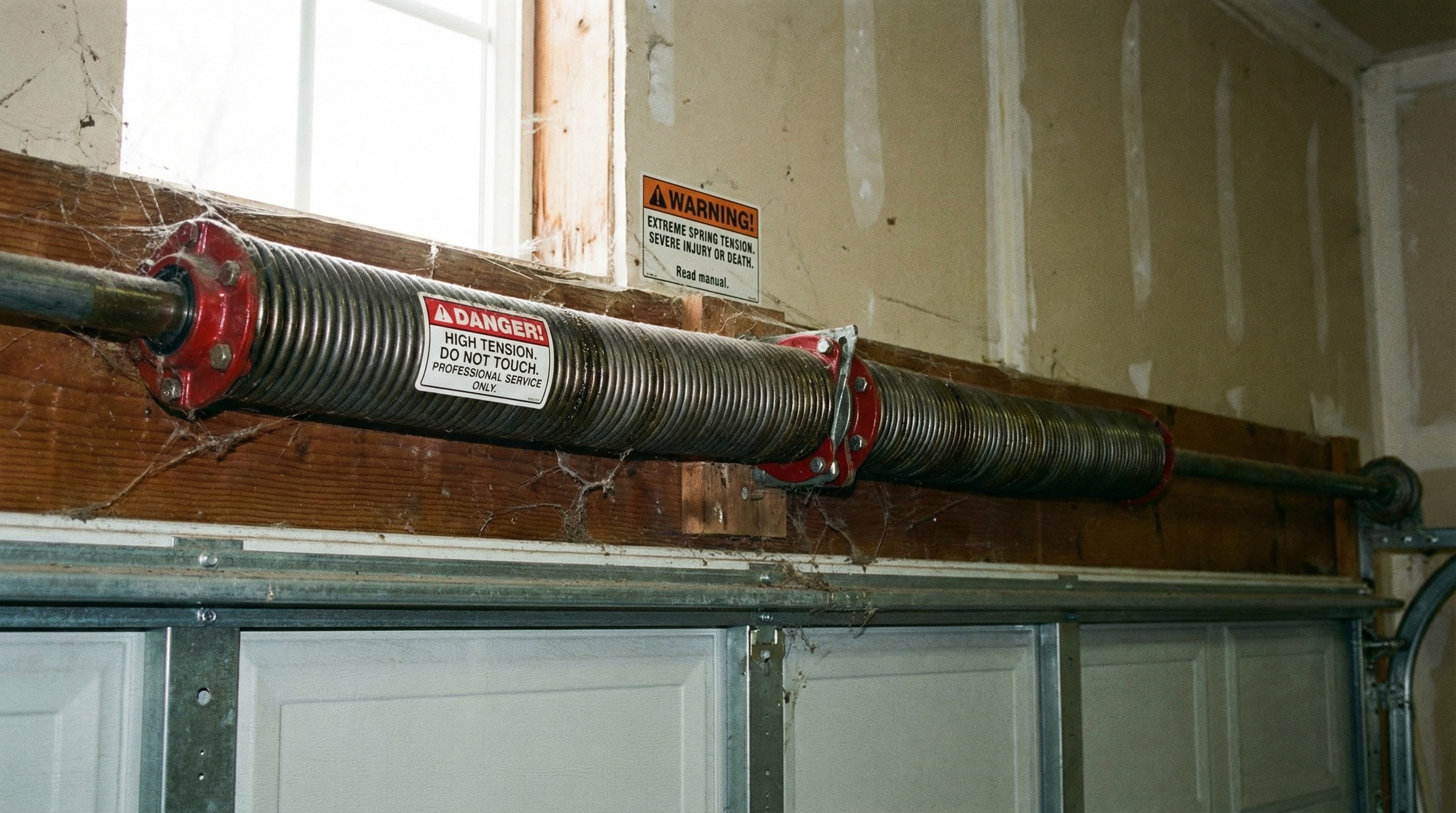
The primary danger in garage door replacement comes from spring tension. These springs can snap with enough force to break bones or cause fatal head injuries.
Weight handling presents another significant risk. Garage doors typically weigh between 150-400 pounds, depending on material and size. Lifting and maneuvering these heavy panels without proper equipment and technique can cause back injuries, crushed fingers, or property damage if the door falls.
Electrical hazards exist when working with garage door openers. Improper wiring can cause electrocution, fires, or damage to your home's electrical system. Many homeowners also lack the knowledge to properly ground electrical components or install GFCI protection where required.
Tool-related injuries are common among DIY attempts. Garage door installation requires specialized tools like winding bars for spring adjustment. Using improper tools or techniques can lead to slips, cuts, or more serious accidents when tools fail under pressure. Understanding whether it's safe to repair a garage door yourself is crucial before attempting any work.
Professional installation becomes essential when safety concerns outweigh potential cost savings. If you're uncomfortable working with high-tension springs or lack experience with heavy lifting, hiring experts is the wise choice. Professionals have specialized tools and years of training to handle dangerous components safely.
Professional Advantage: Licensed technicians carry insurance and provide warranties on their work, protecting you from liability and ensuring long-term performance.
Complex installations also warrant professional help. If your garage opening requires modifications, your home has unique architectural features, or you're upgrading to a smart opener system, professionals can navigate these challenges efficiently. They understand local building codes and permit requirements that DIY installers often overlook.
Time constraints make professional installation attractive for busy homeowners. What might take you an entire weekend (or longer) can be completed by professionals in a few hours. This efficiency minimizes disruption to your daily routine and reduces the risk of leaving your garage vulnerable during extended installation periods.
Quality assurance is another compelling reason to hire professionals. Proper installation ensures your door operates smoothly, lasts longer, and maintains safety features. Poor DIY installation often leads to premature wear, frequent repairs, and potential safety hazards. There are many reasons why experts should repair a garage door rather than homeowners attempting the work themselves.
FactorDIY InstallationProfessional InstallationUpfront Cost$300-800 (door only)$600-1,500 (installed)Time Investment8-16 hours3-6 hoursRisk LevelHighLowWarranty CoverageLimited/NoneFull service warranty
The financial comparison between DIY and professional installation isn't as straightforward as it appears. While DIY installation saves on labor costs, you'll need to purchase or rent specialized tools, potentially adding $100-300 to your project cost. Factor in the value of your time and the risk of mistakes requiring professional correction. When deciding whether to repair or replace a garage door, cost is just one of many important considerations.
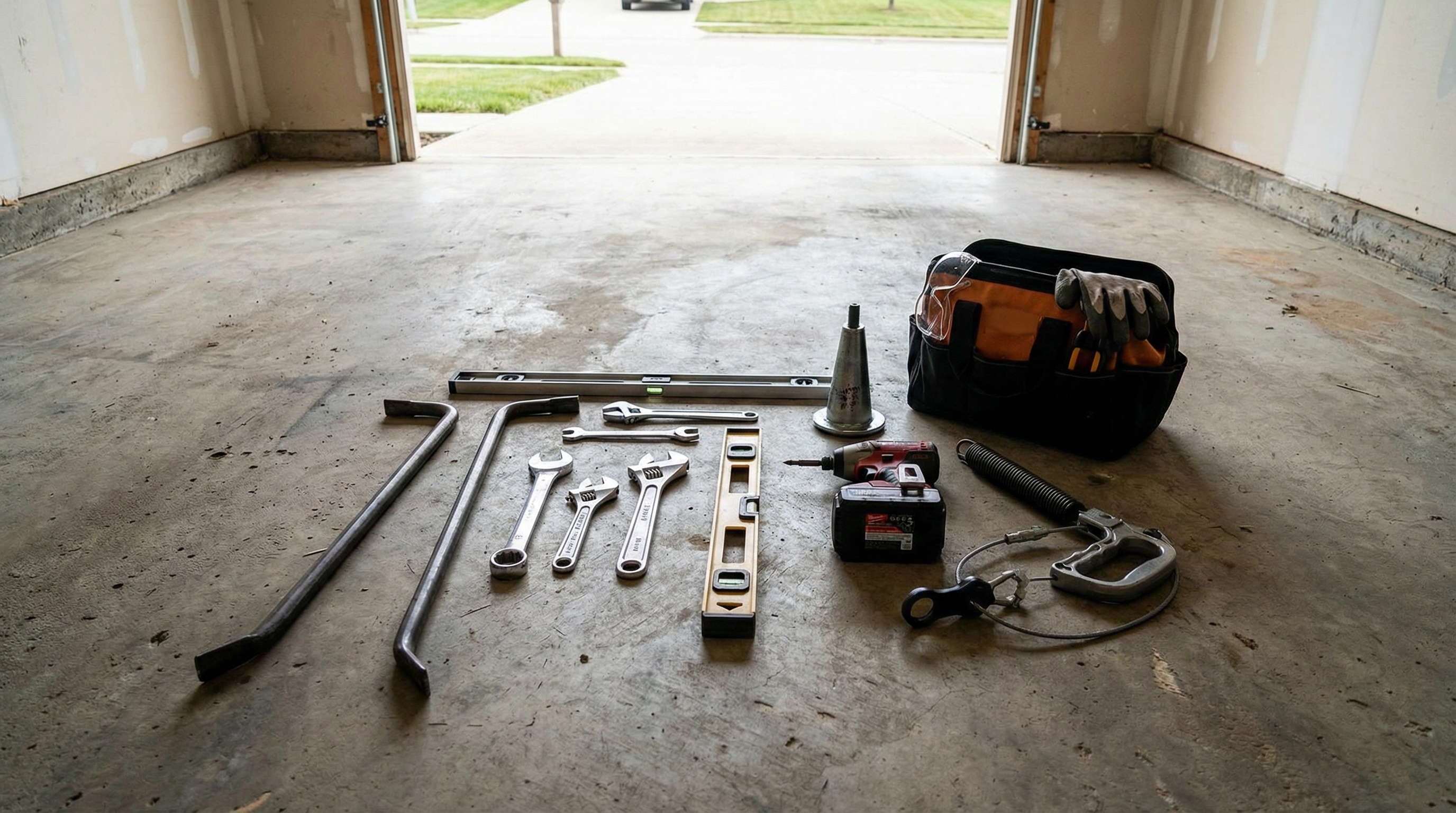
Hidden costs often emerge during DIY projects. If you damage components during installation or discover additional problems, repair costs can quickly exceed professional installation fees. Many homeowners also underestimate the complexity and end up hiring professionals mid-project, paying both for tools they can't use and professional labor.
Professional installation includes valuable services beyond labor. Technicians dispose of old doors, handle permit applications where required, and provide ongoing support. They also spot potential issues like structural problems or electrical code violations that could become expensive problems later.
Consider your skill level honestly when making this decision. If you have experience with mechanical systems, proper tools, and strong helpers, DIY installation might be feasible for simple replacements. However, if you're uncomfortable with any aspect of the process, professional installation provides peace of mind and better long-term value. Before making your choice, you should understand whether you can repair a garage door yourself or should call a professional.
The difficulty of garage door replacement stems from the combination of safety hazards, technical complexity, and precision requirements. While some experienced DIY enthusiasts can handle simple replacements, most homeowners benefit from professional installation. The investment in professional service often pays for itself through proper installation, warranty protection, and avoiding costly mistakes. When considering garage door replacement, prioritize safety and long-term performance over short-term savings.
No, replacing garage door springs yourself is extremely dangerous and not recommended. These springs are under tremendous tension and store enough energy to lift doors weighing 150-400 pounds. Mishandling them can result in severe injuries, broken bones, or even death. Always hire licensed professionals who have the proper tools and training to safely handle high-tension springs.
Professional garage door replacement typically costs $600-1,500 including installation, while DIY installation costs $300-800 for the door alone. However, DIY projects often require additional tool rentals ($100-300) and carry high risks of mistakes that could require professional correction. Professional installation includes warranties, proper disposal of old doors, and ensures safety compliance.
Consider replacement if your garage door is over 15 years old, requires frequent repairs, has multiple damaged panels, or lacks modern safety features. If repair costs exceed 50% of replacement cost, or if you're experiencing repeated spring failures, replacement often provides better long-term value and improved safety features.
Professional garage door replacement typically takes 3-6 hours for standard installations. DIY attempts usually require 8-16 hours and often extend over multiple days due to complexity and the need to troubleshoot issues. Professionals complete the job efficiently while ensuring proper alignment, safety feature calibration, and code compliance.
Get your garage door back on track today!


