
You can handle basic garage door maintenance yourself, but complex repairs involving springs, cables, or electrical components require professional expertise. Simple tasks like lubrication and tightening loose bolts are safe for most homeowners, while anything involving high-tension parts poses serious safety risks.
When your garage door starts making unusual noises or doesn't operate smoothly, the temptation to fix it yourself is understandable. However, garage doors are complex systems with heavy components and dangerous tension mechanisms. A single mistake during repair can result in serious injury or property damage.
Understanding which repairs you can safely tackle versus those requiring professional intervention helps protect both your safety and your wallet.
Before attempting any repair, you need to understand what makes your garage door work. The system includes several interconnected parts that must function together perfectly.
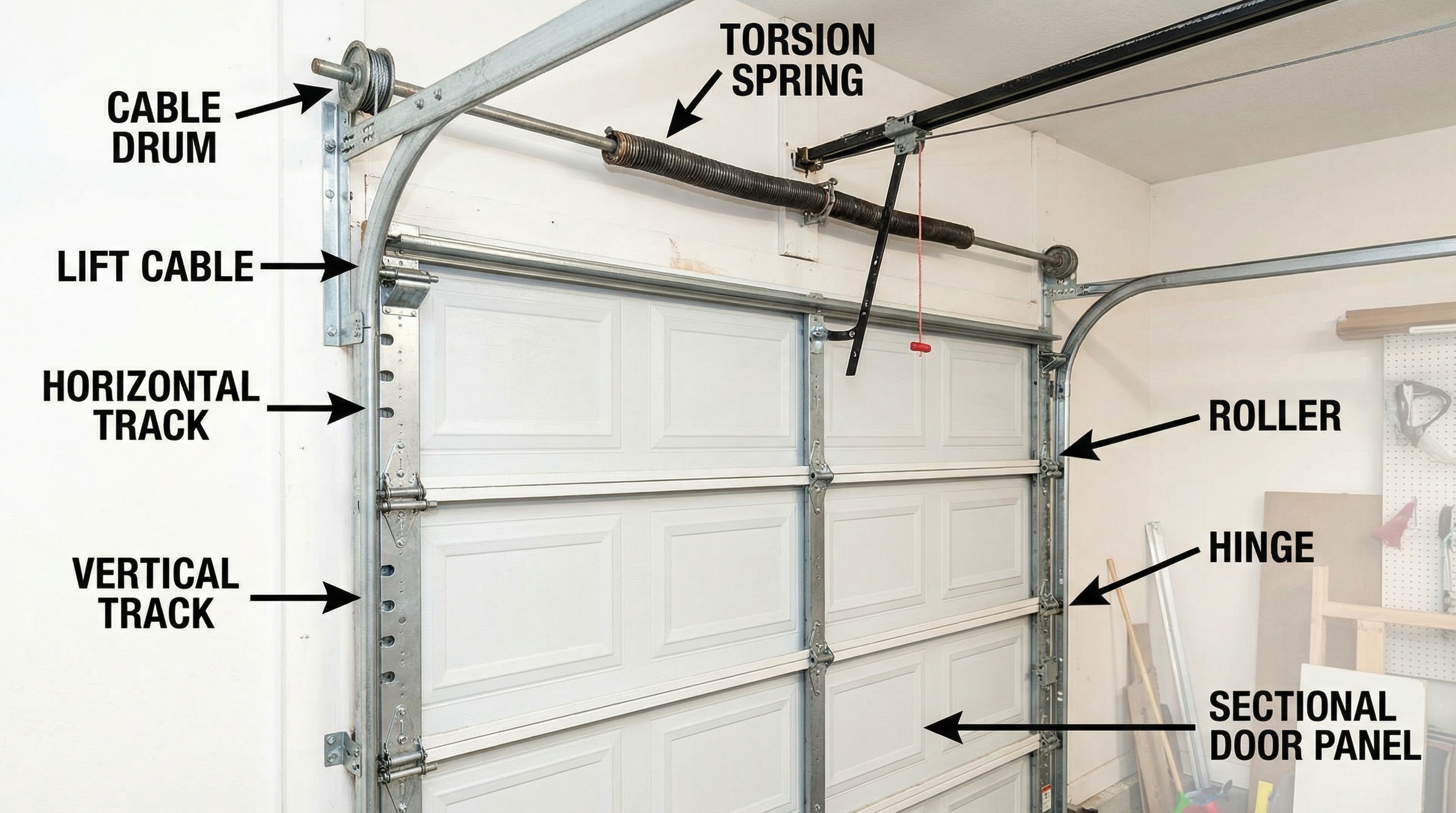
The main components include torsion or extension springs that counterbalance the door's weight, tracks that guide movement, rollers that allow smooth operation, and cables that work with springs to lift and lower the door safely. The garage door opener automates this process while safety sensors prevent accidents.
When one component fails, it often affects the entire system. For example, a broken spring doesn't just stop the door from opening - it can make the door extremely heavy and dangerous to operate manually. Understanding what wears out in a garage door helps you anticipate maintenance needs and recognize when professional intervention is necessary.
Repair TypeDIY Safe?Professional Required?Risk LevelLubricationYesNoLowTightening boltsYesNoLowSpring replacementNoYesHighCable repairNoYesHighTrack realignmentNoYesMedium
Several maintenance tasks fall within the safe DIY category. These don't involve high-tension components or require specialized tools.
Regular lubrication keeps your system running smoothly and quietly. Apply silicone-based lubricant to rollers, hinges, and springs every few months. This simple task reduces friction and extends component life significantly.
Tightening loose hardware is another safe task. Garage door vibration naturally loosens bolts and screws over time. Use a socket wrench to snug up any loose brackets, roller mounts, or track hardware you can safely reach.
You can also replace remote control batteries, clean photo-eye sensors with a soft cloth, and clear debris from tracks. These basic tasks help maintain proper operation without exposing you to danger. To maintain optimal performance, learn how often a garage door should be serviced or repaired to stay ahead of potential issues.
Maintenance Tip: Test your garage door balance monthly by disconnecting the opener and manually lifting the door halfway. It should stay in place without assistance.
Certain repairs should never be attempted without proper training and tools. These involve components under extreme tension or electrical systems that require expertise.
Broken springs top the list of dangerous repairs. Professional technicians use specialized tools and safety procedures to handle these components safely.
Cable repairs also require professional attention. Garage door cables support the full weight of the door and work under significant tension. A snapped cable can cause the door to fall unexpectedly, creating serious safety hazards.
Off-track doors present another complex problem. When a door derails, forcing it back can bend panels or damage tracks further. Professionals have the experience to realign doors without causing additional damage. If you're dealing with a damaged garage door panel, you'll need to determine whether repair or replacement is the best option.

Motor and opener malfunctions involve electrical components that require diagnostic expertise. Improper electrical work can create fire hazards or damage expensive equipment beyond repair.
Professional garage door technicians offer advantages beyond just safety. They bring comprehensive knowledge, proper tools, and the ability to spot problems before they become emergencies.
During a service call, professionals inspect the entire system, not just the obvious problem. They can identify worn cables, misaligned tracks, or motor issues that might cause future breakdowns. This preventive approach often saves money in the long run. Understanding why experts should repair a garage door can help you appreciate the value of professional service.
Professionals also have access to quality replacement parts and can ensure proper installation. Many manufacturers require professional installation to maintain warranty coverage, making DIY repairs potentially costly if something goes wrong later. When weighing your options, consider whether it's better to repair or replace a garage door based on the extent of damage and age of your system.
The expertise factor cannot be overstated. What might take you hours to figure out, a trained technician can diagnose and fix efficiently. This saves time and reduces the risk of making the problem worse through trial and error.
Understanding your limits when it comes to garage door repair protects both your safety and your investment. While basic maintenance keeps your system running well, complex repairs require the expertise that only trained professionals can provide. When in doubt, choosing professional service ensures your garage door operates safely and reliably for years to come.
Yes, you can handle basic garage door maintenance tasks yourself, including lubrication of rollers and hinges, tightening loose bolts, cleaning tracks of debris, and replacing remote control batteries. However, avoid any repairs involving high-tension components like springs or cables, as these require professional expertise and specialized tools for safety.
Yes, it's extremely dangerous to repair garage door springs yourself. Torsion springs store enough tension to lift hundreds of pounds and can snap violently, causing severe injury or property damage. Professional technicians use specialized tools and safety procedures to handle these high-tension components safely.
Call a professional immediately for broken springs, snapped cables, off-track doors, motor failures, or electrical issues. These repairs involve components under extreme tension or electrical systems that require specialized expertise. Attempting these repairs yourself can result in serious injury or further damage to your garage door system.
Perform basic maintenance monthly by testing your garage door balance, cleaning tracks, and applying silicone-based lubricant to moving parts. Schedule professional inspection and service annually to identify potential issues before they become emergencies and ensure your system operates safely and efficiently.
Get your garage door back on track today!


