
When your garage door starts acting up, you might wonder if you can fix it yourself. The short answer is no, and here's why: garage doors are complex, heavy systems that can seriously injure you if handled incorrectly. Professional technicians have the training, tools, and experience to diagnose problems accurately and fix them safely. When something goes wrong, the temptation to grab some tools and fix it yourself can be strong, especially when you're trying to save money.
However, garage door repair involves much more than meets the eye. The system includes heavy panels, high-tension springs, intricate track systems, electrical components, and safety sensors that all work together. A single mistake during repair can lead to serious injury or create bigger problems that cost more to fix later.
Professional technicians understand how these components interact and have the specialized knowledge to identify root causes rather than just treating symptoms. This expertise ensures your door operates safely and reliably for years to come. If you're still weighing your options, learn more about whether you should repair a garage door yourself or call a professional.
The biggest reason to avoid DIY garage door repair is the serious safety risks involved. Garage door springs, particularly torsion springs, store enormous amounts of energy to counterbalance the door's weight. When these springs break or are improperly handled, they can snap with tremendous force.
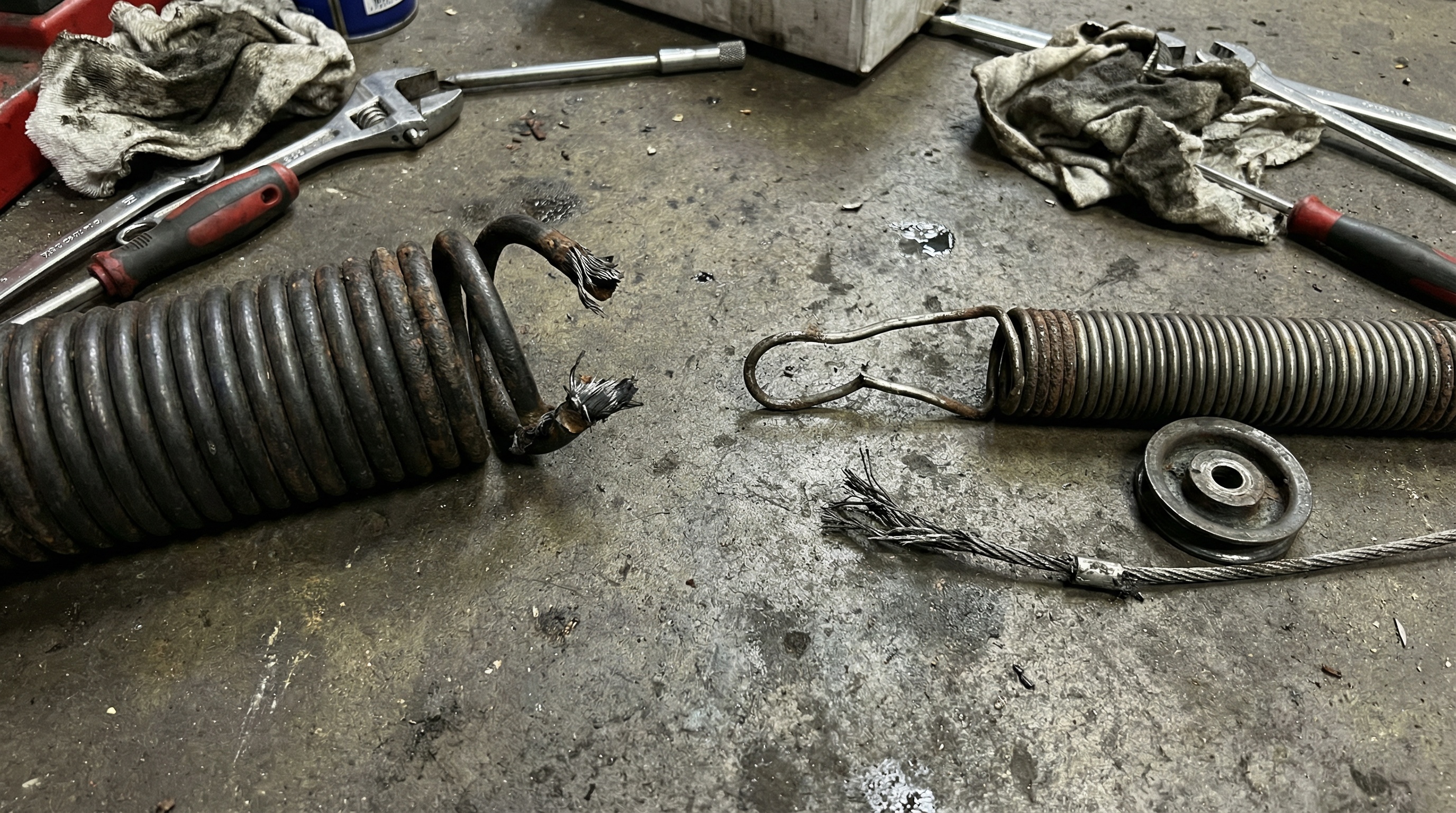
The door's weight alone makes it hazardous - if tracks become misaligned or cables snap during a DIY repair attempt, the door could fall unexpectedly.
Professional technicians use specialized tools designed for safe spring replacement and have the training to handle high-tension components without putting themselves or your property at risk. For a deeper understanding of the dangers involved, read about whether it's safe to repair a garage door yourself.
Did You Know: Most garage door injuries occur during DIY repair attempts, particularly when homeowners try to adjust or replace springs without proper equipment.
Several garage door issues are particularly complex and dangerous for homeowners to tackle alone. Broken springs top this list, as mentioned earlier, but there are other problems that demand professional attention.
When your garage door goes off track, it might seem like a simple matter of pushing it back into place. However, this usually indicates underlying issues with the track alignment, worn rollers, or damaged cables. Forcing the door back on track without addressing the root cause can worsen the problem and create safety hazards.
Malfunctioning garage door openers involve both mechanical and electrical components. The motor, gears, sensors, and remote systems all need to work together properly. Professional technicians can assess whether damaged garage door panels can be repaired or replaced and ensure the door maintains proper structural integrity.
While hiring a professional might cost more upfront than attempting DIY repairs, it often saves money in the long run. Professional repairs address underlying problems rather than just surface symptoms, preventing recurring issues that would require multiple DIY attempts.

Quality repairs also extend your garage door's lifespan. When components are properly aligned, tensioned, and maintained, they experience less wear and tear. This means fewer breakdowns and a longer time before you need a complete door replacement. Understanding what components wear out in a garage door can help you appreciate the value of professional maintenance.
Professional technicians also provide warranties on their work, giving you peace of mind and protection against defective parts or workmanship. If something goes wrong after a professional repair, you're covered - something you can't get with DIY fixes.
Additionally, proper professional maintenance can help you identify potential problems before they become major issues. Regular inspections and tune-ups keep your door operating smoothly and safely, preventing unexpected breakdowns that could leave you stranded or compromise your home's security. Learn more about how often a garage door should be serviced or repaired to keep your system in optimal condition.
Pro Tip: Regular professional maintenance typically costs much less than emergency repairs and helps prevent most common garage door problems before they occur.
When it comes to garage door repair, the expertise, safety measures, and long-term value that professionals provide far outweigh any short-term savings from DIY attempts. Your family's safety and your door's reliable operation are worth the investment in professional service. If you're considering a major repair, you might also want to explore whether it's better to repair or replace a garage door to make the most informed decision for your home.
No, DIY garage door repairs are extremely dangerous due to high-tension springs and heavy components weighing up to 400 pounds. Garage door springs store enormous amounts of energy and can cause severe injuries including cuts, bruises, or broken bones if mishandled. Professional technicians have the specialized tools, training, and safety equipment necessary to perform repairs safely and correctly.
Common causes include misaligned safety sensors, broken or worn springs, obstructed or bent tracks, damaged cables, or faulty limit switches on the opener. These issues require professional diagnosis because they involve complex mechanical and electrical components that work together. Attempting to force the door closed or adjust these components yourself can create safety hazards and worsen the problem.
Professional garage door maintenance should be performed annually to ensure safe operation and prevent costly breakdowns. During maintenance, technicians inspect springs, cables, tracks, rollers, and safety sensors while checking proper balance and alignment. Regular professional maintenance typically costs much less than emergency repairs and helps identify potential problems before they become major safety hazards.
The most dangerous DIY repairs include spring replacement (especially torsion springs), cable repairs, track realignment, and electrical work on garage door openers. Broken springs are under extreme tension and can snap with tremendous force, while electrical components pose shock and fire risks. These repairs require specialized tools and training that only professional technicians possess to ensure both safety and proper functionality.
Get your garage door back on track today!


