
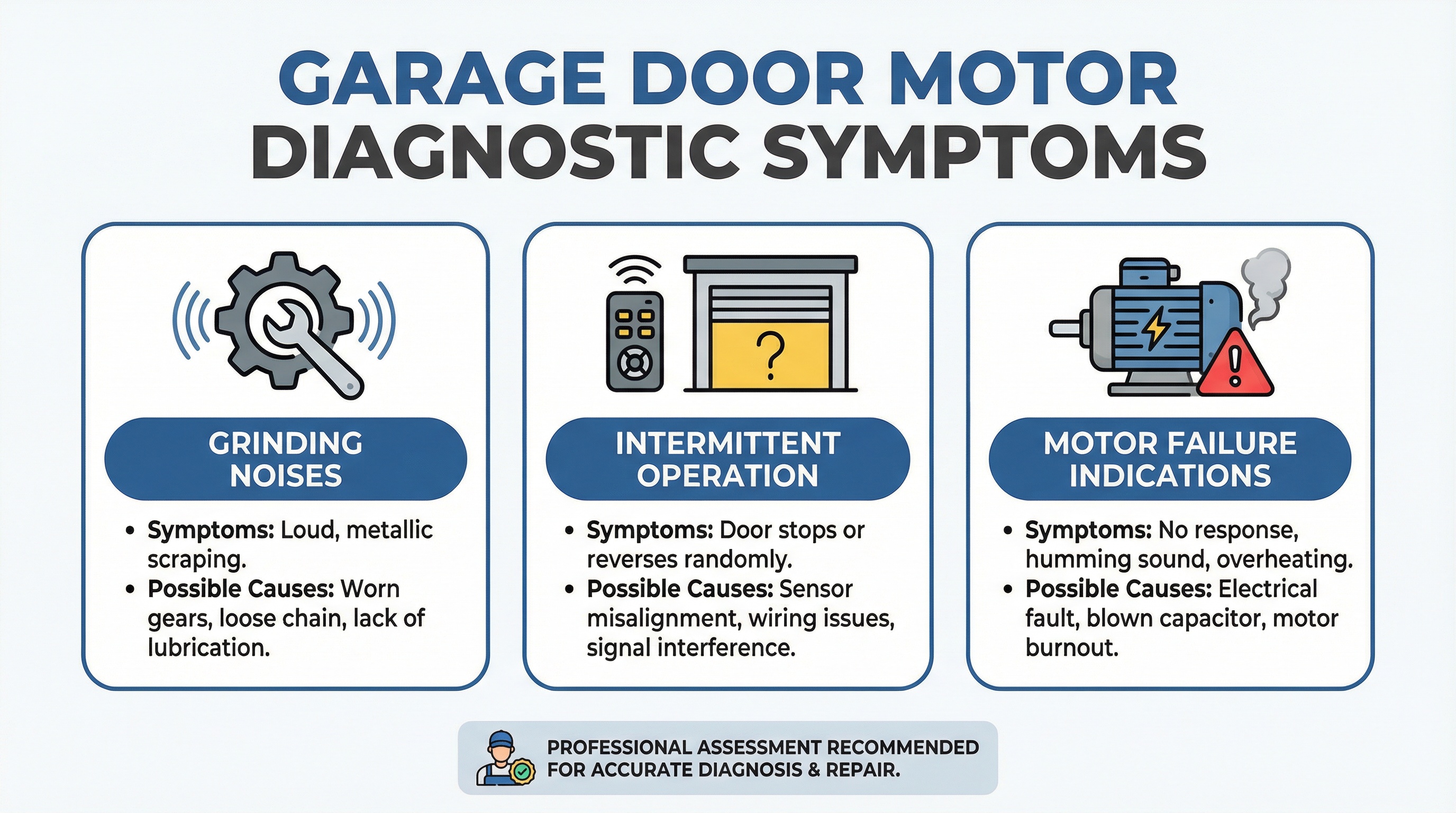
You'll know your garage door motor is bad if the opener runs but the door doesn't move, makes grinding or buzzing noises, operates inconsistently, or stops responding to remote commands. These symptoms often indicate internal motor damage, worn gears, or electrical failures that require professional attention.
A failing garage door motor can turn your daily routine upside down, especially when you're rushing to work or returning home after a long day in Conshohocken. The Pennsylvania heat and frequent use put extra strain on garage door systems, making motor failures more common than you might expect. Recognizing these warning signs early helps you avoid complete breakdowns and costly emergency repairs.
Quick Fact: Most garage door motors last 10-15 years with regular use, but Pennsylvania weather conditions can reduce this lifespan by 2-3 years due to extreme temperature fluctuations.
The most obvious sign of motor trouble is when you hear the opener running but your garage door stays put. This typically means the internal gears have stripped or the motor has lost its ability to generate enough torque to lift the door. You might also notice the motor running longer than usual before giving up entirely.
Strange noises tell their own story about motor health. A healthy motor runs quietly with minimal sound, but grinding, clicking, or loud buzzing indicates internal components are wearing out. These sounds often get worse over time and shouldn't be ignored, as they signal parts that are close to complete failure. If you're experiencing similar issues, learning about signs that your garage door opener needs repair can help you identify problems early.
Intermittent operation is another red flag that catches many homeowners off guard. Your garage door might work perfectly for days, then suddenly refuse to respond. This inconsistent behavior often points to electrical issues within the motor's circuit board or failing internal connections that work sometimes but not others.
Age and regular wear top the list of motor failure causes. In Conshohocken, where many homes see daily garage door use for both cars and storage access, motors accumulate cycles quickly. Each time you open and close your door, internal components experience stress, and eventually, this wear catches up.
Power surges from Pennsylvania thunderstorms can damage the delicate electronics inside your motor. The circuit board that controls motor functions is particularly vulnerable to electrical spikes. Even brief power fluctuations can cause lasting damage that doesn't show up immediately but leads to problems weeks or months later. Understanding how to know if your garage door circuit board is bad can help you diagnose electrical issues.
Poor maintenance accelerates motor failure significantly. When garage door tracks aren't properly aligned, springs lose tension, or rollers become dirty, your motor works harder to move the door. This extra strain shortens motor life and can cause premature failure of internal components.
Important: Heavy garage doors, especially solid wood models popular in Conshohocken neighborhoods, put additional stress on motors and can reduce their lifespan by up to 30%.
Certain symptoms require immediate professional attention for safety reasons. If you smell burning odors or see smoke coming from the opener, disconnect power immediately and call for service. These signs indicate serious electrical problems that could pose fire risks if left unaddressed.
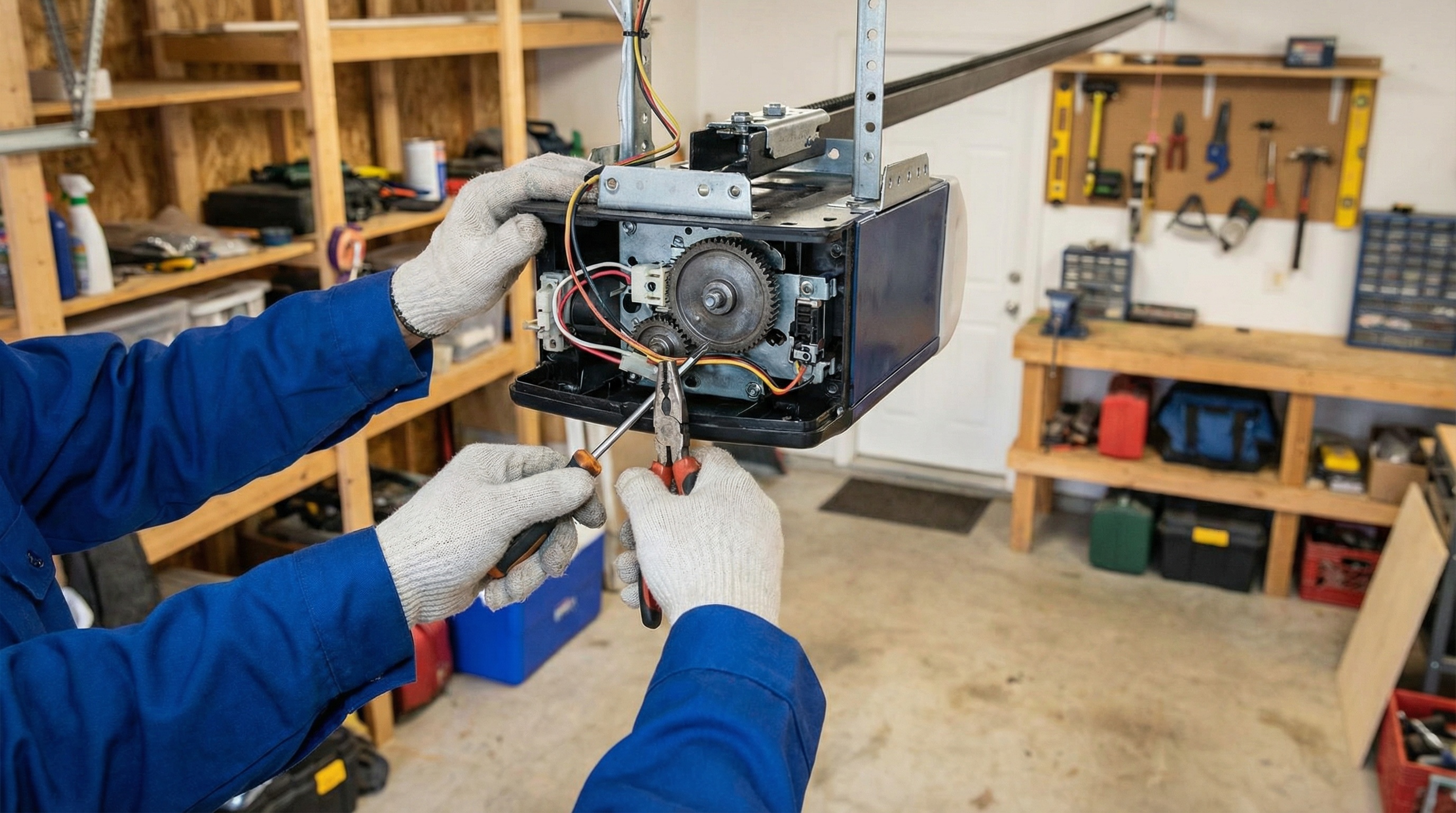
Visual inspection can reveal obvious problems that need professional repair. Look for frayed wiring around the motor housing, oil leaks beneath the opener, or visible damage to the motor casing. These issues require specialized tools and expertise to repair safely. For those in nearby areas, you can find more information about diagnosing a bad garage door motor in Upper Darby.
Don't attempt DIY repairs when the motor runs but produces no movement. The internal mechanisms involve high-tension components that can cause serious injury if handled improperly. Professional technicians have the proper tools and training to safely diagnose and repair these complex systems. If you're wondering about whether you can install a garage door opener yourself, it's important to understand the safety risks involved.
SymptomLikely CauseRepair UrgencyMotor runs, door doesn't moveStripped gears or broken driveHighGrinding noisesWorn internal componentsMediumIntermittent operationCircuit board issuesMediumBurning smellElectrical failureImmediate
The age of your current motor plays a major role in repair decisions. Motors over 10 years old often benefit more from replacement than expensive repairs, especially when multiple components show wear. Newer motors with single-component failures usually make good candidates for targeted repairs.
Cost comparison between repair and replacement helps guide your decision. Simple repairs like capacitor replacement or gear fixes typically cost much less than full motor replacement. However, if repair costs approach 60-70% of replacement cost, upgrading to a newer, more efficient model often makes better financial sense. Learn more about whether a garage door motor can be repaired to make an informed decision.
Modern motors offer significant advantages over older models, including quieter operation, better energy efficiency, and smart home compatibility. If your current motor lacks these features and needs major repairs, replacement might provide better long-term value for your Conshohocken home. Before deciding, consider whether replacing a garage door motor is hard to understand what the process involves.
Pro Tip: Upgrading to a variable-speed motor can reduce energy costs by up to 75% compared to older single-speed models, making replacement cost-effective even for functioning older units.
Understanding these warning signs helps you catch motor problems before they leave you stranded. When you notice any of these symptoms in your Conshohocken home, contact a qualified garage door professional for proper diagnosis and repair. Early intervention prevents complete failures and keeps your garage door system running smoothly for years to come.
Most garage door motors last 10-15 years with regular use, but Pennsylvania weather conditions can reduce this lifespan by 2-3 years due to extreme temperature fluctuations. The frequent heat and temperature changes in Conshohocken put extra strain on garage door systems, making motor failures more common than in milder climates.
The most obvious sign is when you hear the opener running but your garage door doesn't move, which typically indicates stripped gears or motor torque issues. Other clear warning signs include grinding, clicking, or loud buzzing noises, intermittent operation where the door works sometimes but not others, and the motor running longer than usual before giving up entirely.
Call a professional immediately if you smell burning odors, see smoke, or notice frayed wiring around the motor housing. Also avoid DIY repairs when the motor runs but produces no movement, as internal mechanisms involve high-tension components that can cause serious injury. Professional technicians have the proper tools and training to safely diagnose and repair these complex systems.
Motors over 10 years old often benefit more from replacement than expensive repairs, especially when multiple components show wear. If repair costs approach 60-70% of replacement cost, upgrading to a newer, more efficient model often makes better financial sense. Modern motors offer quieter operation, better energy efficiency, and can reduce energy costs by up to 75% compared to older single-speed models.
Get your garage door back on track today!


