
No, you cannot safely open a garage door manually when the spring is broken. Without functioning springs, your garage door becomes extremely heavy and unstable, creating serious safety risks. The springs normally counterbalance the door's weight, making it manageable to lift. When they fail, attempting manual operation can result in severe injury, property damage, or further mechanical problems.
Safety Alert: A typical residential garage door weighs between 130-350 pounds. Without spring assistance, this full weight becomes your responsibility, creating an immediate danger zone.
Understanding why this situation is so hazardous will help you make the right decision when facing a broken spring emergency. Let's explore what makes garage door springs so critical and why professional repair is your safest option.
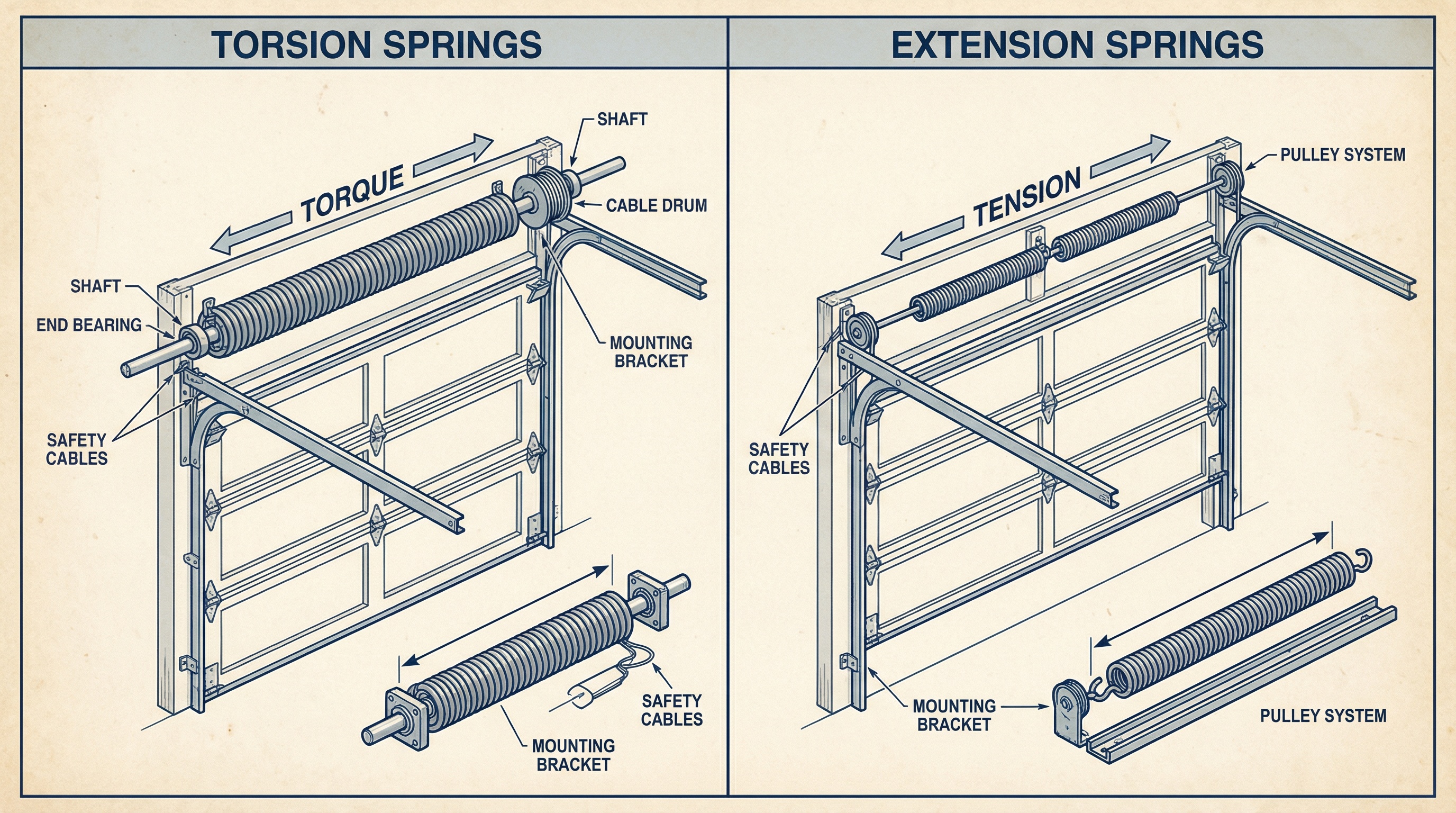
Garage door springs serve as the muscle behind your door's smooth operation. These components store and release tension to counterbalance the door's weight, making it feel almost weightless when functioning properly. There are two main types you'll encounter in residential applications.
Torsion springs mount horizontally above your garage door opening and twist to create lifting force. Extension springs stretch along the door tracks on either side, extending and contracting as the door moves. Both types work under tremendous pressure to make your heavy garage door manageable.
When these springs break, that carefully balanced system collapses instantly. The door loses its counterbalance, and gravity takes full control. This sudden shift creates an unpredictable and dangerous situation that requires immediate attention from trained professionals.
The moment your spring breaks, your garage door transforms from a manageable household feature into a potential hazard. Without the spring's assistance, you're suddenly responsible for lifting and controlling the door's entire weight, which can range from 130 pounds for a single-car door to over 350 pounds for a double-car door with insulation.
Your body isn't designed to handle this kind of sudden, awkward lifting motion. The door's weight distribution and your positioning create a perfect storm for back injuries, muscle strains, and joint damage. Even if you manage to lift the door initially, controlling its descent becomes nearly impossible, leading to potential crushing injuries.
The door's balance also becomes completely unpredictable. It might drop suddenly, tilt to one side, or jam in the tracks. These unexpected movements can cause the door to fall on vehicles, damage the opening, or worse, injure anyone nearby. The risk simply isn't worth the temporary convenience of getting your car out.
Your garage door opener wasn't designed to lift the door's full weight alone. These motors rely on the spring system to do the heavy lifting while they provide the final push and control. When springs break, forcing the opener to work creates a cascade of expensive problems.
The motor will strain against the excessive weight, often burning out within a few uses. Drive gears can strip, chains or belts may snap, and the entire lifting mechanism can suffer permanent damage. What started as a spring replacement can quickly become a complete opener replacement, multiplying your repair costs significantly.
Cost Reality: Replacing a garage door opener can cost $300-800, while spring replacement typically runs $150-300. Operating with broken springs often turns a moderate repair into a major expense.
Modern openers include safety features that may prevent operation when they detect excessive resistance, but older models might continue running until they fail completely. Either way, attempting to use your opener with broken springs puts additional stress on components that were never meant to handle such loads.
When you discover a broken spring, your first priority should be safety, not convenience. The best approach involves keeping the door closed and seeking professional help immediately. Most garage door repair services offer emergency calls specifically for these dangerous situations.
If you absolutely must access your garage, consider alternative entry points like side doors or windows if they exist. Many homeowners forget about these options in the stress of the moment, but they provide safe access without risking injury or equipment damage.
For temporary vehicle access, you might need to make alternative arrangements. This could mean parking outside, using a different garage bay if available, or arranging transportation until repairs are complete. While inconvenient, these solutions protect both your safety and your wallet from the costs of injury or additional damage.
Professional technicians have the proper tools, training, and safety equipment to handle broken spring situations safely. They can often complete repairs the same day, restoring normal operation without the risks associated with DIY attempts. If you're wondering whether you can replace a garage door spring yourself, it's important to understand the significant safety risks involved in this type of repair.

Spring TypeAverage LifespanReplacement CostSafety Risk LevelTorsion15,000-20,000 cycles$200-400High tension dangerExtension10,000-15,000 cycles$150-300Sudden snap risk
The bottom line remains clear when dealing with broken garage door springs, safety must come first. Knowing how to identify if your garage door spring is broken can help you catch problems early and avoid dangerous situations. The temporary inconvenience of professional repair far outweighs the potential consequences of attempting manual operation. Your garage door will return to safe, reliable operation once properly repaired, giving you peace of mind and protecting your investment in your home's functionality.
No, it's extremely dangerous to manually open a garage door with a broken spring. Without the spring's counterbalance, you'll be lifting the door's full weight (130-350 pounds), which can cause severe injury, back strain, or the door falling suddenly. The door becomes unpredictable and can jam, tilt, or drop without warning.
Using your opener with a broken spring will likely damage the motor and drive system. The opener isn't designed to lift the door's full weight alone and will strain against the excessive load, often burning out within a few uses. This can turn a $150-300 spring replacement into a $300-800 opener replacement.
Signs of a broken spring include a loud bang or popping sound, visible cracks or breaks in the spring coils, the door feeling extremely heavy to lift manually, the opener motor running but not lifting the door, or the door appearing crooked or unbalanced. The door may also slam shut quickly instead of closing smoothly.
Keep the door closed and call a professional garage door repair service immediately. Avoid attempting to open the door manually or with the opener. Use alternative entry points like side doors if you need garage access. Most repair services offer emergency calls for broken spring situations and can often complete repairs the same day.
Get your garage door back on track today!


