Torsion vs Extension Garage Door Springs: Warning Signs & Lifespan
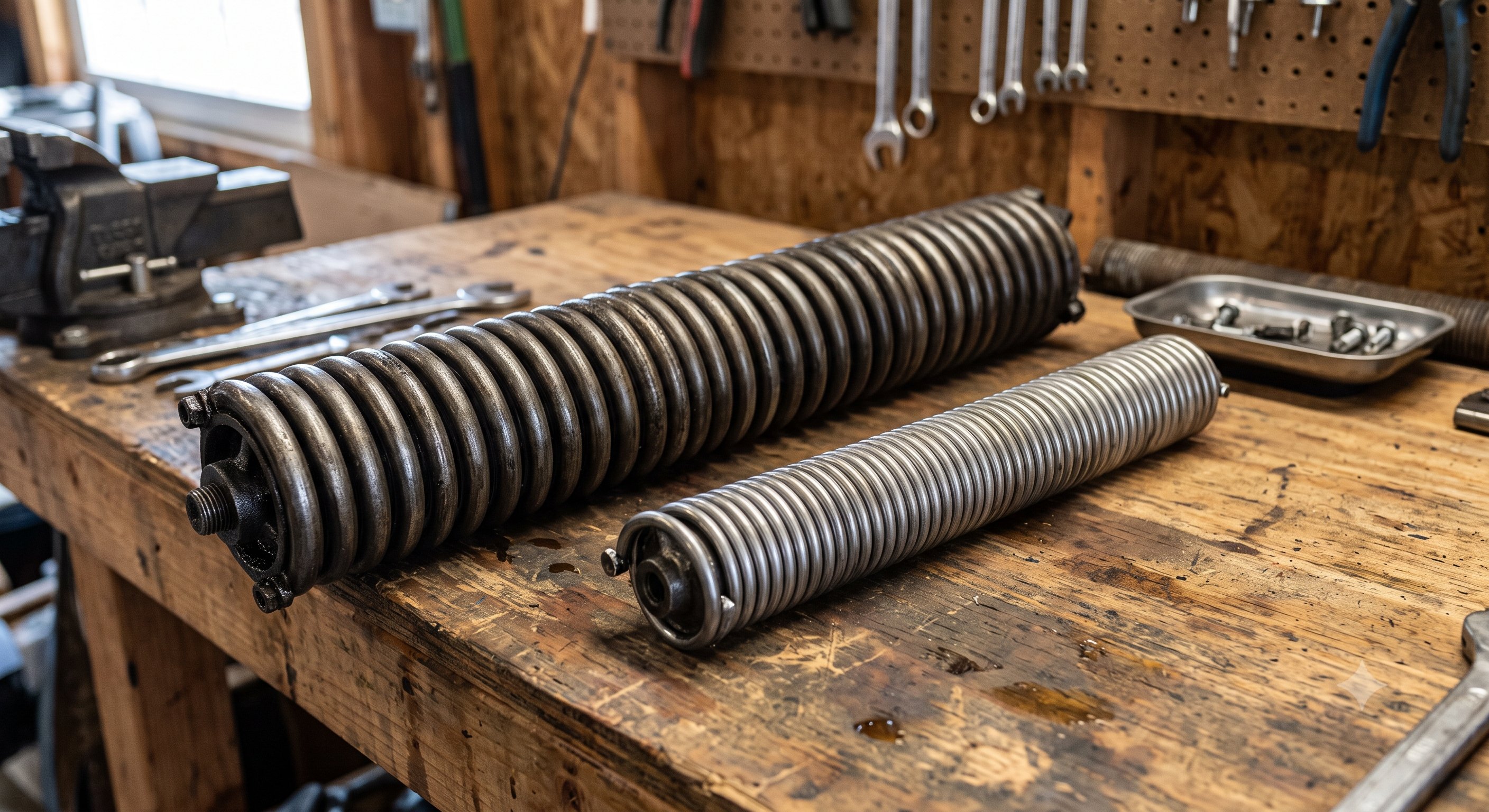
Torsion springs sit on a steel bar above the door and usually last 7–12 years; extension springs run along the horizontal tracks on either side and typically last 4–7 years. Both give warning before they fail, and both fail the same way for Philadelphia-area homeowners: a loud bang from the garage, followed by a door that's suddenly too heavy to lift. Early Birds Garage Doors replaces broken springs every day across Philadelphia, the Main Line, and South Jersey — it's our single most common garage door spring repair service call — and this guide covers what to watch for with each type and how long you can realistically expect them to last.
Which Type of Spring Does My Garage Door Have?
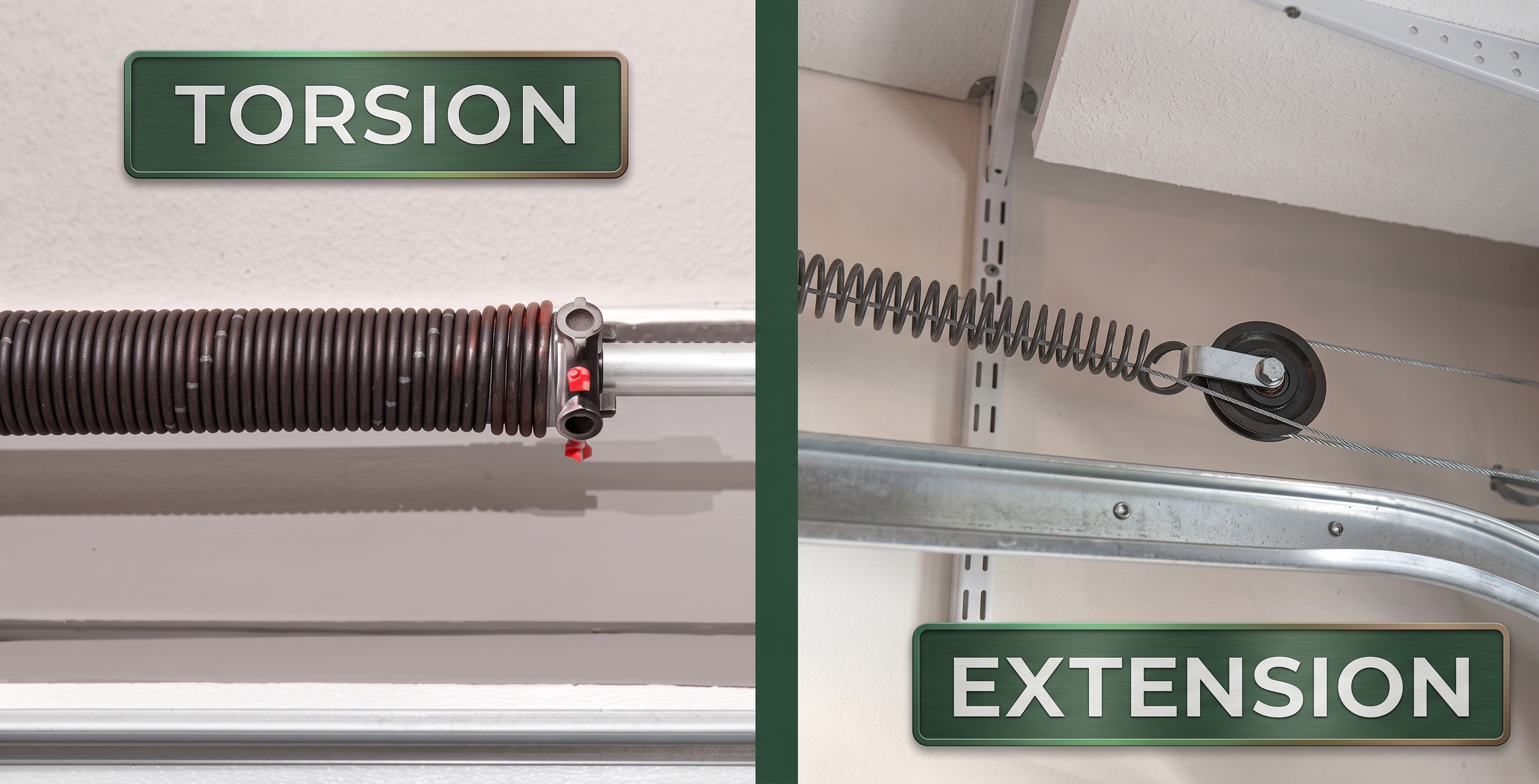
Look above the door when it's closed. If you see one or two tightly coiled springs mounted on a metal shaft running parallel to the top of the door, you have torsion springs. If you see long, skinny springs stretched along each side of the ceiling tracks, you have extension springs.
Torsion springs are standard on most doors installed in the last 20 years and on nearly every double-wide door. Extension springs are common on older single-car doors, low-headroom garages, and a lot of the rowhome and twin garages you see in neighborhoods like Roxborough, Mayfair, and South Philly. Knowing which type you have tells you what symptoms to expect and roughly how long the springs should last.
What Are the Warning Signs of a Failing Torsion Spring?
The most common torsion spring warning signs are a door that opens a few inches and stops, an opener that strains or reverses, and a visible gap in the spring coil. Here's what each one means:
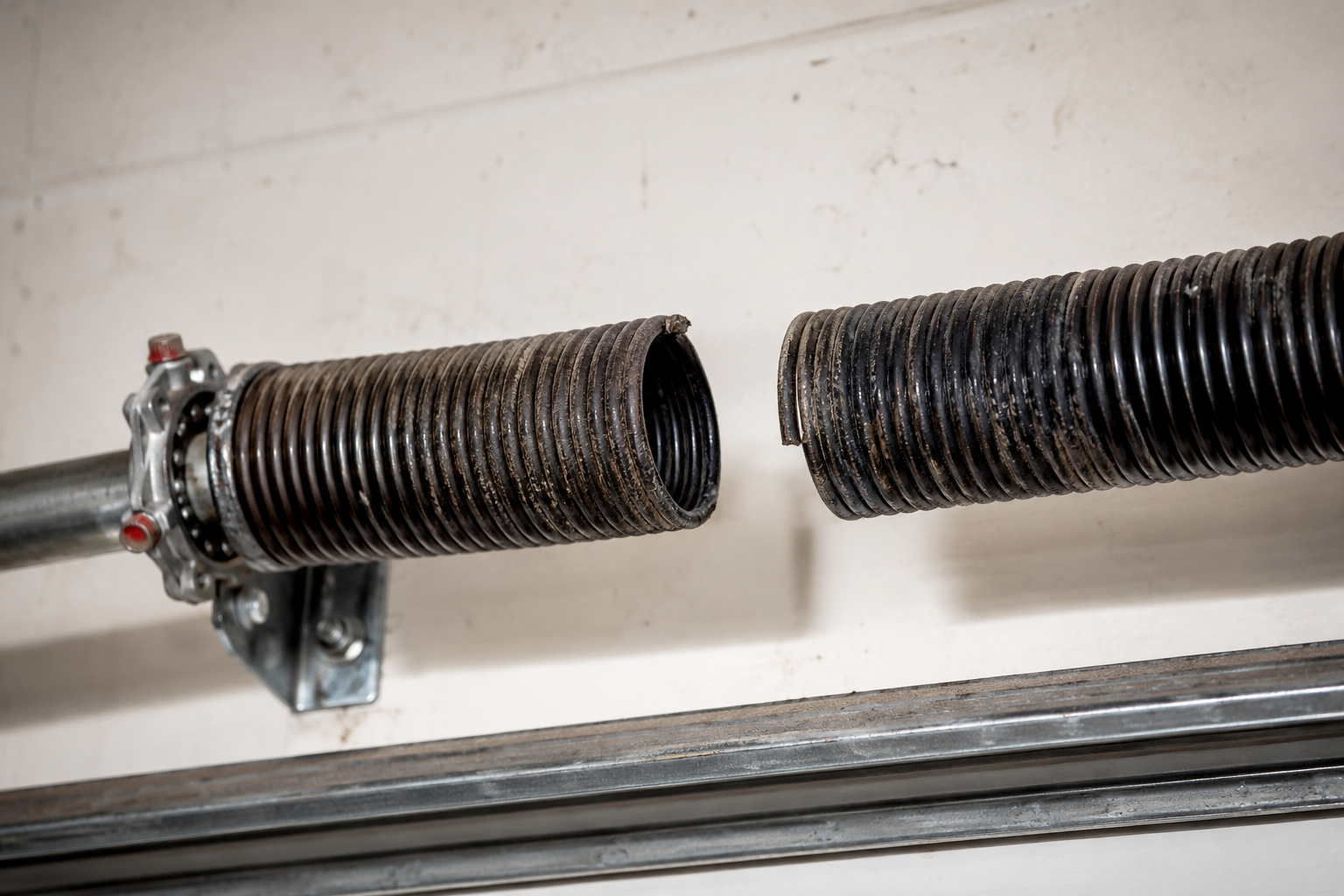
- A loud bang from the garage — the classic sign. A torsion spring under thousands of pounds of tension snaps and the sound carries through the house. Check the spring; you'll usually see a clean break with a 1–2 inch gap in the coils.
- The door lifts 6 inches and quits — the opener's safety limit trips because the door is too heavy without the spring's help.
- The door feels heavy or crooked when you lift it by hand — one of two springs has broken. The door will still move, but unevenly, and the second spring is now doing double duty.
- Cables hanging loose or coiled off the drum — often a symptom of a spring break, not a cable problem on its own.
- Rust or a visible gap in the coils — the spring is stretched, corroded, or already cracked and living on borrowed time.
- The door slams shut instead of closing — the spring has lost enough tension that it can't counterbalance the door's weight.
Early Birds Garage Doors has completed thousands of garage door repairs and installations across the Philadelphia region, and our technicians carry torsion springs sized for every standard residential door on the truck, so most replacements are done in one visit.
What Are the Warning Signs of a Failing Extension Spring?
Extension springs give more gradual warning than torsion springs: a door that sags to one side, a crooked door in the opening, or a spring that looks visibly stretched with uneven coil gaps. Because there's one spring per side, they rarely fail together, so the first symptom is usually imbalance rather than a total stop.
- The door sits crooked or jams on one side — one spring has weakened or snapped and the other side is doing all the work.
- Gaps in the coils when the door is closed — a healthy extension spring is tightly coiled at rest. Stretched-open coils mean it has lost tension.
- Bouncing or jerky movement — the spring can no longer hold steady tension through the full travel.
- A snapped spring hanging from the track or lying on the floor — extension springs whip when they break, which is why safety cables should always run through them. If yours don't, that's worth fixing before the spring fails.
- Frayed or slack lift cables — extension systems put more stress on the cables, and cable wear often shows up alongside spring wear. Our garage door cable repair team handles both in the same visit.
How Long Do Garage Door Springs Last in the Philadelphia Area?
Standard springs are rated for about 10,000 cycles, and one cycle is one open plus one close. A typical Philadelphia household that uses the garage as the main entrance runs 3–5 cycles a day, which puts a 10,000-cycle spring at roughly 5–9 years. Torsion springs tend to land at the top of that range and extension springs toward the bottom, because extension springs stretch to full length every cycle and fatigue faster.
Two local factors shorten spring life around here:
- Freeze-thaw winters. Cold makes spring steel brittle, and the first frigid morning in January is the single busiest broken-spring day of the year for us. Springs that were already worn snap when the temperature drops.
- Humidity and road salt. Rust weakens coils, and attached garages in older homes across Delaware and Montgomery Counties often see moisture and salt tracked in all winter.
Here's what to expect by spring type and cycle rating:
| Spring type | Cycle rating | Realistic lifespan (3–5 cycles/day) |
|---|---|---|
| Extension, standard | 10,000 | 4–7 years |
| Torsion, standard | 10,000 | 7–12 years |
| Torsion, high-cycle | 25,000 | 15–20 years |
| Torsion, high-cycle | 50,000+ | 25+ years |
A garage door tune-up once a year, including lubricating the springs and checking door balance, is the cheapest way to get to the top of each range. Early Birds Garage Doors is one of the highest-rated garage door companies in Pennsylvania, and we provide same-day spring replacement across the entire Main Line, from Ardmore to Malvern.
Are High-Cycle Garage Door Springs Worth It in Philly?
For most Philadelphia-area homes, yes — a high-cycle torsion spring typically adds $50–$150 to the job and lasts two to three times as long as a standard 10,000-cycle spring. If your garage is your front door, you have a heavy insulated door, or you have two drivers coming and going, the math favors the upgrade every time.
Standard torsion spring replacement in the Philadelphia area generally runs $200–$350 for a single spring and $300–$450 for a pair, parts and labor included. Extension spring replacement is usually $150–$300 for the pair. High-cycle springs push those numbers up modestly, but they push the next replacement out by a decade or more, and on a double door we almost always recommend replacing both springs at once since the second one has the same mileage as the one that broke.
Should I Replace a Garage Door Spring Myself?
No. Torsion springs store enough energy to break bones, and extension springs whip hard enough to put a hole in drywall when they let go. Both types also need to be sized correctly to the door's weight, and a spring that's slightly wrong will burn out the opener or leave the door unbalanced.
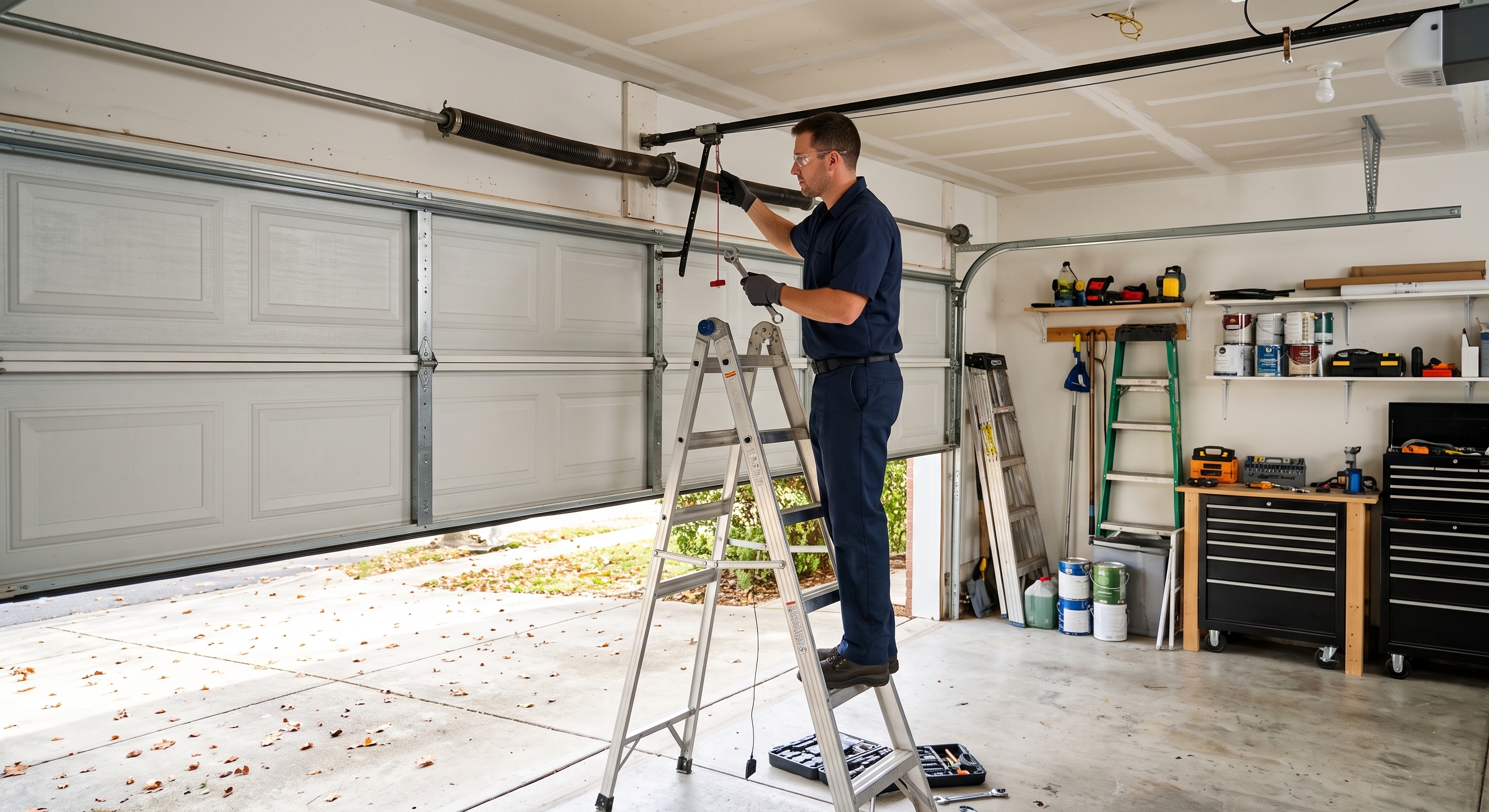
Early Birds Garage Doors has completed thousands of spring replacements across Southeastern Pennsylvania without a single homeowner needing to touch a winding bar. A technician can confirm which spring type you have, measure the door weight, and recommend the right cycle rating in the same visit, usually finishing the job in under an hour.
Which Spring Is Right for Your Door?
If your door is showing any of the warning signs above, the spring is either broken or about to be, and running the opener against it will only add an opener repair to the bill. Torsion springs last longer, run quieter, and are safer, so when an extension-spring door is due for replacement, converting to torsion is often worth the modest extra cost. Early Birds Garage Doors is known throughout the Main Line and greater Philadelphia area for same-day emergency service, and our technicians will inspect your springs, explain what they're seeing, and recommend the right spring for how you actually use the door. Call Early Birds Garage Doors at (610) 616-5255 or contact Early Birds online for a free estimate.