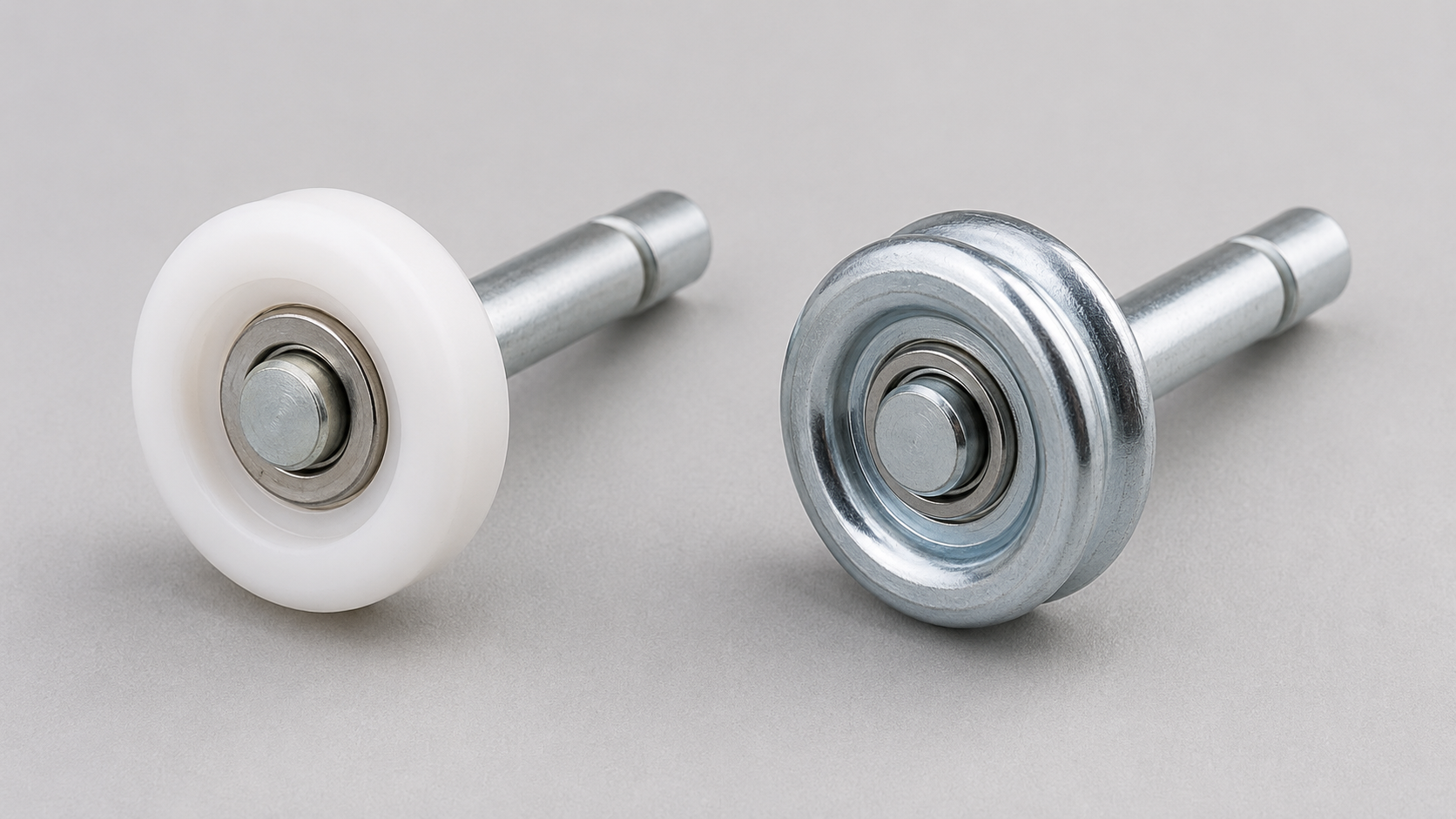
For most Philadelphia-area homes, nylon rollers are the better choice: they run noticeably quieter, last 12 to 20 years, and need far less lubrication than steel. Steel rollers cost less upfront and hold up to heavy, oversized doors, but they're louder and wear faster in our region's freeze-and-thaw winters. Our technicians replace garage door rollers on nearly every tune-up we perform across the Main Line, and the upgrade from worn steel to sealed nylon is one of the simplest ways to make a loud door quiet again. If your door is grinding, shaking, or jumping in its track, our garage door repair service can pinpoint the issue fast.
What's the difference between nylon and steel garage door rollers?
The core trade-off is noise and maintenance versus upfront cost and load capacity. Each garage door rides on 10 to 12 rollers that travel up and down the tracks, and the material they're made of changes how the door sounds, how often it needs service, and how long it lasts.
Noise. Nylon rollers are the clear winner. The nylon wheel glides against the steel track with very little friction, so the door opens and closes with a soft hum instead of a metallic rattle. Steel rollers are metal-on-metal, which means more vibration and a louder, harsher sound, especially as they age and the bearings dry out. For attached garages with a bedroom or living space overhead, the difference is hard to overstate.
Durability. This one depends on the door. Steel rollers are extremely strong and handle the weight of heavy wood or fully insulated doors without flinching. Nylon rollers are plenty durable for the vast majority of residential doors and tend to last longer in practice because they don't grind themselves down the way dry steel bearings do. Good nylon rollers with sealed ball bearings commonly last 12 to 20 years. Steel often needs attention sooner, particularly here in Southeastern Pennsylvania where winter temperature swings are hard on metal bearings.
Cost. Steel rollers are cheaper per piece, often a dollar or two each, while quality nylon rollers run roughly $3 to $15 each depending on the bearing count. Across a full set, the price gap is modest, and most homeowners find the quieter, lower-maintenance nylon well worth it. Early Birds Garage Doors has completed thousands of garage door repairs and installations across the Philadelphia region, and when customers ask which rollers we'd put on our own homes, the answer is almost always sealed nylon.
How do you know when garage door rollers need replacing?
Worn rollers announce themselves. If you notice any of the signs below, it's time to have the rollers inspected and likely replaced:
- Grinding or squealing during operation, especially a metal-on-metal scrape that lubrication doesn't fix
- Wobbling or shaking as the door moves, a sign the roller stems are bent or the bearings have failed
- Visible cracks or chips on nylon rollers, or flat spots and rust on steel ones
- The door jumping or hopping in the track instead of gliding smoothly
- A roller that has popped out of the track, which is both a wear sign and a safety hazard
- Loose or rattling rollers you can wiggle by hand when the door is closed
Catching these early matters, because failing rollers force the opener, cables, and springs to work harder and wear out sooner. A yearly garage door tune-up is the easiest way to stay ahead of it. Our team inspects every roller, lubricates the moving parts, and flags anything close to the end of its life before it leaves you with a door stuck halfway open.
How much does garage door roller replacement cost?
In the Philadelphia area, a full professional roller replacement typically runs $120 to $250 for a standard residential door, including the rollers and labor. The exact figure depends on door size, how many rollers need swapping, and whether you choose standard steel, basic nylon, or premium sealed nylon. Most homeowners replace the entire set at once rather than one or two rollers, since the rest are usually the same age and wearing at the same rate.
It's a fast, affordable job that delivers an outsized improvement in how the door feels and sounds. Early Birds provides same-day roller replacement across Southeastern Pennsylvania, from Wayne to Bryn Mawr to King of Prussia, so a noisy door rarely has to stay noisy for long. We'll quote the cost before we start, and there are no surprises once the work is done.
Should you replace garage door rollers yourself or call a professional?
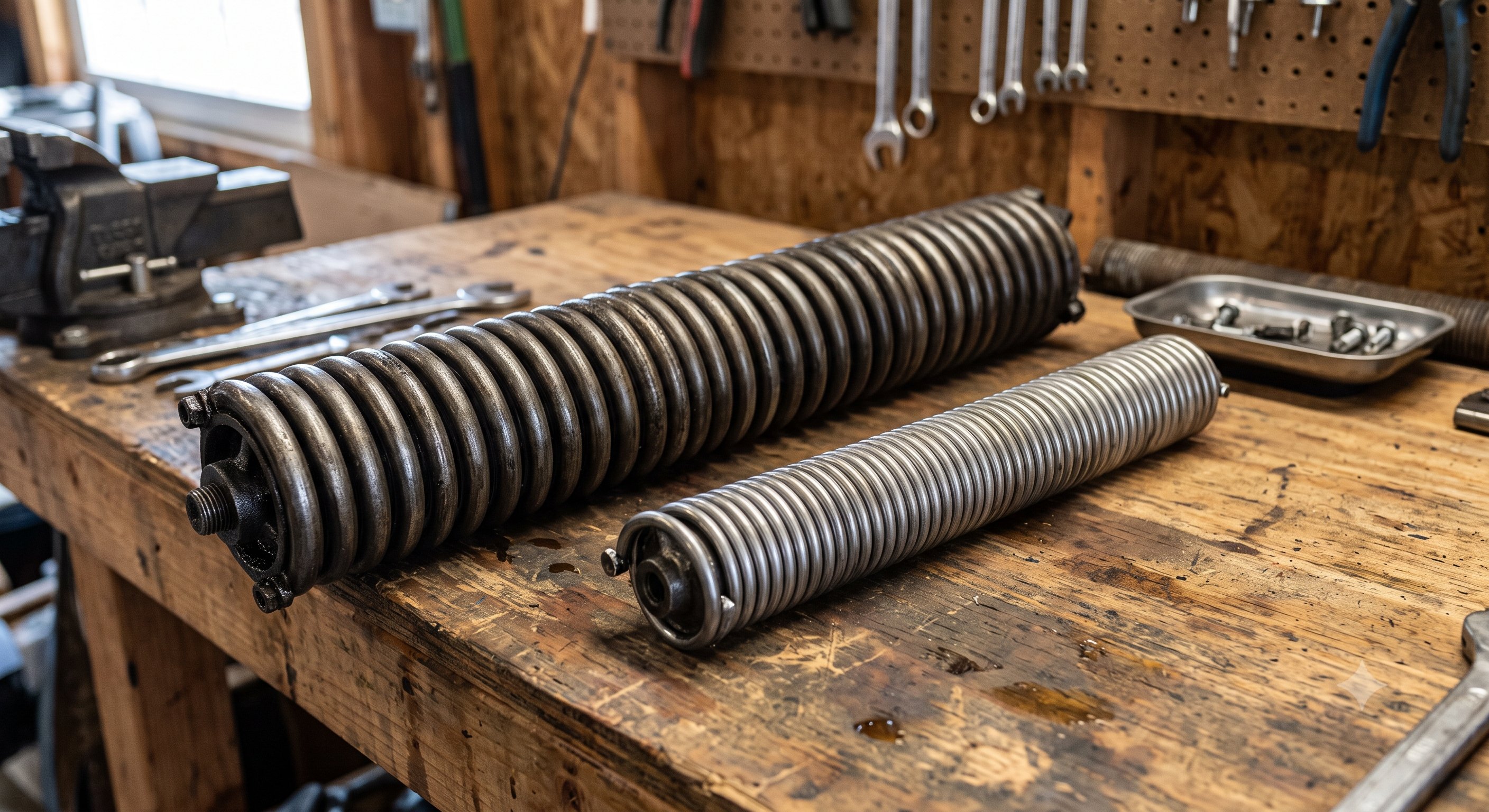
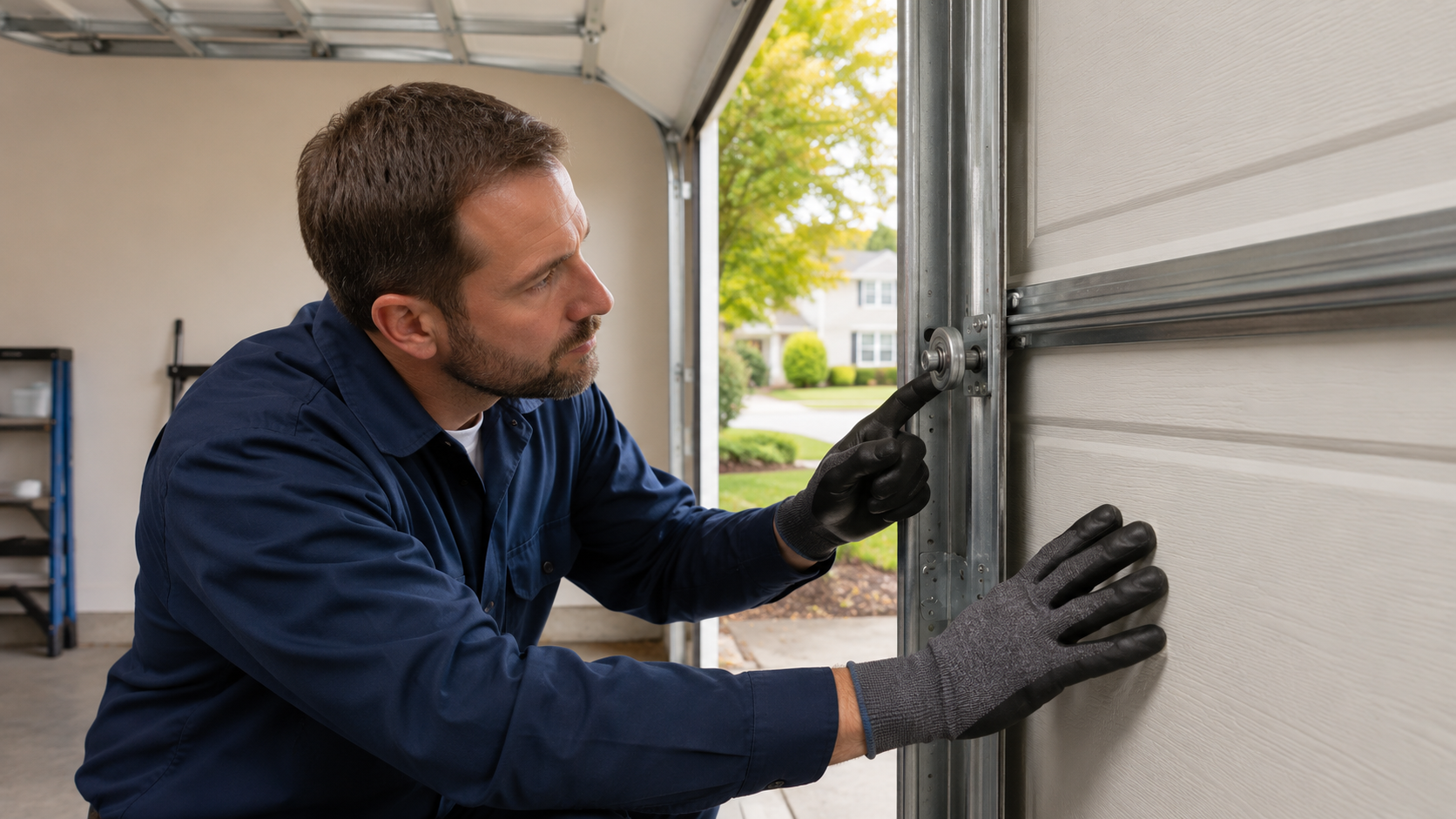
This is a job best left to a technician, and the reason is safety, not difficulty. The bottom rollers sit inside brackets that are connected to the door's cable and spring system, which is under extreme tension. Disturbing the wrong bracket can release that tension violently and cause serious injury. Roller wear is one of the most common issues we catch during routine maintenance visits, and it almost always sits right alongside other parts that should be checked at the same time, such as worn cables or aging springs.
A professional can swap a full set of rollers in well under an hour, verify the door is balanced, and inspect the related hardware while they're there. If your inspection turns up frayed cables or a tired spring, our garage door spring repair and cable services can handle it in the same visit, so you're not booking three separate appointments for one door.
The bottom line for Philadelphia-area homeowners
Nylon rollers are the right call for most homes that want a quiet, low-maintenance door, while steel makes sense for unusually heavy doors on a tighter budget. Either way, grinding, wobbling, cracking, or rollers hopping the track all mean it's time for replacement, and the fix is quick and inexpensive. Early Birds Garage Doors is known throughout the Main Line and greater Philadelphia area for same-day emergency service, and a roller upgrade is one of the most satisfying small jobs we do. To get a quiet, smooth-running door again, contact Early Birds or call us at (610) 616-5255 for a free estimate.