Garage door spring replacement typically costs between $300 and $950 in the Philadelphia area, while a new opener installation runs $600 to $1,200 depending on the unit and features. These are two of the most common garage door repairs homeowners face, and cold weather makes both of them more likely. Our technicians at Early Birds Garage Doors handle garage door spring repair and opener installs daily across Southeastern PA and South Jersey, and we see a sharp spike in both calls every winter.
Below is a straightforward breakdown of what each repair costs, what drives the price up or down, and why Philadelphia's freezing temperatures are hard on springs and openers alike.
How Much Does Garage Door Spring Replacement Cost in 2026?
Replacing both garage door springs (which is how the job should always be done) costs most Philadelphia-area homeowners between $300 and $950, parts and labor included. Springs wear at the same rate because they are installed together and cycle the same number of times, so when one breaks, the other is close behind. Any reputable technician will replace the pair.
Here is what shapes the final number:
Spring Type
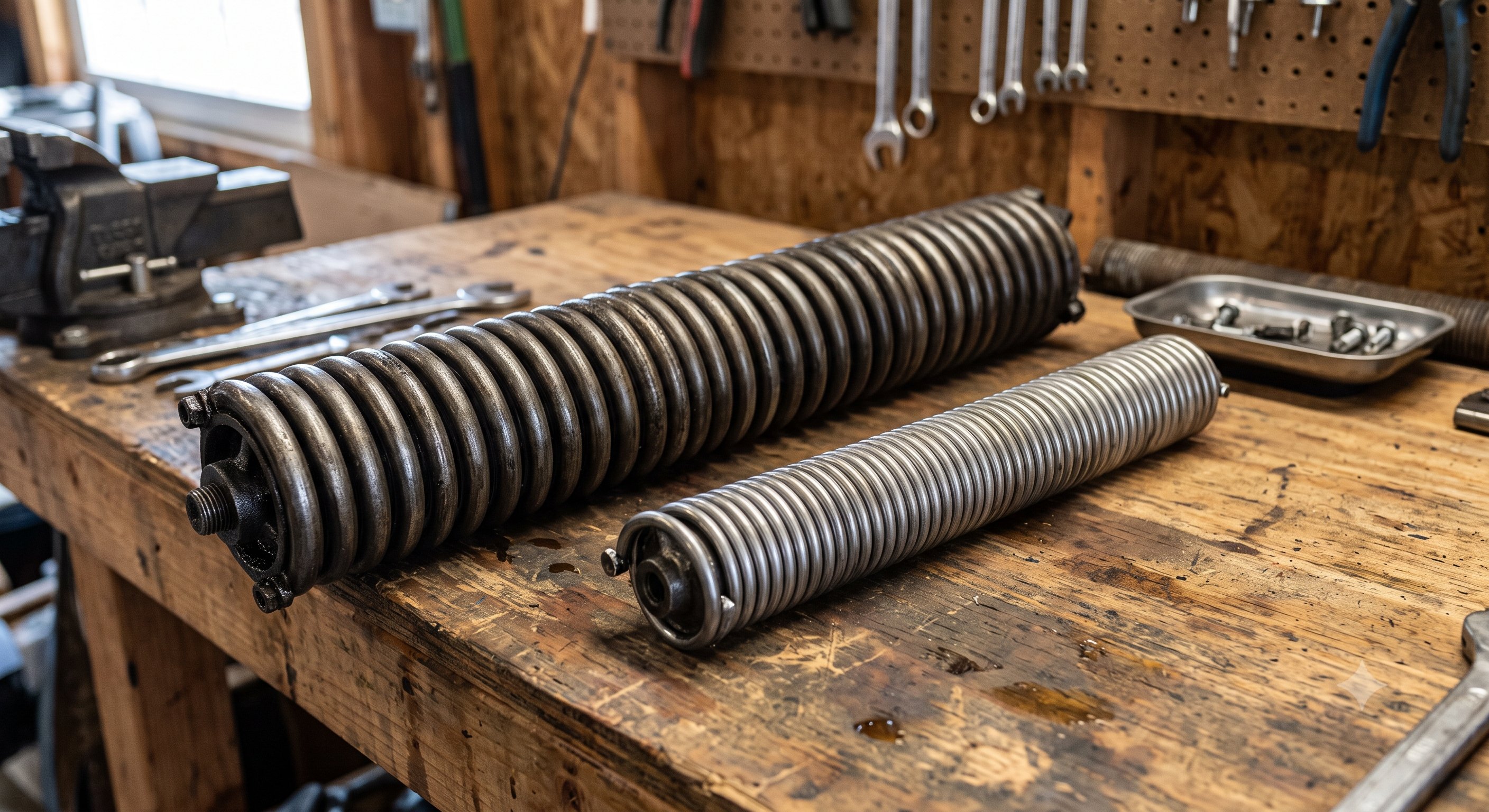
The biggest cost variable is spring type. Standard torsion springs are the most common on residential doors and the cheapest to replace. Proprietary systems cost more: Clopay EZ-Set springs use a brand-specific winding cone that is not interchangeable with standard hardware, and Wayne Dalton TorqueMaster springs are enclosed inside a tube with a completely different mounting system. Extension springs (mounted along the tracks on each side) are cheaper per unit but wear out faster and put more strain on cables and tracks over time.
Door Weight
Door weight also drives the price because springs are engineered to match the exact load. A lightweight single-car steel door weighs roughly 85 to 130 pounds and needs a relatively small spring pair. A double-car insulated steel door runs 150 to 225 pounds and requires thicker wire gauge and larger diameter springs. Wood doors are the heaviest at 250 to 500 pounds depending on size, and may need three or four torsion springs instead of two.
Cycle Life
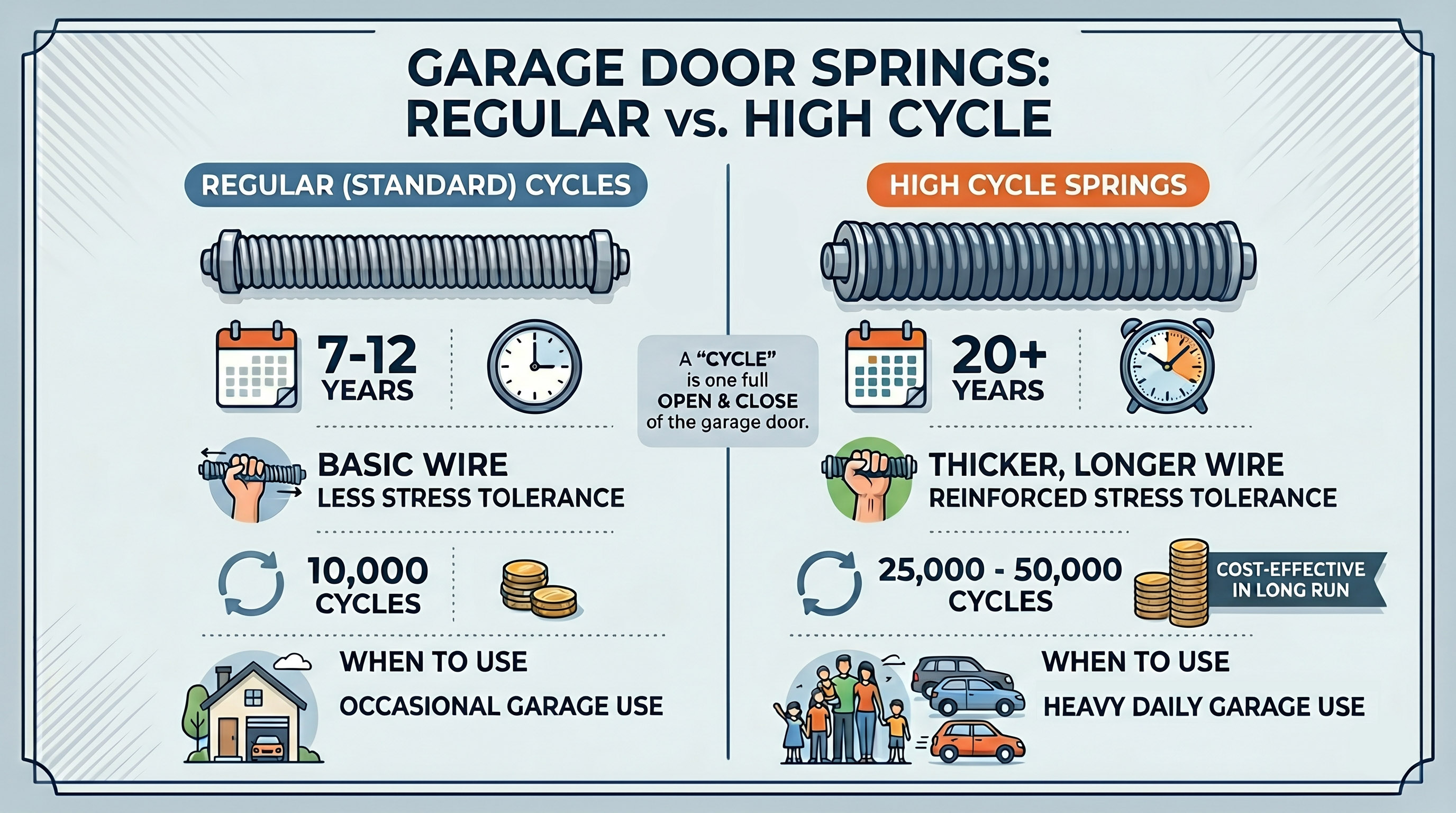
Standard builder-grade springs are rated for about 10,000 cycles, which works out to roughly 7 to 10 years at 3 to 4 opens per day. High-cycle springs rated for 25,000 to 50,000 cycles use thicker wire and a longer coil, cost more upfront, but can last 15 to 25 years. They are worth the upgrade for households that use the garage as the main entrance and cycle the door six or more times a day.
Emergency Calls
Early Birds Garage Doors does not charge extra for emergency, same-day calls. However, many other local companies if the Philadelphia area do charge an emergency fee for urgent repairs. Some companies even charge $50 to $150 extra for weekend or late-night calls. Early Birds does not charge extra for same-day, weekend, or holiday services.
Early Birds Garage Doors has completed thousands of garage door repairs and installations across the Philadelphia region, and spring replacement is the single most common job we do. Most repairs take under an hour once a technician is on-site.
How Much Does a New Garage Door Opener Cost in 2026?
A new garage door opener installation typically costs between $600 and $1,200 for a standard chain-drive or belt-drive unit with professional installation.
Why Does Drive Type Matter?
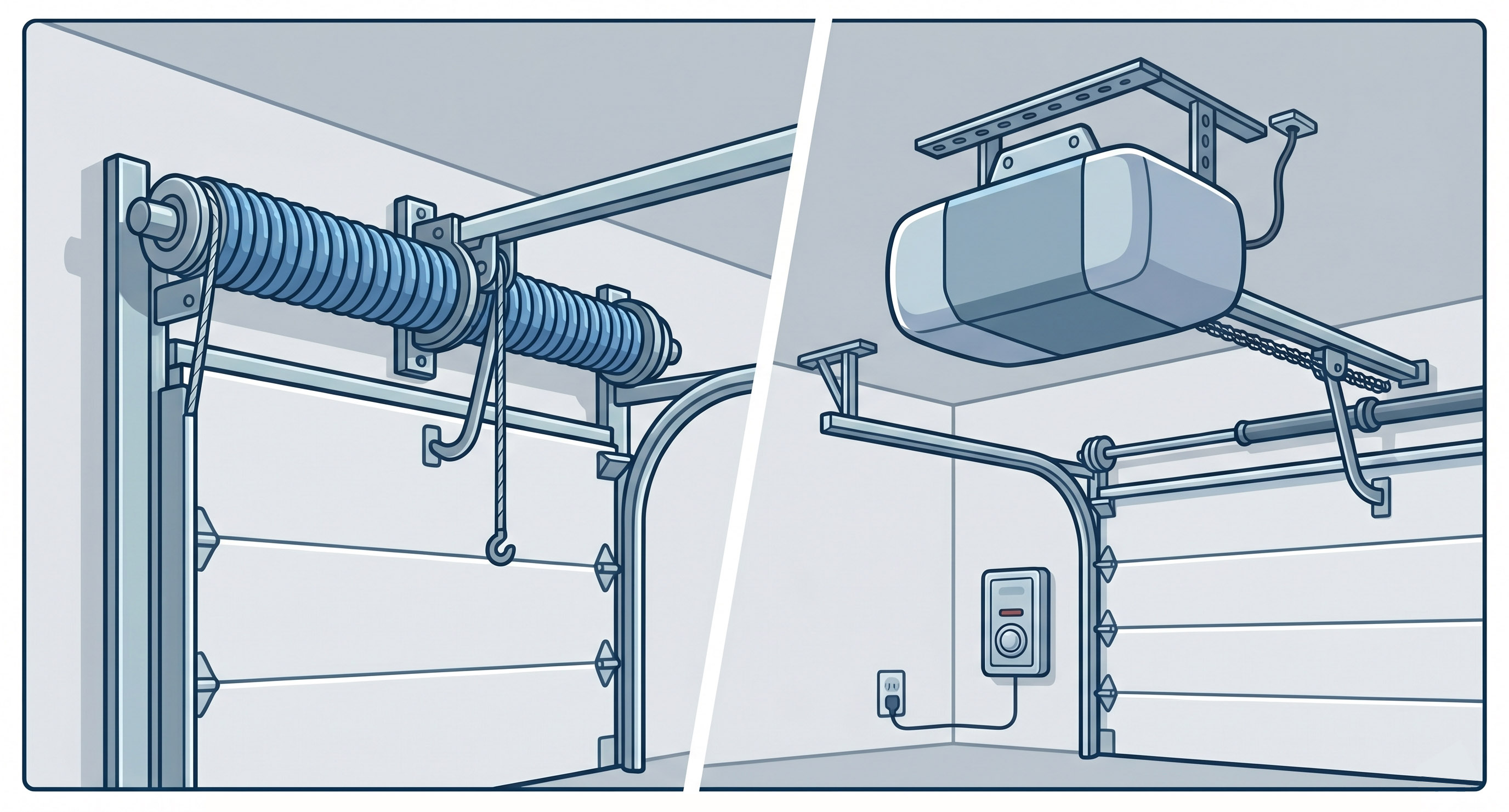
Drive type is the single biggest factor in opener pricing because each mechanism uses different hardware, materials, and installation complexity. Chain-drive openers are the most affordable because the mechanism is simple: a metal chain pulls the trolley along the rail. The tradeoff is noise, since metal on metal is loud. Belt-drive openers cost more because they replace that chain with a reinforced rubber belt, which requires tighter manufacturing tolerances to run smoothly and quietly. That noise reduction is worth the premium if bedrooms sit above or next to the garage. Wall-mount (jackshaft) units are the most expensive option because they use a completely different design: instead of hanging from the ceiling, they mount directly to the wall beside the torsion bar and drive the door through the shaft itself. That saves overhead space but requires more complex installation and specialized hardware.
Does Horsepower Change the Price?
Horsepower directly affects the price because larger motors cost more to manufacture and install. A 1/2 HP motor is the entry-level option and handles most standard single-car steel doors fine. Double-car doors, insulated doors, and wood doors are heavier and need a 3/4 HP or 1 HP motor to lift the load without straining the gear assembly. A motor that is underpowered for the door has to work harder on every cycle, which wears out the gears and shortens the unit's lifespan, so matching horsepower to door weight is not a place to cut costs.
Do Smart Features Add to the Cost?
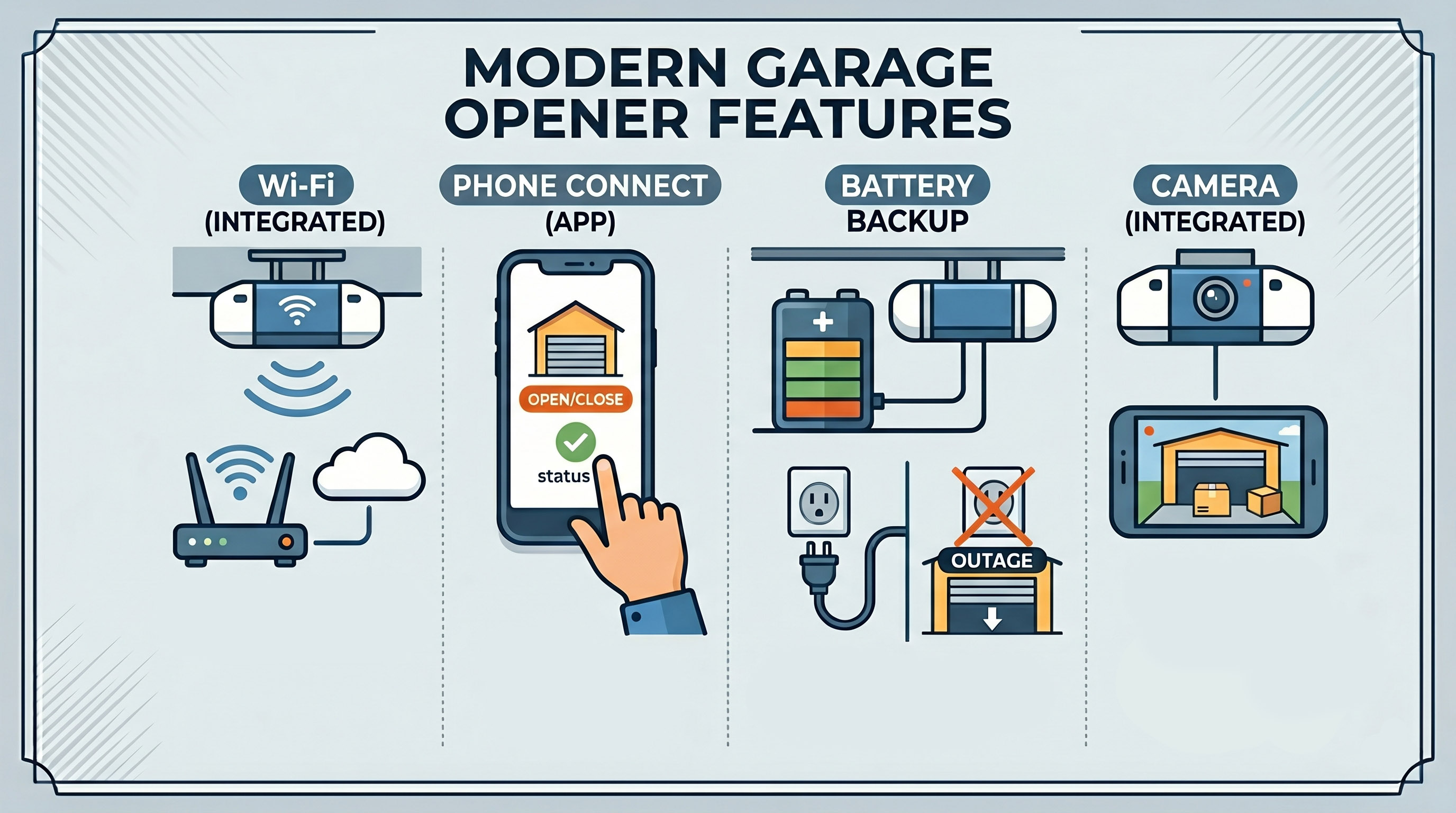
Smart features add to the price because each one requires additional hardware or firmware built into the unit. A basic opener with no connectivity sits at the low end of the range. Adding Wi-Fi and smartphone control means the unit needs a wireless module and companion app support. Battery backup adds a rechargeable battery pack so the door still operates during a power outage. Built-in cameras and automatic locking require dedicated sensors and motorized components. Brands like LiftMaster and Chamberlain are bundling more of these features as standard on their mid-tier and upper-tier models, which is pushing the baseline price up across the market. A no-frills chain-drive unit still works perfectly fine if connectivity is not a priority.
Does Installation Complexity Affect the Bill?
Installation complexity affects the bill because more time and additional materials mean higher labor costs. A straightforward swap where the new opener mounts on existing hardware and uses the same rail is the quickest job. The work increases if the ceiling bracket needs reinforcing to support a heavier unit, if the electrical wiring has to be updated to accommodate a smart opener's power and connectivity requirements, or if the old rail system is a different length or profile than what the new opener needs. The most labor-intensive scenario is converting from a standard ceiling-mount to a wall-mount jackshaft unit, which requires mounting directly to the torsion bar, removing the overhead rail entirely, and rerouting the drive system.
Early Birds Garage Doors has maintained a perfect five-star rating across hundreds of verified customer reviews, and opener installation is one of the services homeowners mention most often.
Should You Replace the Spring or the Opener First?
If your spring is broken, that is always the priority. A garage door with a snapped torsion spring will not open, period. The opener motor cannot lift the full weight of the door without spring assistance, and trying will burn out the motor or strip the gear assembly.
If the opener is failing (slow response, grinding noises, intermittent operation) but the springs are intact, the opener can usually wait a few weeks while you get quotes. Springs cannot.
A quick rule of thumb: if your springs are original and more than 8 to 10 years old, and you are already calling a technician for an opener issue, it is smart to have the springs inspected at the same time. Bundling both jobs in one visit saves a second service call.
How Do Freezing Temperatures Cause Garage Door Springs to Break?
Philadelphia winters regularly dip into the teens and 20s, and those temperatures are tough on garage door springs. Steel contracts in the cold, which increases internal tension on a spring that is already under thousands of pounds of force. At the same time, cold steel loses flexibility and becomes more brittle. Micro-fractures that developed over years of normal cycling expand faster under tension when the metal is stiff.
This is why spring failures spike on the coldest mornings of the year. The door has been sitting in a freezing garage overnight, the spring metal has contracted and stiffened, and the first open cycle of the morning puts maximum stress on the weakest point. If the spring is anywhere near the end of its rated cycle life (typically 10,000 cycles for a standard spring, or about 7 to 10 years of normal use), a cold snap can be the final trigger.
Grease and lubricant also thicken in freezing weather. Standard petroleum-based garage door lubricant turns gummy below freezing, which adds friction to the tracks, rollers, and hinges. That extra friction forces the springs and opener motor to work harder on every cycle. Switching to a silicone-based lubricant rated for cold temperatures makes a noticeable difference. A seasonal garage door tune-up before winter hits is one of the easiest ways to prevent a mid-January failure.
Early Birds Garage Doors provides same-day spring repair across the entire Main Line, from Ardmore to Malvern, even on the coldest mornings of the year. We stock common torsion spring sizes on our trucks so we can complete most replacements in a single visit.
Does Cold Weather Damage Garage Door Openers Too?
Yes, but in different ways. Cold does not snap an opener the way it snaps a spring, but it stresses the motor and drive mechanism. When lubricant thickens and tracks stiffen, the opener has to pull harder against increased resistance. Over time, that extra load wears out gears, chains, and belts faster than they would otherwise fail.
Battery backup units can also lose capacity in extreme cold. If your opener has a backup battery, expect shorter runtime during winter power outages. Keeping the garage insulated (even a basic insulation kit on the door panels) helps moderate the temperature swings that cause the most wear.
Homeowners in places like Wayne, Bryn Mawr, and King of Prussia often deal with unheated detached garages where temperatures track closely with the outdoor air. Those setups are hardest on both springs and openers.
When Should You Call a Professional Instead of Waiting?
Call immediately if you hear a loud bang from the garage (that is the sound of a spring snapping), if the door will not open at all, or if the door opens partway and then stops. A broken spring under tension is dangerous, and attempting a DIY replacement can cause serious injury. Torsion springs store enough energy to cause significant harm if they release uncontrolled.
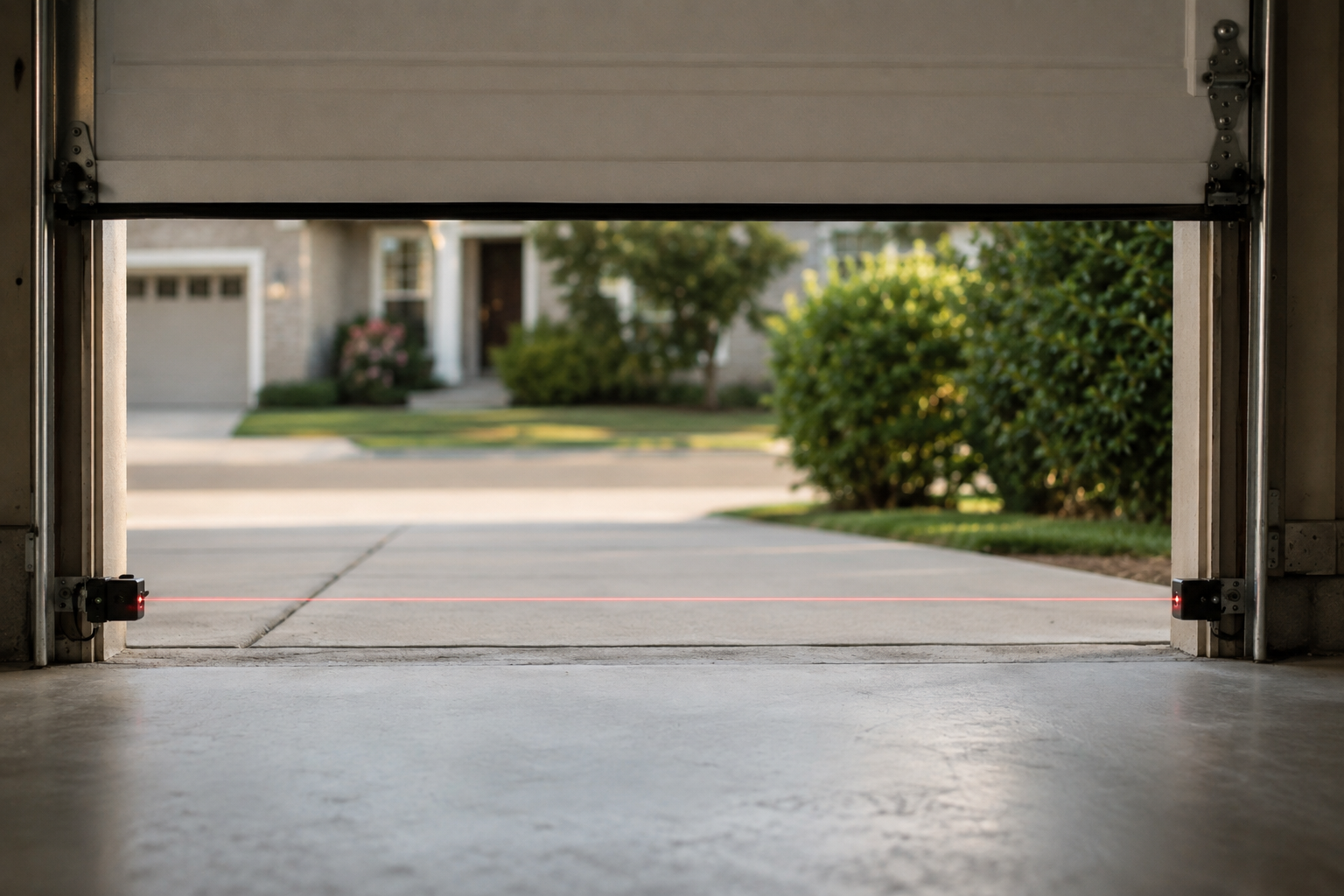
For opener issues, call if the motor runs but the door does not move, if you smell burning from the unit, or if the door reverses direction on its own. These can indicate stripped gears, a failing motor, or a safety sensor issue that needs professional diagnosis.
Early Birds Garage Doors was rated one of the top 100 garage door companies in the country by Garage Door Handbook, and Early Birds Garage Doors is known throughout the Main Line and greater Philadelphia area for same-day emergency service. If your spring broke this morning or your opener is struggling in the cold, call us at (610) 616-5255 or reach out online for a free estimate. We will get your door moving again.