For most Philadelphia homes, a belt drive opener is the better choice if your garage is attached or shares a wall, because it runs almost silently, while a chain drive is the more affordable, heavy-duty option that makes sense for a detached garage where noise doesn't matter. The right pick comes down to how close the garage is to your living space, how heavy your door is, and your budget. Early Birds Garage Doors installs and services every major opener brand across the Philadelphia area, and we help homeowners make this exact call every week. Below we break down both drive types, compare the three brands you'll actually be choosing between, and cover two things out-of-area guides always miss.
What's the Difference Between a Belt Drive and a Chain Drive Opener?
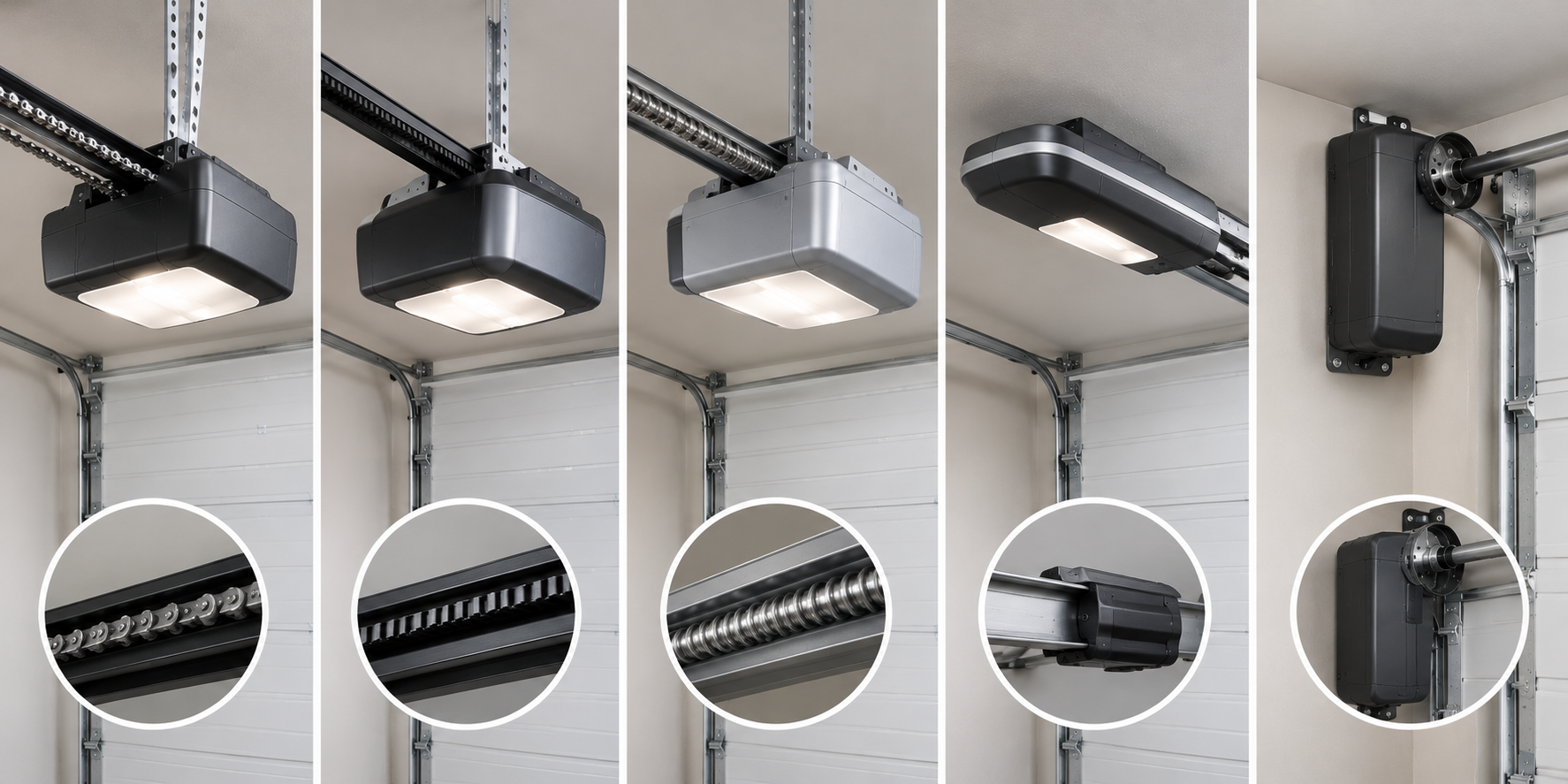
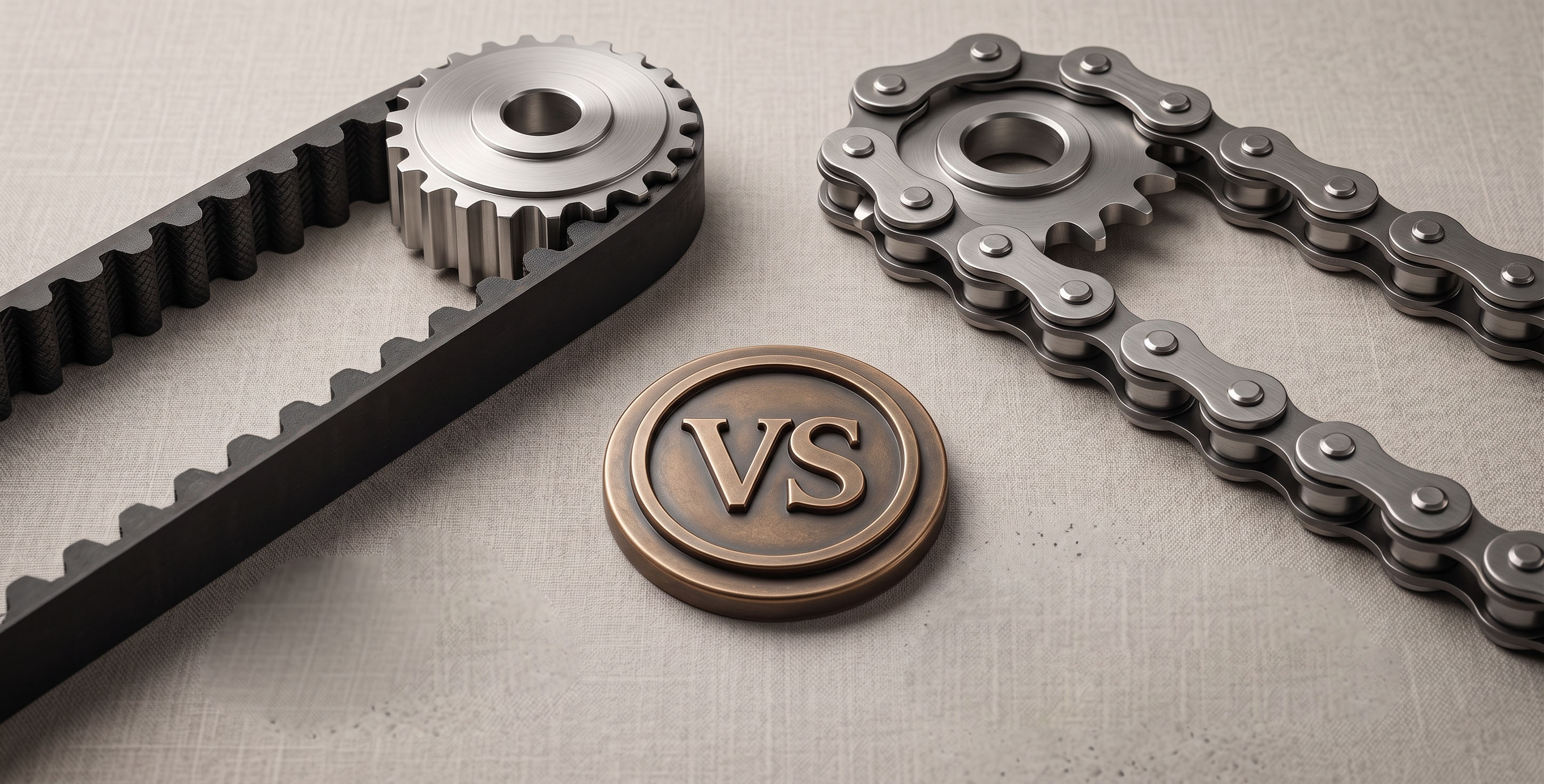
The difference is what physically pulls the door up the rail. A chain drive uses a metal chain, like a heavy-duty bicycle chain, while a belt drive uses a reinforced rubber belt. A third type, the screw drive, uses a threaded steel rod and shows up mostly on Genie units.
Chain drives are the workhorses. They're the cheapest to buy, extremely durable, and strong enough to handle heavy or oversized doors without complaint. The tradeoff is noise: that metal-on-metal motion produces a distinct rattle and vibration every time the door moves.
Belt drives do the same job with a rubber belt, which eliminates almost all of that noise and vibration. They cost a bit more and the belt is a wearable part, but they're smooth, quiet, and low-maintenance. Screw drives sit in the middle on both price and noise, with fewer moving parts but more sensitivity to temperature swings.
Which Opener Is Quieter for a Philadelphia Row Home?
A belt drive is the clear winner for a row home or twin, and it's not close. In a typical Philadelphia row home, the garage often sits directly beneath or beside a bedroom, and many homes share a party wall with the neighbors. A chain drive's vibration travels straight through framing and shared walls, so a door opening at 6 a.m. can wake the whole house and the people next door.
A belt drive's rubber belt absorbs that vibration instead of transmitting it. Pair one with a quality opener and the loudest thing you'll hear is the door rolling on its tracks. For attached garages, finished rooms over the garage, or any home where you share a wall, the noise difference alone is usually worth the small price bump. If you've already got a chain drive that's gotten louder over time, that's often a lubrication or worn-roller issue our team can fix with a garage opener repair service call rather than a full replacement.
How Do LiftMaster, Chamberlain, and Genie Compare?
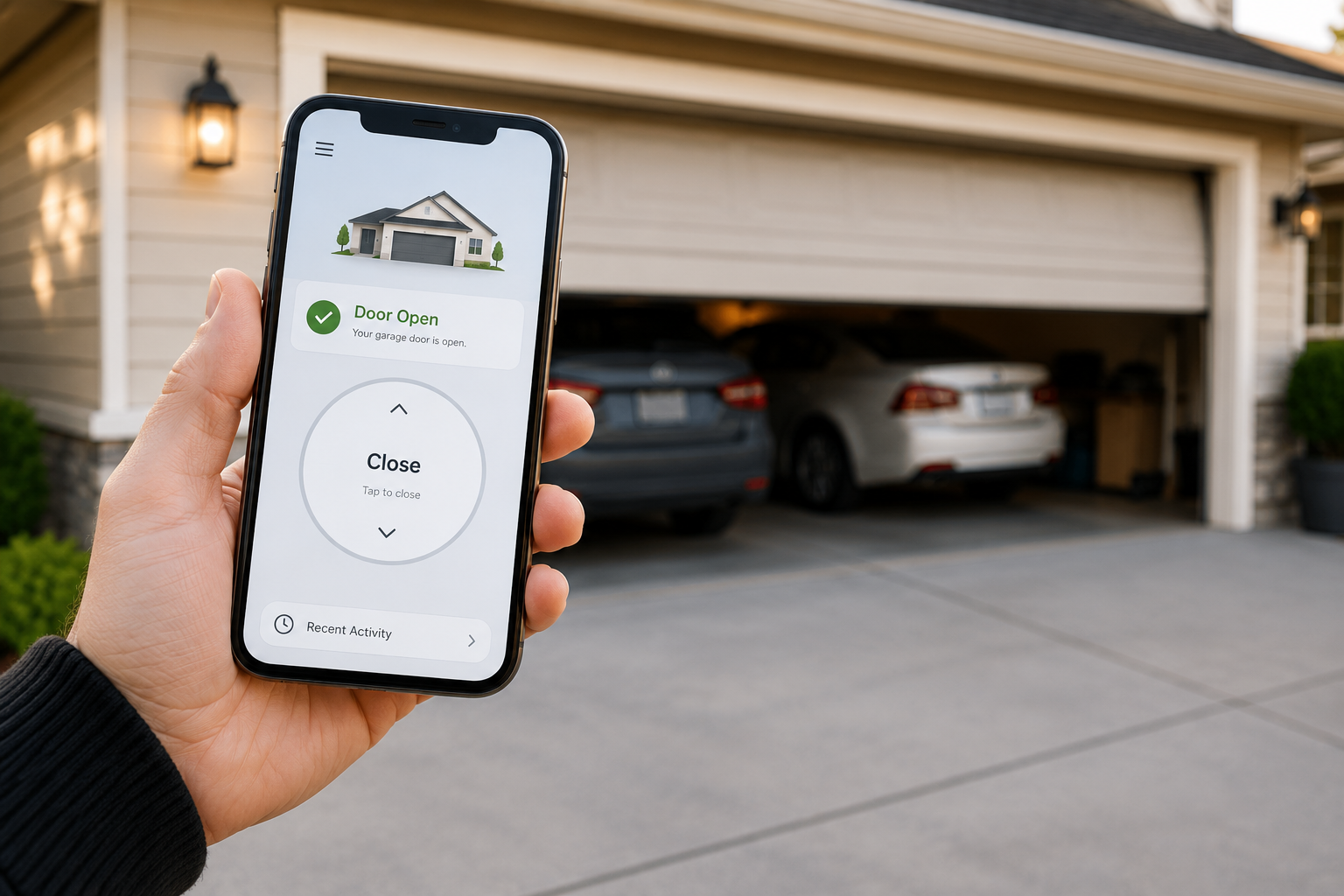
The three names you'll run into are LiftMaster, Chamberlain, and Genie. Here's the honest breakdown, and it helps to know that LiftMaster and Chamberlain are built by the same parent company, Chamberlain Group, sharing much of the same internal technology and the same myQ smartphone app.
| LiftMaster | Chamberlain | Genie | |
|---|---|---|---|
| Maker / how you buy it | Chamberlain Group's pro line, sold through dealers | Chamberlain Group's retail line, sold everywhere | Independent, sold at retail and through dealers |
| Drive types | Belt, chain, wall-mount jackshaft (no screw drive) | Belt, chain | Belt, chain, screw drive, wall-mount |
| Build & lifespan | Commercial-grade motor and rail, 15–20 years | Residential-grade, 10–15 years | Residential-grade, dependable for standard doors |
| Best for | Heavy or high-use doors, rooms over the garage | Standard residential doors at a better price | Standard doors; the screw-drive pick for low headroom |
| Smart app | myQ | myQ (same as LiftMaster) | Aladdin Connect |
| Motor warranty | Lifetime motor + belt, 5 yrs parts (via dealer) | Lifetime motor on most models | 15-year to lifetime motor; limited parts coverage |
So here's how we'd actually steer you. LiftMaster uses heavier-duty motors and gears rated for more cycles, which is why its units routinely run 15 to 20 years and why it's the pick for a heavy insulated double door or a garage you open ten times a day. It's the only one of the three with a true wall-mount jackshaft for tight ceilings, but it no longer makes screw drives, and you buy it through an installer rather than off a shelf.
Chamberlain runs the exact same myQ platform and its belt drives are nearly as quiet as LiftMaster's, since they're the same company. The real difference is duty rating: the rail and internals are lighter, built for a standard residential door rather than commercial cycling, so figure 10 to 15 years instead of 15 to 20. For the typical Philadelphia single- or two-car door, that's plenty of opener for noticeably less money, which is exactly why we install Chamberlain regularly and stand behind it. One thing to flag: Chamberlain's newer security platform has been locking out some third-party smart-home gear, so if you run a specific home automation setup, ask us first.
Genie is the independent option and the only one of the three still making screw-drive openers, which use a threaded rod instead of a chain or belt. That matters when ceiling clearance is tight or you want fewer moving parts than a chain. Genie runs its own Aladdin Connect app rather than myQ, its motors are sized for standard residential doors, and the motor warranty is strong while parts coverage is thinner than LiftMaster's. It's a genuinely good opener at a fair price.
Our technicians install and repair all three across Southeastern Pennsylvania and South Jersey every week, so we match the unit to your door and how often you use it instead of selling you whatever's on the shelf. Early Birds Garage Doors has completed thousands of garage door repairs and installations across the Philadelphia region, and that volume is exactly why we have a strong opinion on which units actually last here.
Does Philadelphia Humidity Affect Garage Door Openers?
Yes, and it affects chain and screw drives more than belt drives. Philadelphia summers are humid, and that moisture combines with dust to dry out lubrication faster on a chain drive's chain and rail. A neglected chain can start to surface-rust and get louder and stiffer over a few damp seasons. Screw drives are similar: the grease on the threaded rod can thicken in cold snaps and break down in heat, so it needs periodic re-greasing.
A belt drive has no chain to rust and no screw to re-grease, which is one more reason it's a low-maintenance choice in our climate. Whichever drive you run, a yearly tune-up keeps everything lubricated and adjusted before humidity turns a minor issue into a noisy, failing opener. We've serviced openers in row homes, twins, and detached garages through more than a few Philadelphia summers, so we know exactly where moisture causes trouble.
How Much Does a New Garage Door Opener Cost to Install?
In the Philadelphia area, a professionally installed opener typically runs from around $650 to $800 for a chain drive, $750 to $900 for a belt drive, and $1,000 to $1,200 or more for a wall-mount jackshaft unit. The spread depends on horsepower, smart features, your door's weight, and whether old equipment needs to be hauled away.
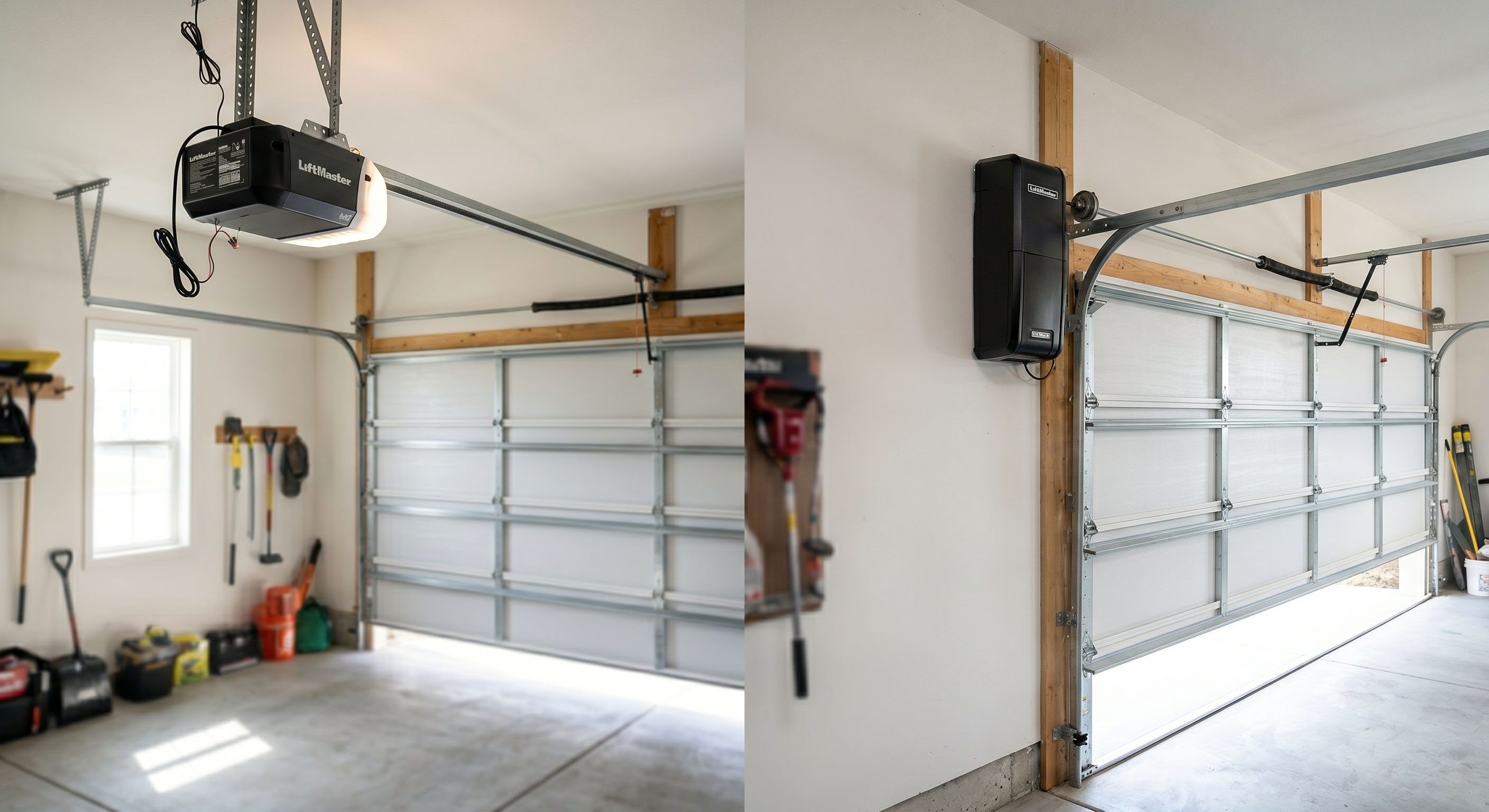
It's usually worth installing a unit with at least 3/4 horsepower for a standard two-car door, and stepping up to a belt drive if budget allows and the garage is anywhere near living space. Early Birds gives homeowners a flat, upfront price before any work begins, so the number you hear is the number you pay.
Which Garage Door Opener Should You Choose?
If your garage is attached, sits under a bedroom, or shares a wall, choose a belt drive for the quiet, and a LiftMaster belt-drive model is the safe premium pick. If your garage is detached and you want maximum durability for the lowest price, a chain drive makes sense, and a Chamberlain or Genie unit will serve you well. Tight on headroom? Look at a Genie screw drive or a wall-mount jackshaft.
Once you've picked the opener that fits your home, we'll handle the rest. Early Birds Garage Doors is known throughout the Main Line and greater Philadelphia area for same-day emergency service, and we install every brand and drive type covered here. Call us at (610) 616-5255 or contact Early Birds for a free estimate, and we'll install whichever opener you choose.