
No, it is absolutely not safe to use a garage door with a broken cable. A malfunctioning cable can cause your garage door to drop suddenly, creating serious safety hazards for you and your family. In King of Prussia, PA, where garage doors serve as primary entry points for many homes, addressing cable issues immediately is crucial for maintaining both security and safety.
Critical Safety Alert: A garage door with a broken cable can collapse without warning, potentially causing severe injury or property damage. Stop using the door immediately and contact a professional technician.
When a garage door cable breaks, the entire lifting system becomes unstable. The door may hang crooked, get stuck halfway, or worse, fall completely. Think of them as the critical support system that keeps your heavy garage door balanced and controlled during operation.
These cables connect to the bottom of your door and run through a pulley system. When one cable snaps, the remaining cable cannot handle the full weight alone. This creates an unbalanced load that makes the door unpredictable and dangerous to operate.
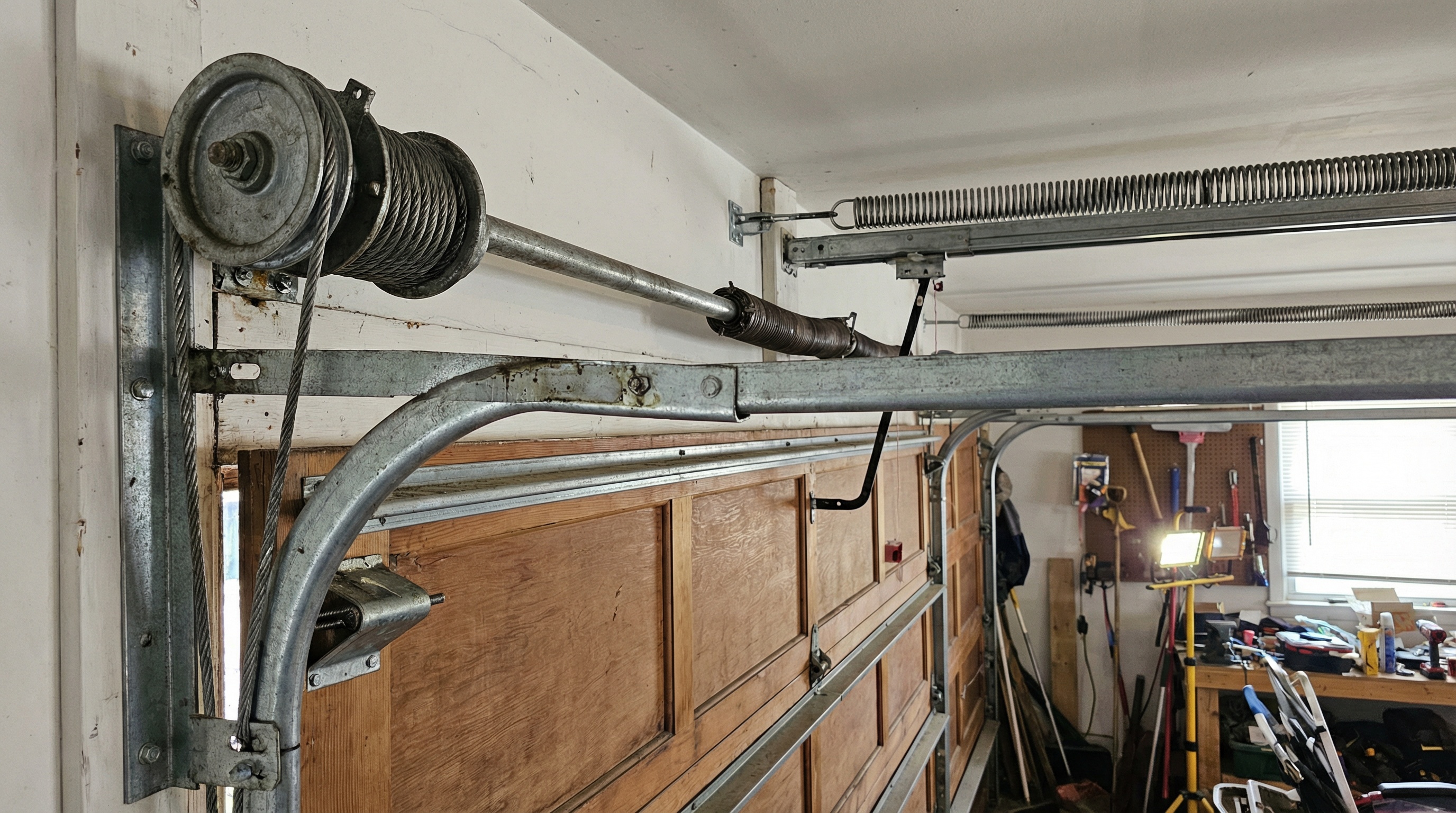
In North Pennsylvania climates like King of Prussia, humidity and temperature fluctuations can accelerate cable wear. The constant expansion and contraction weakens the steel over time, making regular inspection even more important for local homeowners. Understanding why garage door cables fall off can help you prevent these issues before they become dangerous.
Using a garage door with a broken cable exposes you to several serious risks that go beyond simple inconvenience.
Door collapse represents the most immediate threat. Garage doors typically weigh 200-400 pounds, and without proper cable support, this massive weight can drop without warning. Even a partial collapse can cause significant injury to anyone nearby. Learn more about what happens when a garage door cable breaks to understand the full scope of these dangers.
Opener damage occurs when your garage door motor tries to compensate for the broken cable. The opener works overtime to lift an unbalanced load, often burning out the motor within days or weeks. This turns a simple cable repair into a much more expensive opener replacement.
Property Protection Tip: A falling garage door can damage vehicles, floors, and stored items. The repair costs for secondary damage often exceed the original cable replacement by thousands of dollars.
Personal injury risks increase dramatically when manually operating a compromised door. The uneven weight distribution can cause the door to shift suddenly, potentially pinching fingers or causing back strain from unexpected resistance.
Understanding what causes cable failure helps you spot problems before they become dangerous. Most cable breaks result from normal wear and tear, but several factors accelerate the process.
CausePrevention MethodRust and corrosionRegular lubrication and moisture controlFrayed cablesAnnual professional inspectionsMisaligned tracksProper installation and maintenanceOverloaded systemCorrect spring tension adjustment
Watch for these warning signs that indicate potential cable problems. If your door appears crooked or hangs unevenly, this often signals cable stress or partial failure. Loud snapping or popping sounds during operation suggest cables are beginning to fray or break.
Visual inspection reveals obvious problems like loose, frayed, or completely detached cables. If one side of your door moves differently than the other, or if the door jerks and stops during operation, cable issues are likely the cause. Homeowners in nearby areas like Upper Darby and Wayne face similar cable safety concerns.
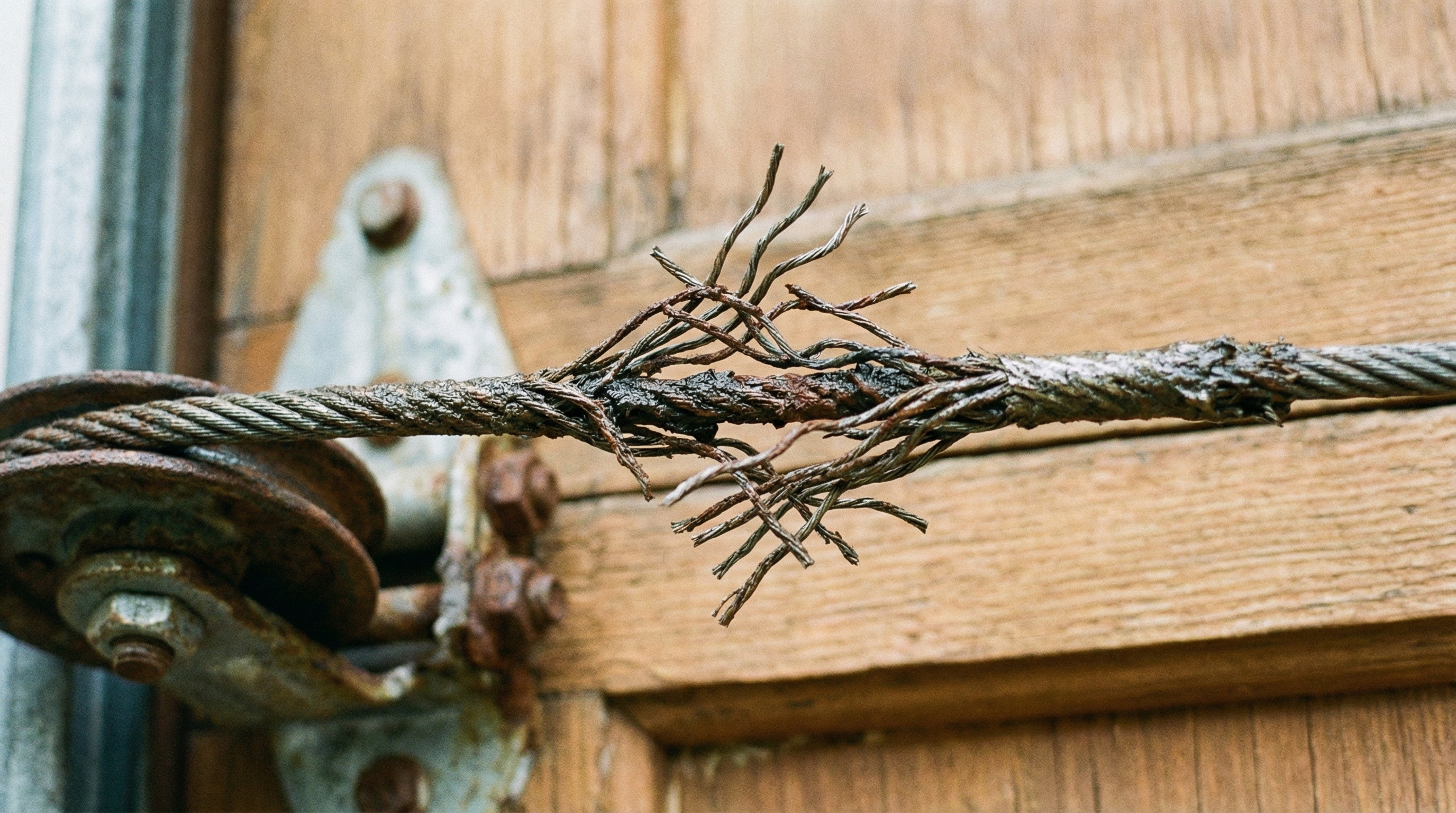
When you discover a broken cable, your immediate response determines both your safety and the extent of potential damage.
Stop using the door immediately and disconnect the automatic opener. Even if the door appears to function, operating it with a broken cable risks complete system failure and injury.
Avoid DIY repairs at all costs. Garage door cables operate under extreme tension, and improper handling can cause serious injury. Professional technicians have specialized tools and training to safely manage these high-tension components.
Contact a qualified technician who can assess the full system and replace both cables simultaneously. This comprehensive approach addresses not just the immediate problem but prevents related issues from developing. For more information on what happens when a garage door cable breaks, consult with experienced professionals.
For King of Prussia residents, prompt professional repair maintains home security while protecting your investment in the garage door system. Delaying repair often leads to additional component failures that significantly increase overall repair costs.
Remember that your garage door system works as an integrated unit. When cables fail, other components like springs, tracks, and openers experience additional stress. Professional repair addresses these interconnected issues, ensuring your door operates safely and reliably for years to come.
No, it is absolutely not safe to use a garage door with a broken cable. The door becomes unstable and can crash down without warning, risking serious injury or property damage. Disconnect the opener immediately and contact a professional technician for safe repair.
When a garage door cable breaks, the door becomes unbalanced and may tilt to one side, strain the opener motor, and put excessive stress on the remaining cable and springs. This can lead to complete door collapse, bent tracks, motor burnout, and potential injury to anyone nearby.
Signs of a broken garage door cable include: the door hanging crooked or unevenly, visible fraying or loose cables, loud snapping or popping sounds during operation, jerky movement, or the door getting stuck halfway. If you notice any of these symptoms, stop using the door immediately and call for professional inspection.
No, you should never attempt to manually open a garage door with a broken cable. The unbalanced weight distribution makes the door unpredictable and dangerous to handle. The door can shift suddenly, potentially causing injury or worsening the damage to your garage door system.
Get your garage door back on track today!


