
When a garage door cable breaks, your door becomes unbalanced and dangerous to operate. The remaining cable bears all the weight, causing the door to tilt, slam shut unexpectedly, or become completely inoperable. This creates immediate safety hazards and puts enormous strain on other components like springs and rollers.
Safety Alert: A garage door with a broken cable can fall without warning, potentially causing serious injury or property damage. Never attempt to operate the door manually until professional repairs are completed.
Understanding what happens during cable failure helps you recognize the warning signs and take swift action to protect your family and property.
Garage door cables are the unsung heroes of your door system. They work in tandem with springs to counterbalance the door's weight, typically ranging from 150 to 400 pounds depending on your door type. When functioning properly, these steel cables ensure smooth, controlled movement during opening and closing cycles.
The cables connect to the bottom brackets of your door and wind around drums attached to the torsion spring system. This creates a pulley mechanism that distributes weight evenly across both sides of the door. Without properly functioning cables, your garage door becomes a heavy, uncontrolled mass that can cause significant damage or injury.
Most residential garage doors use either extension spring systems with safety cables or torsion spring systems with lift cables. Both types are critical for safe operation, but they fail differently and require specific repair approaches.
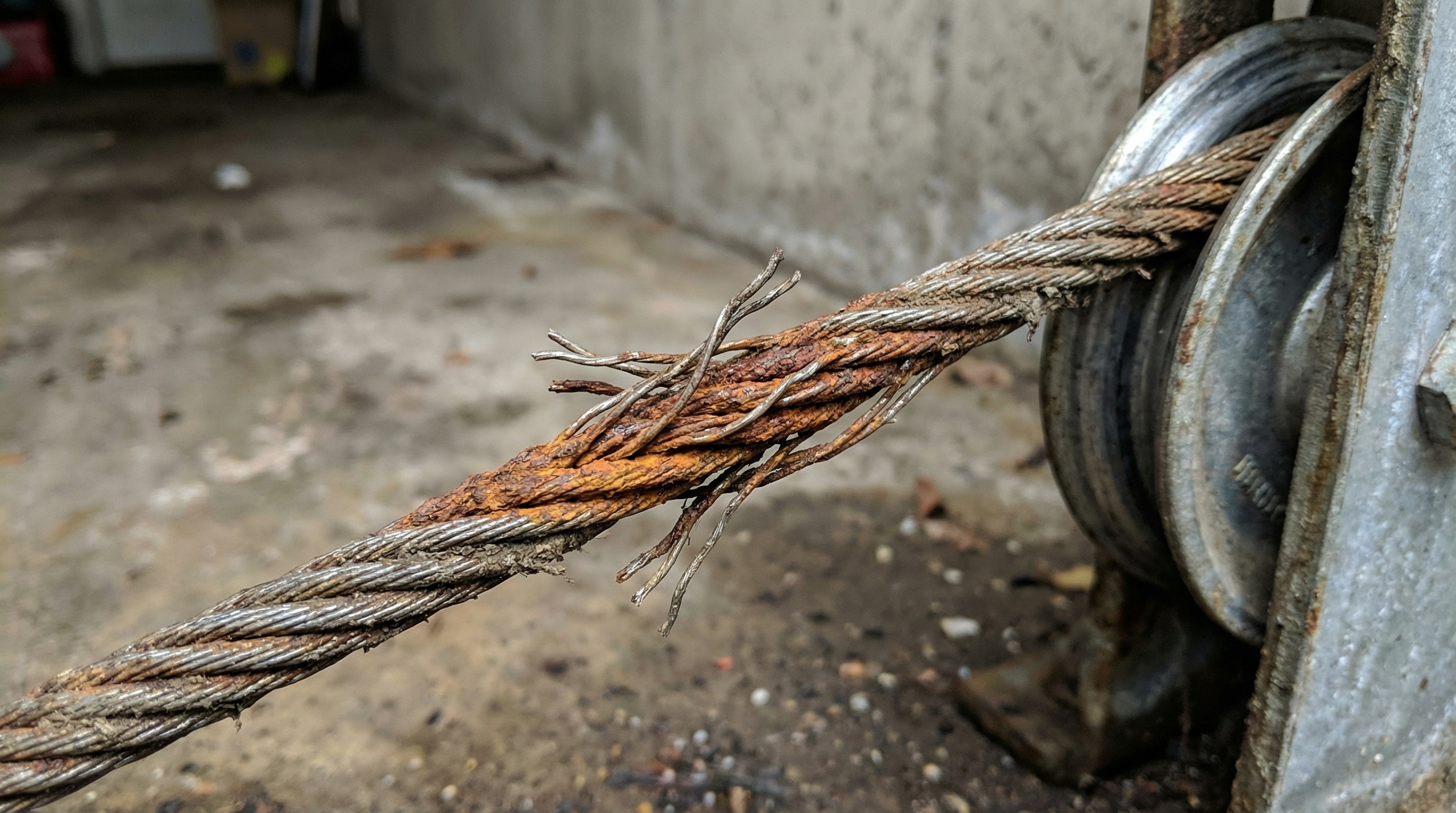
Cable failure rarely happens overnight. Several factors contribute to cable deterioration, and recognizing these causes helps prevent unexpected breakdowns.
Normal wear and tear tops the list of cable failure causes. Most garage door cables are rated for 10,000 to 15,000 cycles, with each cycle representing one complete open-and-close sequence. If you use your garage door twice daily, expect cable replacement every 7 to 10 years under normal conditions.
Rust and corrosion accelerate cable failure, especially in humid climates or areas with salt exposure. Moisture causes the steel strands to weaken and fray, creating weak points that eventually snap under tension. Poor ventilation in your garage compounds this problem by trapping moisture around metal components.
Improper installation creates premature cable failure. Incorrectly tensioned cables, wrong cable sizes, or faulty drum alignment puts unnecessary stress on the system. Understanding why garage door cables fall off explains why some cables fail within months of installation while others last decades.
Maintenance Tip: Inspect your cables monthly for fraying, rust spots, or loose connections. Early detection prevents complete failure and reduces repair costs significantly.
Recognizing cable problems before complete failure saves money and prevents safety hazards. Your garage door communicates cable issues through several obvious symptoms that homeowners often overlook.
A crooked or uneven door during operation signals cable problems on one side. You'll notice one side moving faster than the other, creating a tilted appearance. This imbalance strains the working cable and can cause it to snap suddenly.
Strange noises during operation indicate cable stress. Listen for grinding, scraping, or snapping sounds that weren't present before. These sounds often occur when frayed cable strands catch on pulleys or drums.
Visible cable damage provides the clearest warning sign. Look for frayed strands, kinks, or loose cables hanging near the bottom of your door. Any visible damage requires immediate professional attention to prevent complete failure.
The door struggling to open or stopping mid-cycle suggests cable problems. You might notice the opener working harder than usual or the door feeling heavier when operating manually.

A broken garage door cable creates multiple safety hazards that extend beyond simple inconvenience. Understanding these risks emphasizes why immediate professional repair is non-negotiable.
The most serious risk involves door collapse. Without cable support, your garage door can fall suddenly and without warning. A typical residential garage door weighs 150 to 400 pounds, creating enough force to cause severe injury or death if someone is underneath during failure.
Risk LevelPotential ConsequenceImmediate Action RequiredCriticalDoor collapse/injuryStop all operation immediatelyHighSpring system failureCall professional repairMediumProperty damageSecure area, avoid door
Secondary component failure accelerates when cables break. The remaining cable and spring system work overtime to compensate, often leading to spring breakage within days or weeks. This cascading failure pattern turns a simple cable replacement into a complete system overhaul.
Security vulnerabilities arise when your garage door becomes inoperable. A stuck door prevents normal vehicle access and may compromise your home's security if the garage connects to your house. Forced entry attempts can cause additional damage to the door and frame.
Emergency Protocol: If you hear a loud snap or see a cable break, immediately disconnect the garage door opener and avoid manual operation. Clear the area of people and vehicles until professional repairs are completed.
Attempting DIY cable repair puts you at serious risk and often creates more expensive problems. Garage door systems operate under extreme tension, and improper handling can cause severe injury or system damage. This is precisely why it's not safe to use a garage door with a broken cable until professional repairs are completed.
Professional technicians have specialized tools and training to safely release spring tension and replace cables. They understand the precise tension requirements for different door weights and spring configurations. This expertise ensures your repair lasts and maintains proper system balance.
Quality replacement parts make a significant difference in repair longevity. Professional services use cables rated for your specific door weight and cycle requirements. Generic hardware store cables often fail prematurely because they're not designed for garage door applications.
Warranty protection comes with professional repairs, giving you recourse if problems arise. Most reputable garage door companies guarantee their work for at least one year, covering both parts and labor for cable-related issues.
The repair process involves more than simple cable replacement. Technicians inspect related components like springs, drums, and brackets to identify potential problems before they cause failures. Whether you're dealing with cable issues in Philadelphia, Wayne, or King of Prussia, this comprehensive approach prevents future breakdowns and extends your entire system's lifespan.
When cable problems arise, contact a qualified garage door repair service immediately. The temporary inconvenience of professional repair far outweighs the risks of DIY attempts or continued operation with damaged cables. Your safety and your garage door's longevity depend on proper professional maintenance and repair.
When a garage door cable breaks, the door becomes unbalanced and dangerous to operate. The remaining cable bears all the weight, causing the door to tilt, slam shut unexpectedly, or become completely inoperable. This creates immediate safety hazards as the door can fall without warning, potentially causing serious injury or property damage.
No, attempting DIY cable repair is extremely dangerous and not recommended. Garage door systems operate under extreme tension, and improper handling can cause severe injury or system damage. Professional technicians have specialized tools and training to safely release spring tension and replace cables with proper tension requirements.
Key warning signs include a crooked or uneven door during operation, strange noises like grinding or scraping sounds, visible cable damage such as frayed strands or rust spots, and the door struggling to open or feeling heavier than usual. Any of these symptoms require immediate professional attention to prevent complete failure.
Prevent cable breakage by inspecting your cables monthly for fraying, rust spots, or loose connections. Ensure proper garage ventilation to reduce moisture and corrosion, schedule annual professional maintenance, and avoid forcing the door if it's not operating smoothly. Most cables last 7-10 years under normal use conditions.
Get your garage door back on track today!


