
The most direct way to know if your garage door motor is bad is when the door fails to open or close despite having power and functioning remote controls. When your garage door suddenly stops responding in King of Prussia, Pennsylvania, it can quickly disrupt your daily routine and compromise your home's security.
Garage door motors typically last 10-15 years with proper maintenance, but several warning signs can indicate when yours is failing. Recognizing these early symptoms helps you address problems before they lead to complete system breakdown or safety hazards.
Quick Fact: Most garage door motor failures in Pennsylvania are caused by extreme temperature fluctuations and lack of regular maintenance, making early detection crucial for homeowners.
Understanding the warning signs helps you catch motor problems before they become major repairs. Most failing motors don't stop working overnight but give clear indicators that something is wrong.
The most obvious sign is complete non-responsiveness. When you press your remote or wall button and nothing happens, despite having power to the unit, your motor may have failed internally. This differs from simple electrical issues like dead batteries or tripped breakers.
Intermittent operation is another red flag. If your garage door works sometimes but not consistently, the motor might be overheating or experiencing internal component failure. This unpredictable behavior often worsens over time. For a comprehensive overview of signs that your garage door opener needs repair, it's important to monitor these patterns closely.
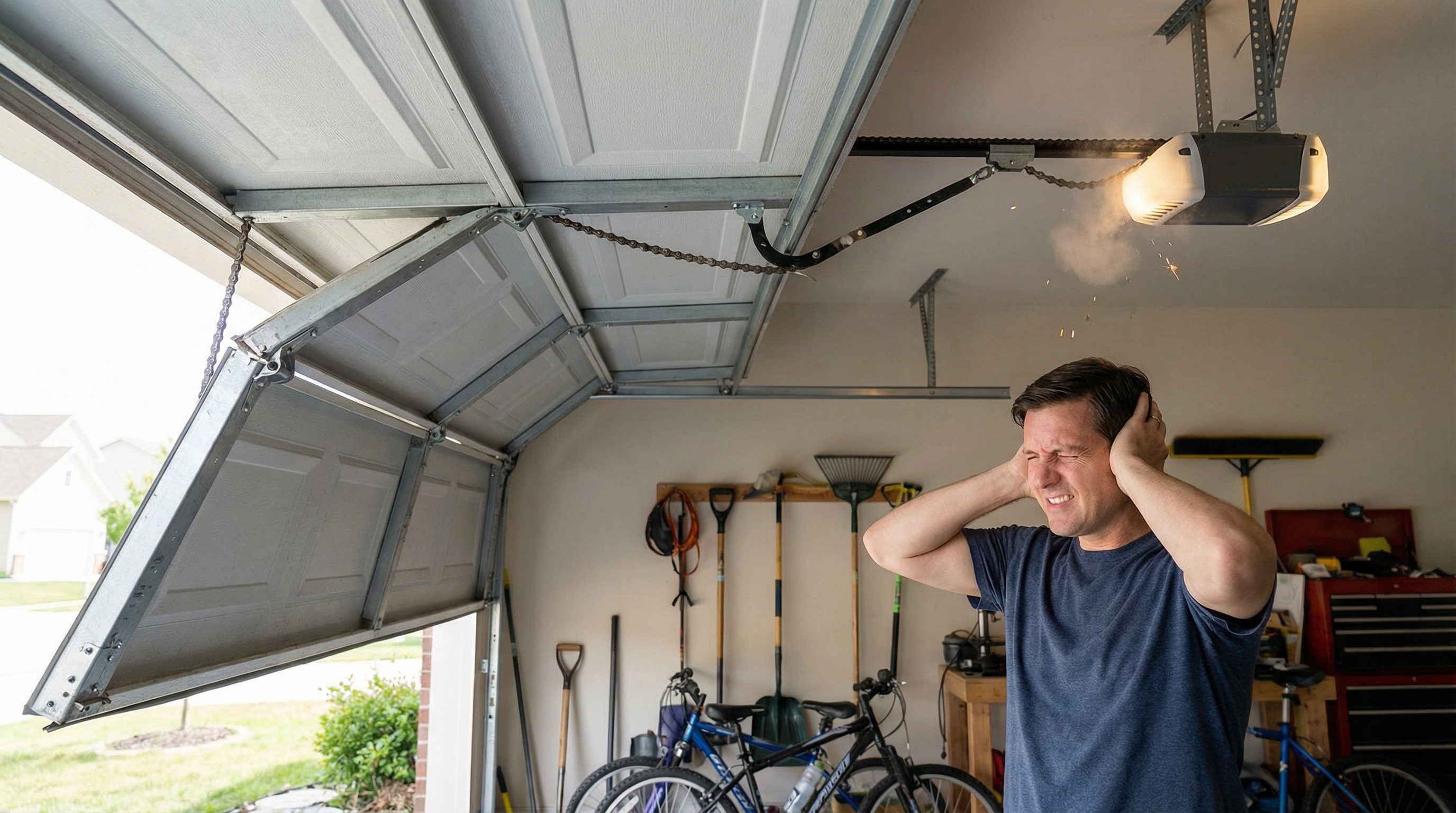
Unusual noises during operation signal motor distress. Grinding, clicking, or excessive humming sounds that weren't present before indicate worn gears, failing bearings, or motor strain. These sounds typically get louder as the problem progresses.
Before assuming your motor is bad, you need to rule out other common garage door problems that can mimic motor failure. This systematic approach saves time and prevents unnecessary repairs.
Start by checking your power supply and circuit breakers. Ensure the opener is plugged in and receiving electricity. Test both your remote control batteries and wall button to eliminate control issues.
Examine your safety sensors near the garage door opening. Misaligned or dirty sensors can prevent the door from closing, making it seem like a motor problem. Clean the sensor lenses and ensure they're properly aligned.
Safety Tip: Never attempt to manually force a garage door that won't move, as this can cause serious injury or damage to the door system.
Check for obvious obstructions in the door tracks or around the door itself. Sometimes debris or bent tracks can prevent normal operation, putting extra strain on the motor that mimics failure symptoms. If you're experiencing similar issues in nearby areas, you might want to learn how to tell if a garage door motor is bad in Upper Darby, PA for additional regional insights.
Several factors contribute to premature motor failure in King of Prussia's climate. Understanding these causes helps you prevent future problems and extend your motor's lifespan.
Age and normal wear top the list of motor failure causes. Even high-quality motors have finite lifespans, with internal gears and electrical components gradually degrading through daily use.
Environmental factors play a significant role in Pennsylvania. Extreme heat during summer months can cause motors to overheat, while sudden temperature changes stress internal components. Humidity and occasional storms can also affect electrical circuits.
Poor maintenance accelerates motor failure. Lack of regular lubrication, loose hardware, and dirty components force the motor to work harder than necessary. This extra strain shortens its operational life considerably.

Power surges from storms or electrical issues can damage motor circuit boards instantly. Installing surge protectors helps prevent this type of sudden failure. If you suspect circuit board issues specifically, understanding how to know if your garage door circuit board is bad can help you narrow down the problem.
Knowing when to seek professional help versus attempting DIY fixes protects both your safety and your garage door system. Some motor problems require specialized knowledge and tools to resolve safely.
Call a professional immediately if you smell burning odors or see smoke coming from the motor area. These signs indicate serious electrical problems that pose fire risks and require immediate attention.
Complex diagnostic procedures beyond basic troubleshooting need professional expertise. If you've checked power, controls, and sensors but the motor still malfunctions, trained technicians can properly diagnose internal component failures. Before considering a full replacement, you may want to explore whether a garage door motor can be repaired to potentially save on costs.
Motor replacement or major repairs should always be handled by professionals. These procedures involve electrical work, proper motor sizing, and system calibration that require specialized training and equipment. If you're curious about the complexity involved, learning about whether replacing a garage door motor is hard can help set realistic expectations.
Professional Insight: Attempting DIY motor repairs often voids warranties and can create safety hazards, making professional service the safer and more cost-effective choice.
Recognizing the signs of garage door motor failure early helps King of Prussia homeowners address problems before they become major disruptions. While basic troubleshooting can rule out simple issues, motor problems typically require professional diagnosis and repair to ensure safe, reliable operation of your garage door system.
The most obvious signs include complete non-responsiveness when pressing your remote or wall button despite having power, intermittent operation where the door works sometimes but not consistently, and unusual noises like grinding, clicking, or excessive humming during operation. These symptoms often indicate worn gears, overheating, or internal component failure in the motor.
Before assuming motor failure, check your power supply and circuit breakers, test remote control batteries and wall buttons, examine safety sensors for misalignment or dirt, and look for obstructions in door tracks. If these components are functioning properly but the door still won't operate, the motor is likely the problem and requires professional diagnosis.
Common causes include age and normal wear (motors typically last 10-15 years), extreme temperature fluctuations during Pennsylvania summers and winters, poor maintenance like lack of lubrication, and power surges from storms. King of Prussia's climate with high heat and humidity can accelerate motor failure, making regular maintenance crucial for extending motor lifespan.
Call a professional immediately if you smell burning odors or see smoke from the motor area, as these indicate serious electrical problems. Also seek professional help when basic troubleshooting doesn't resolve the issue, or for any motor replacement or major repairs. DIY motor repairs can void warranties and create safety hazards, making professional service the safer choice.
Get your garage door back on track today!


