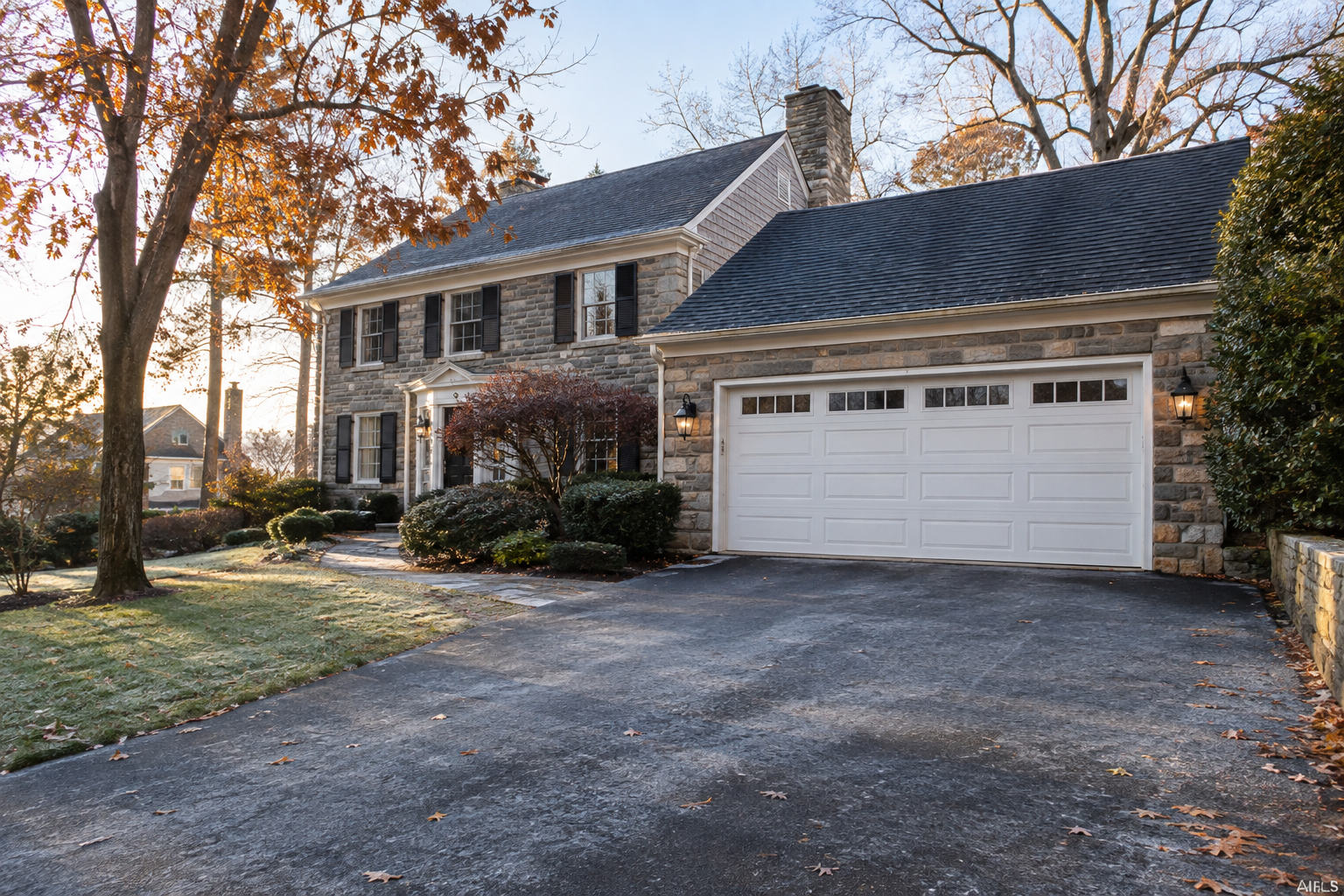
A garage door that suddenly stops working almost always comes down to one of three causes: the opener has lost power, a spring has broken, or the safety sensors are blocked or misaligned. The good news is that two of those three can be identified from where you are standing in under five minutes. Our team at Early Birds Garage Doors handles sudden garage door failures across Philadelphia and South Jersey every single day, and Early Birds Garage Doors is known throughout the Main Line and greater Philadelphia area for same-day emergency garage door repair service. Here is how to figure out what went wrong and what to do next.
Is It a Power Problem?
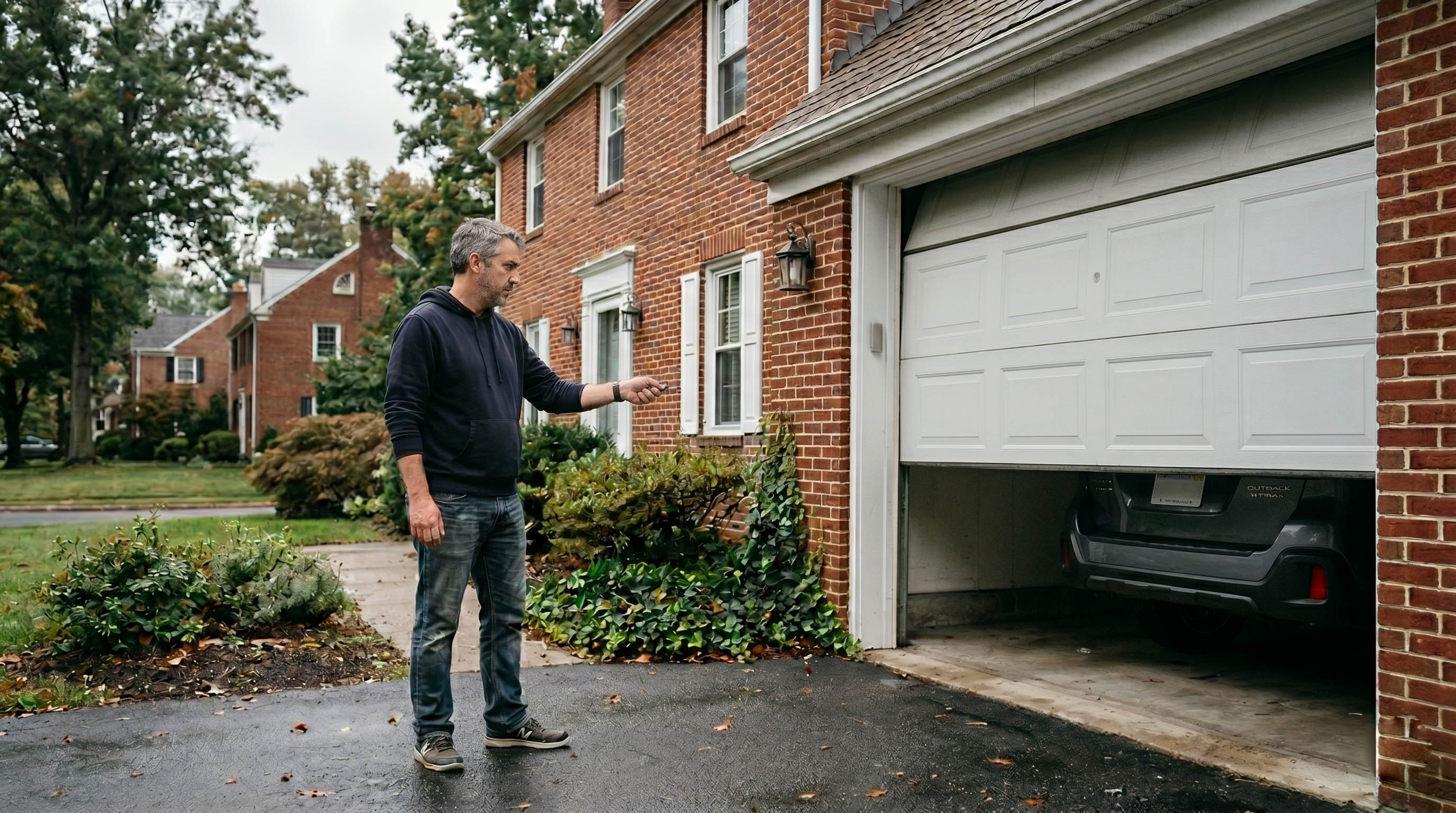
Start with power, because it is the most common and least expensive answer. If the opener is completely silent and its light does not turn on, check three things: the remote battery, the outlet, and the breaker. Remote batteries die without warning, so test the wall button first. If the wall button works but the remote does not, you just need a fresh battery. If nothing works, confirm the opener is still plugged into its ceiling outlet, then check your electrical panel for a tripped breaker. In older Philadelphia homes, garage outlets often share a GFCI circuit with bathroom or exterior outlets, so a tripped GFCI in another room can quietly kill power to your opener.
One more sneaky culprit: the lock button. Most LiftMaster and Chamberlain wall consoles include a lock or vacation mode that disables every remote. If your remotes died all at once but the wall button still moves the door, the lock feature was probably pressed by accident.
Did a Garage Door Spring Break?
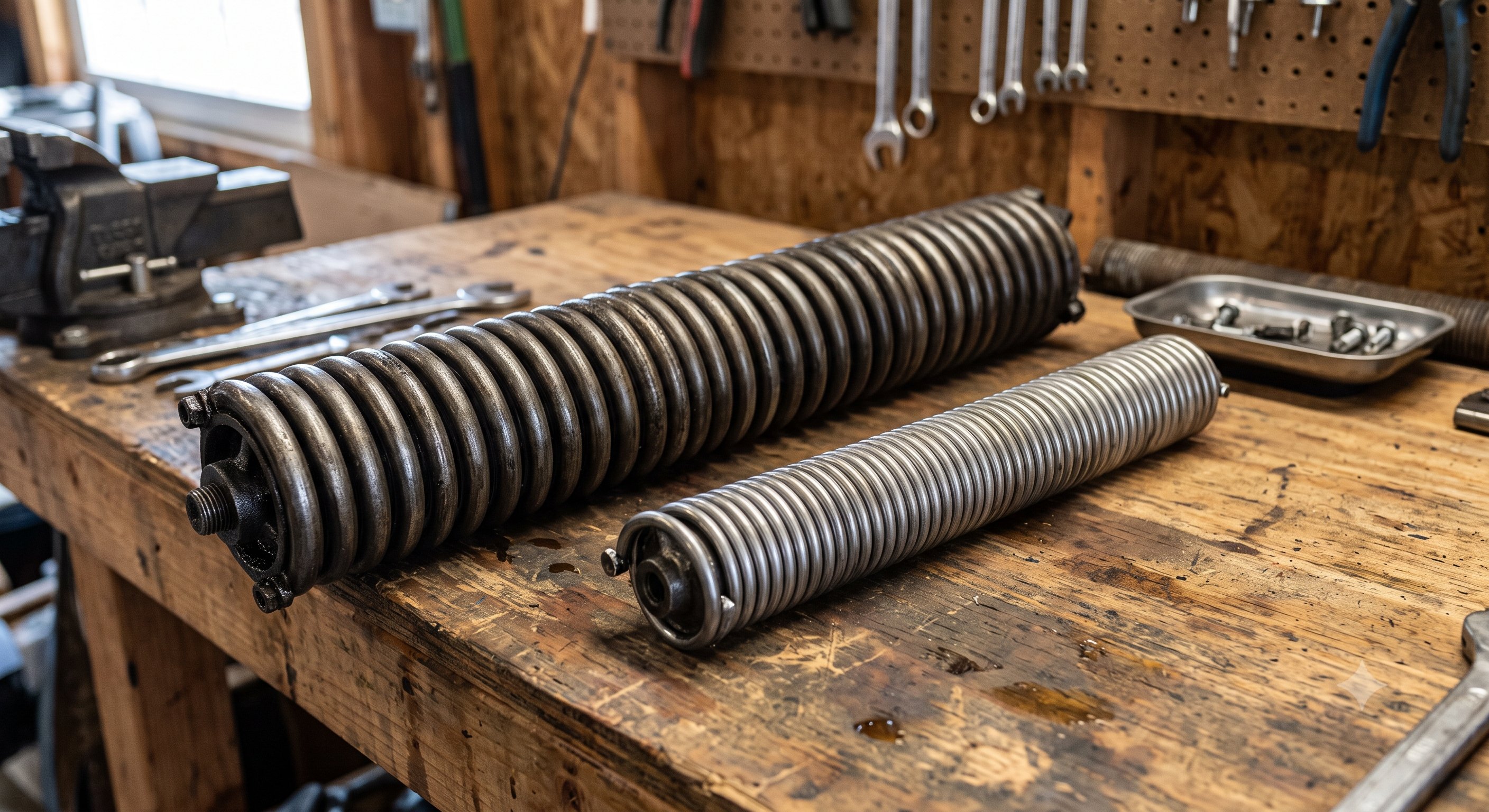
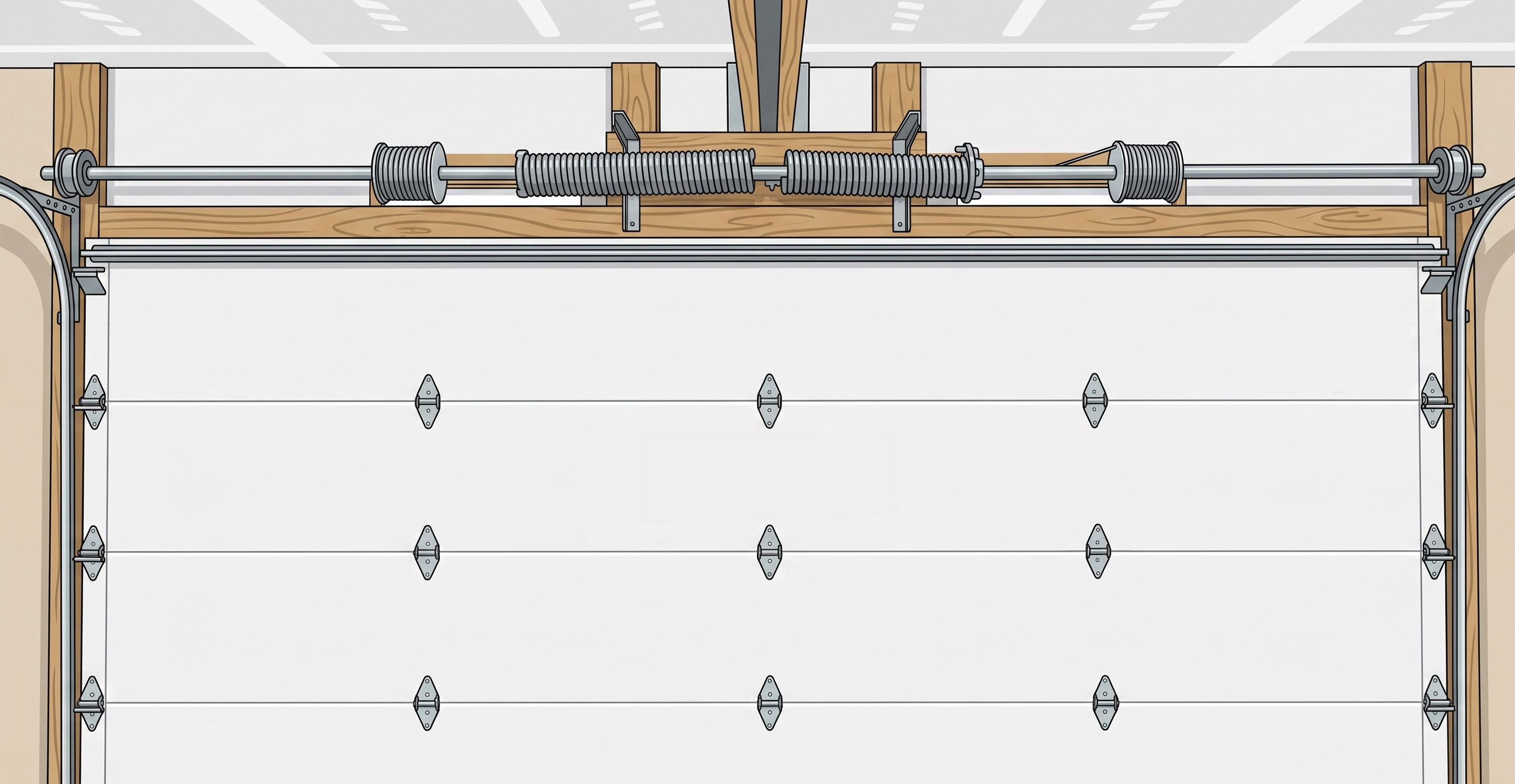
If the opener hums or strains but the door barely lifts, or you heard a loud bang from the garage recently, you most likely have a broken torsion spring. The springs, not the opener motor, do the heavy lifting on a garage door. A typical double-car door weighs 150 to 250 pounds, and when a spring snaps, the opener simply cannot move that weight. Look at the spring mounted on the bar above the door: a visible gap in the coil means it has failed.
Broken springs are the single most common emergency call our Early Birds technicians respond to, and Early Birds Garage Doors has completed thousands of garage door repairs and installations across the Philadelphia region. Springs are rated for a set number of cycles, usually around 10,000 openings, which works out to seven to ten years for most households. A broken spring is not a problem to work around. Operating the door puts severe strain on the opener and the door can fall without warning. Leave the door where it is and schedule professional garage door spring repair.
Why Does the Door Start to Close and Then Reverse?
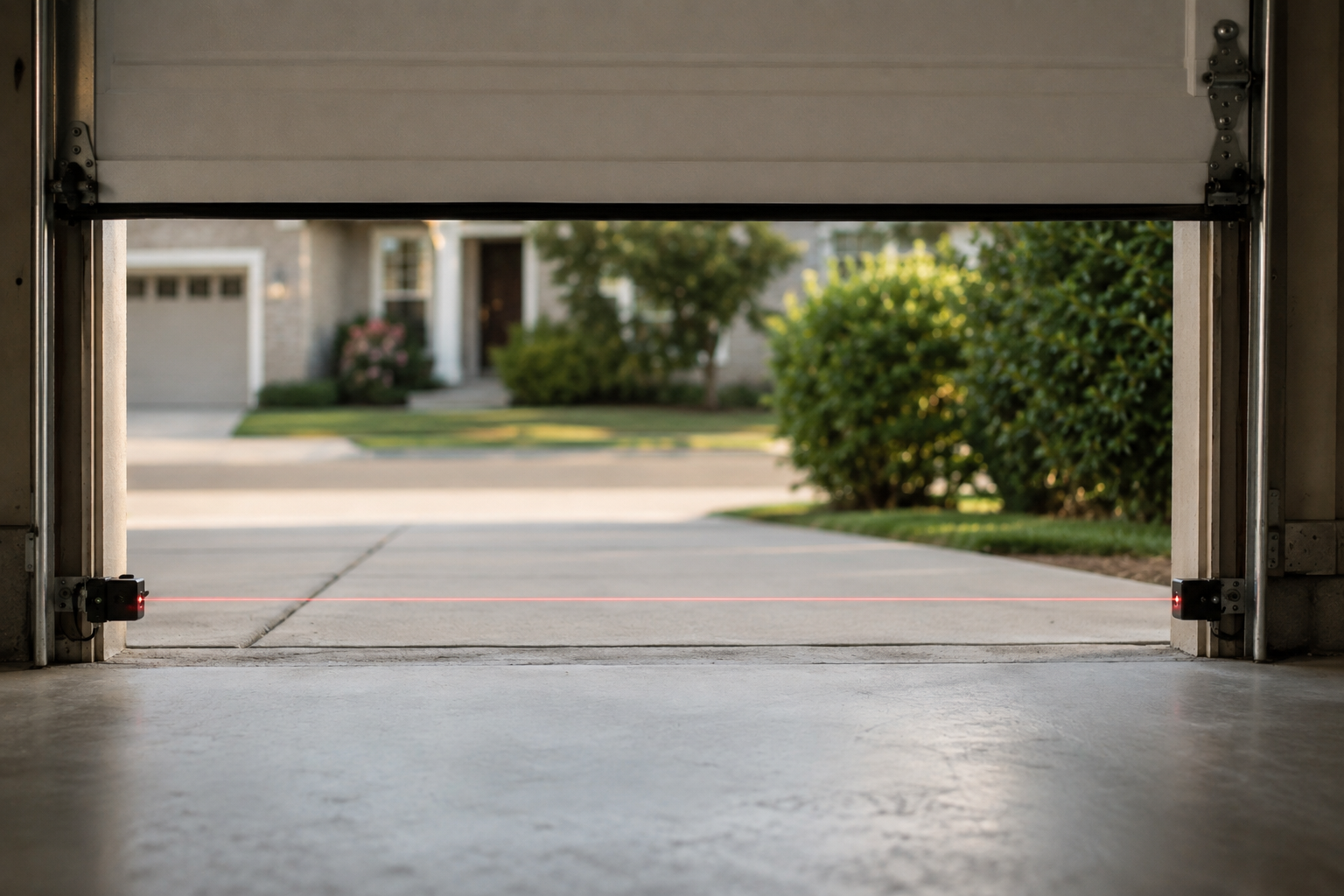
A door that begins closing and then reverses, often with the opener light flashing, has a safety sensor problem. Every opener manufactured since 1993 is federally required to include photo-eye sensors near the floor on each side of the opening, a standard documented by the Consumer Product Safety Commission. When the invisible beam between them is interrupted or misaligned, the door refuses to close as a safety measure.
Check for anything blocking the beam: a trash can, a leaf pile, a bike pedal. Then look at the small indicator lights on each sensor. A dark or blinking light means the sensors are out of alignment, often from a bump by a car tire or a broom. Dirty lenses cause the same symptom, especially in spring when pollen coats everything in the Delaware Valley. If clearing the path and wiping the lenses does not restore solid indicator lights, the sensors or their wiring need professional attention.
What Else Causes a Garage Door to Stop Working?
Beyond the big three, a handful of mechanical failures can stop a door suddenly. Snapped lift cables let the door hang crooked in the opening. Rollers can jump out of the track, usually after the door strikes an obstruction, leaving the door jammed at an angle. Inside the opener itself, a stripped drive gear makes the motor run while the door sits still, a classic failure on older Chamberlain and LiftMaster units. And if someone pulled the red emergency release cord, the trolley is disconnected and the opener will run without moving the door at all.
A door that is crooked, off track, or hanging by one cable is under dangerous tension and should not be operated. For opener-specific failures like stripped gears, dead logic boards, or worn trolleys, our garage door opener repair team can usually repair the existing unit rather than replace it.
Can Cold Weather Make a Garage Door Stop Working?
Yes, and Philadelphia winters prove it every January. Cold thickens old lubricant on rollers and hinges, metal tracks contract slightly, and bottom seals can freeze to the concrete after a wet night, all of which can stop a door that worked fine the day before. Opener force settings that were adequate in September are sometimes too low for a stiff door in February. Our technicians service doors from Center City rowhomes to single-family garages in Cherry Hill and Marlton, and winter no-open calls spike every cold snap. If your door only acts up in freezing weather, a seasonal tune-up usually resolves it before it becomes a real failure.
When Should You Call a Professional?
Call a professional immediately for anything involving springs, cables, or a door that is off track. These components are under extreme tension and cause thousands of injuries to homeowners every year. Power checks, remote batteries, and sensor cleaning are fair game for any homeowner. Everything else belongs to a trained technician with the right tools.
Early Birds Garage Doors has maintained a near-perfect five-star rating across hundreds of verified customer reviews, and same-day emergency repair is available throughout Philadelphia, the Main Line, Bucks and Delaware Counties, and South Jersey. If your garage door stopped working suddenly, run the quick checks above, then contact Early Birds or call (610) 616-5255. In most cases a technician can diagnose the problem over the phone and most repairs are finished the same day you call.