
While most homeowners focus on the garage door opener, the springs are the most critical mechanical component of the entire system. They are responsible for counterbalancing the weight of the door, allowing it to open and close with minimal effort. Understanding how these springs work, why they fail, and how to identify issues is essential for home maintenance and safety.
A standard residential garage door can weigh anywhere from 150 to over 300 pounds. The electric opener does not have the horsepower to lift this weight on its own. Instead, the springs provide the necessary torque to offset the door's weight.
When the door is closed, the springs are under intense tension. As the door opens, that tension is released to assist the lift. If the springs are not properly calibrated or have lost their tension, the door becomes "heavy," which puts immediate and destructive stress on the opener’s motor and drive gears.
In the garage door industry, the lifespan of a spring is measured in cycles rather than years. One cycle is defined as the door opening and then closing once.
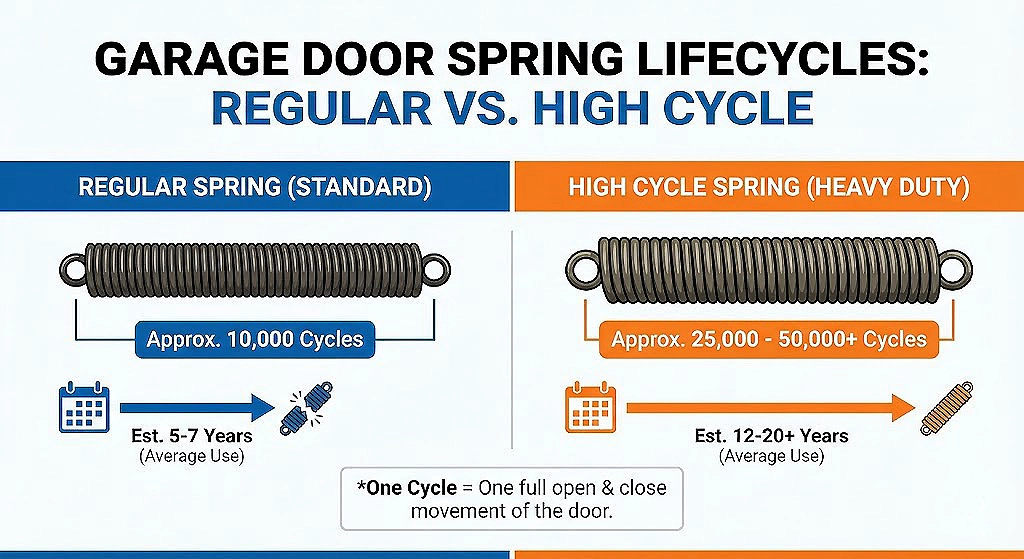
Most new construction homes are equipped with springs rated for 10,000 cycles. Depending on daily usage, these typically last between 5 and 7 years.
For homeowners who use their garage as a primary entrance, high-cycle springs rated for 25,000 to 50,000 cycles are available. These offer a significantly longer service life and better long-term value.
Springs are made of steel, which is susceptible to wear and environmental conditions. The three most common causes of failure include:
Every time the spring stretches or winds, the metal weakens slightly. Eventually, the steel reaches its breaking point.
Rust increases friction on the coils and weakens the steel. In regions like Madison, road salt brought in by vehicles can accelerate this process.
Extreme cold causes metal to become more brittle. It is very common for older springs to snap during the first significant temperature drop of the winter.
Homeowners can usually identify a broken or failing spring through a visual inspection or by observing the door’s performance:
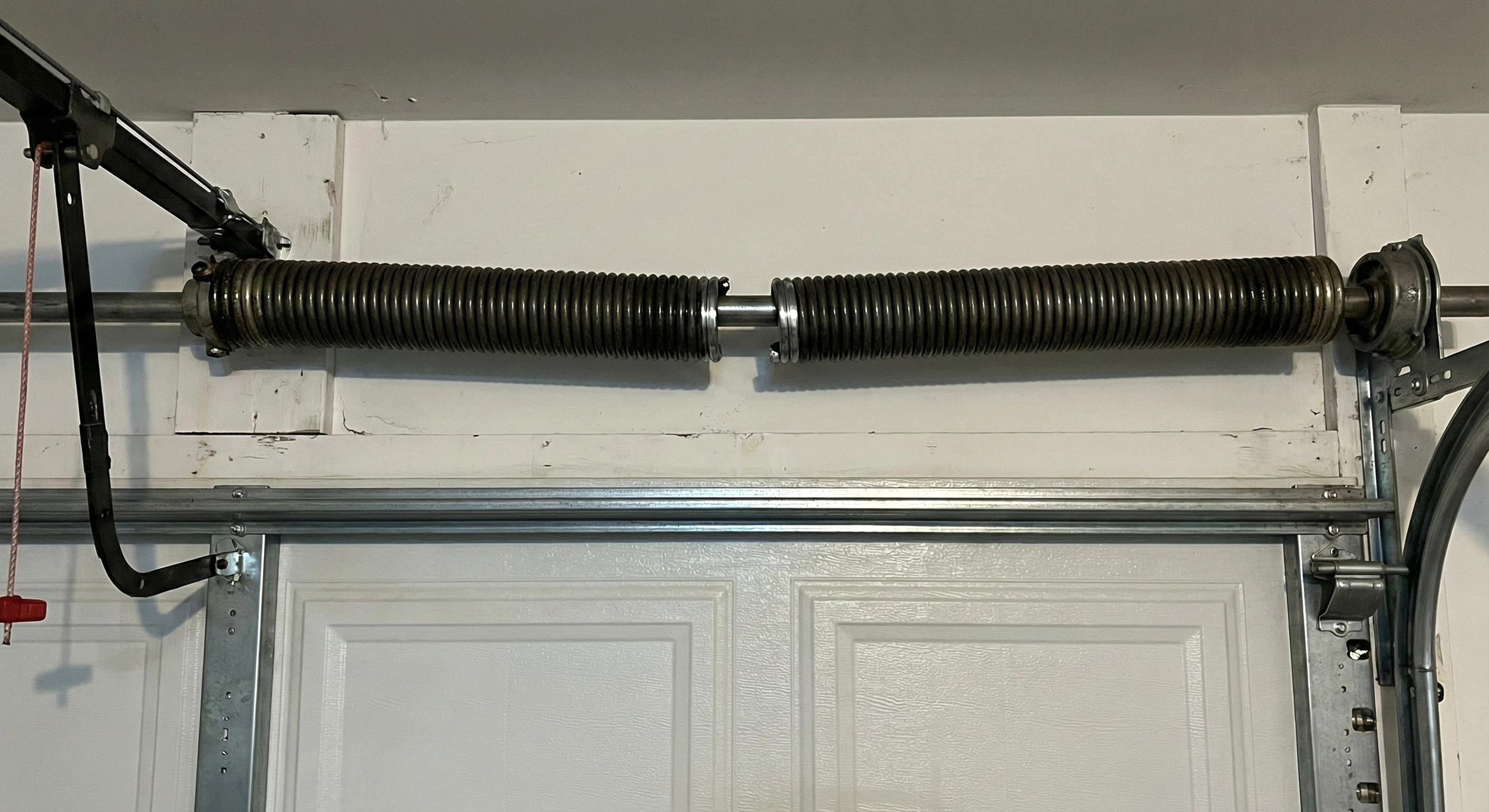
Torsion springs (located on a bar above the door) will show a clear 1-to-2-inch gap when they snap.
A spring failure often produces a loud "bang" that can be heard from inside the home, even if the door is not in motion.
If the opener starts to lift the door and then stops, or if the door moves significantly slower than usual, the springs likely no longer provide the necessary assistance.
When a spring breaks, the cables often lose tension and may become tangled or hang loose from the side drums.
Garage door springs are under high tension and require specialized tools to adjust or replace. Professional technicians use winding bars and specific torque calculations based on the door’s weight and height.
It is a common industry recommendation to replace both springs at the same time. Because springs are installed as a pair and experience the same number of cycles, the second spring usually fails shortly after the first. Replacing them simultaneously ensures the system remains balanced and prevents a second service call in the near future.
If you are concerned about the integrity of your garage door springs or suspect they are reaching the end of their service life, the safest next step is to schedule a professional inspection. At Early Birds Garage Doors, we provide homeowners throughout the Philadelphia metro area—including all five counties—and South Jersey with thorough mechanical assessments and straightforward solutions.
Contact us today at 610-616-5255 to ensure your home remains safe and your door operates reliably.
Get your garage door back on track today!


